









Quantum Art raises $100 million Series A to scale full-stack quantum systems
The Weizmann Institute spin-off aims to achieve commercial quantum advantage in just two years.
Israeli quantum computing startup Quantum Art has raised $100 million in a Series A funding round, bringing the company’s total capital raised to $124 million. Bedford Ridge Capital led the round alongside Battery Ventures, Destra Investments, Lumir Growth Partners, Disruptive AI, Harel Insurance, Karen W. Davidson, GTV, Yasmin Lukatz, Corner Capital, and Qbeat Ventures.
Existing investors and stakeholders Amiti Ventures, which led the Seed round, StageOne Ventures, Vertex Ventures, Entrée Capital, and the Weizmann Institute of Science continued participating in this round.
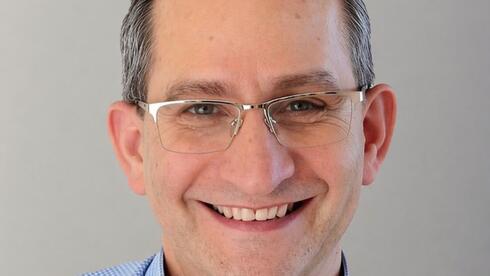
Founded as a spin-off from Prof. Roee Ozeri's group at the Weizmann Institute of Science, Quantum Art’s leadership team includes internationally recognized experts in trapped-ion quantum computing, large-scale system engineering, and quantum market strategy. The company, founded by Dr. Tal David (CEO), Dr. Amit Ben Kish (CTO), and Ozeri (CSO), has spent years developing proprietary techniques for implementing multi-qubit gates, scalable modular architectures, and robust quantum error correction.
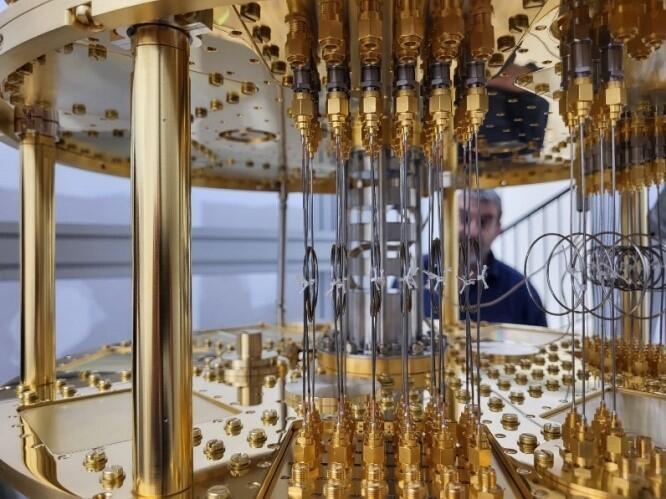
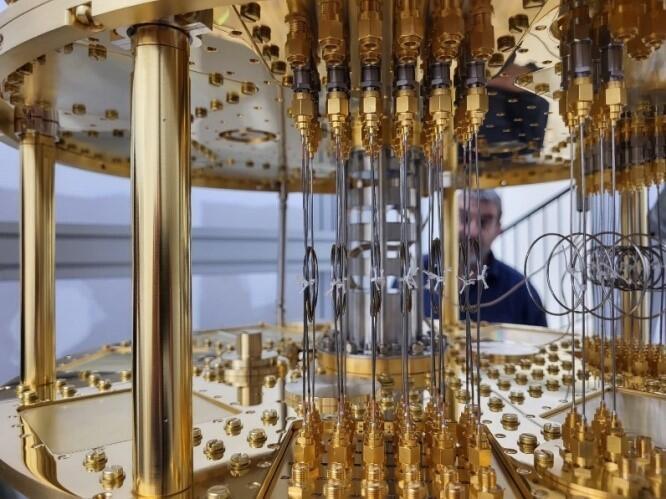
In June, Quantum Art unveiled a comprehensive technology and product roadmap that targets Quantum Advantage by 2027 and a 1 million physical qubit system by 2033. The roadmap details a stepwise scaling plan: a 50-qubit system in 2025, a 1,000-qubit “Perspective” series in 2027, an ultra-dense 12,000-40,000 qubit “Landscape” series by 2029-2031, and a fully fault-tolerant 1 million qubit “Mosaic” system by 2033.
The company’s approach relies on four technological pillars: Multi-qubit gates capable of executing up to 1,000 two-qubit operations in a single step; Optical segmentation of long ion chains into independently operating cores; Dynamic reconfiguration of multi-core arrays to enable rapid entanglement generation; High-density 2D modular structures allowing physical qubits to scale efficiently within a compact footprint.
According to Quantum Art, this architecture allows up to 100 times more gates per second, 100 times more parallel operations, and up to a 50-fold reduction in footprint compared to competitor roadmaps, potentially accelerating progress toward commercial quantum advantage and enabling more complex algorithms with robust error correction.
“We have already demonstrated the core building blocks of our architecture in the lab, including multi-qubit gates, segmented multi-core operation, and scalable system control,” Dr. Amit Ben-Kish, CTO and co-founder, said earlier this year. “These technologies enable high-speed, robust execution across large-scale systems without the need for photonic links or ion shuttling.”
“Investment support at this level reflects strong confidence in our technology and products,” said Dr. Tal David, CEO and co-founder of Quantum Art. “It reinforces the momentum behind our multi-qubit gate architecture and our path toward systems that scale from hundreds to ultimately thousands and millions of qubits.”
Quantum Art’s technology targets high-impact applications across materials discovery, finance, logistics, defense, and other sectors. With this latest funding round, the company aims to accelerate product development and cement its position among a growing cohort of startups vying for leadership in the emerging quantum computing market.



