










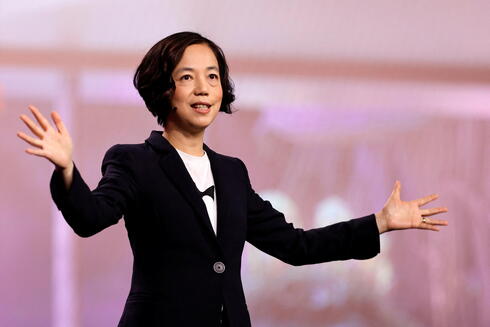
From working at her family’s dry cleaner to an $8.2 billion AI deal: Fei-Fei Li’s journey
The AI pioneer who built ImageNet and helped transform computer vision is joining AMD as chief scientist after the chipmaker agreed to acquire her World Labs.
On Fridays, while other Princeton students headed off for the weekend, Fei-Fei Li would travel to New Jersey to work at her family’s dry-cleaning business.
“Every weekend, from Friday to Sunday, I worked at the dry cleaner’s,” she recalled in an interview. “I ran the business because I spoke English.”
She continued doing this for seven years, including during the early stages of her graduate studies.
This week, it was announced that World Labs, the AI company she co-founded, will be acquired by AMD in a stock deal valued at approximately $8.2 billion. Upon completion of the deal, Li is set to join AMD as a senior vice president and chief scientist, reporting to CEO Lisa Su.
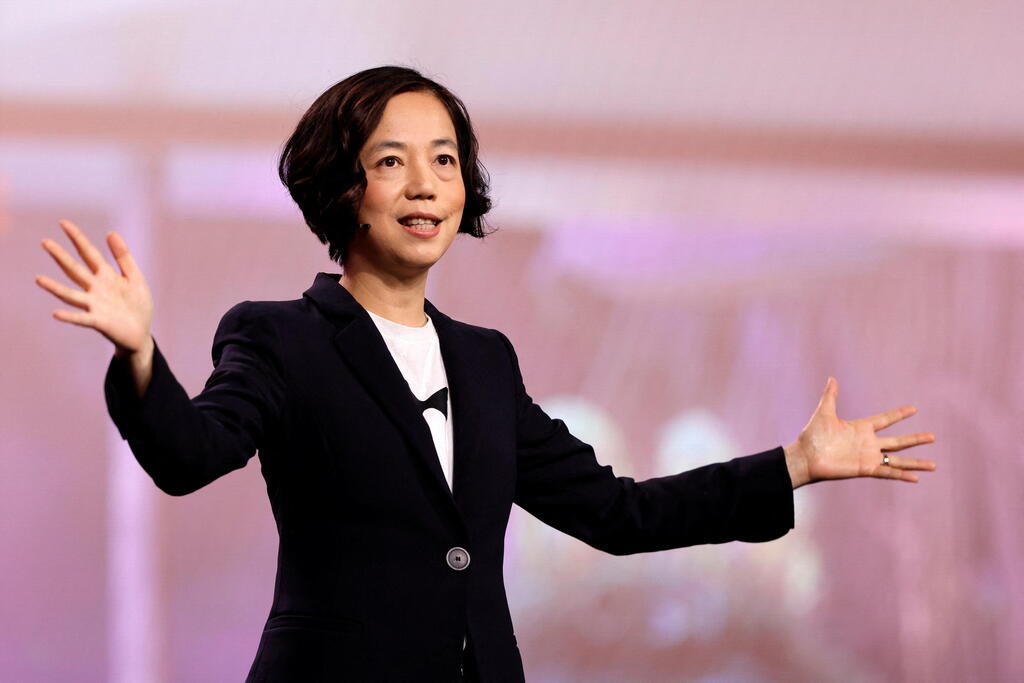
Her journey began in Chengdu, China, where she grew up reading science books, science fiction and European literature. By her own account, however, she was not considered a model student.
In 1992, at the age of 15, she immigrated to the U.S. with her mother. Her father had already emigrated three years earlier. The family settled in a New Jersey suburb, where Li spoke almost no English.
“I remember the place felt very empty... hot water came out of the taps, it was pretty amazing,” she said in a 2017 interview.
She learned English using a dictionary and school textbooks. To help support her family, she also worked at a Chinese restaurant.
One of the people who helped her find her way was her math teacher, Bob Sabella. When the school did not offer the advanced course she needed, he taught her one-on-one during lunch breaks.
Their bond did not end with high school graduation. Sabella continued to support her during her university years and even attended her wedding. In an interview, Li said she maintained a close relationship with his family after his death.
“They are like my American family,” she said.
When Li received a scholarship to Princeton, she could hardly believe it. She asked two school counselors to verify that the acceptance letter was genuine.
She studied physics at Princeton and graduated in 1999. She then went on to earn a PhD in electrical engineering from the California Institute of Technology, or Caltech.
During her doctoral studies, Li considered a completely different career path after receiving a lucrative job offer from McKinsey. The decision to remain in science was far from obvious, given her mother’s financial and health situation.
“There were many moments when I was walking in the dark, metaphorically speaking, wondering if I had made the right choice,” she later recalled.
Yet, as she put it, “the young Fei-Fei was a scientist at heart.”
In 2007, as a young faculty member at Princeton, Li began working on the concept that would become ImageNet, a massive collection of millions of images, each labeled to describe its contents.
The goal was to teach computers to recognize what appears in an image, advancing a field known as computer vision.
Li’s idea was not immediately met with enthusiasm. While many researchers were focused on improving image-recognition algorithms, she proposed spending years collecting and labeling millions of images.
At the time, building a dataset was not considered prestigious research. Some researchers also questioned the usefulness of creating such a vast repository.
Asked in a 2023 interview why she persisted, Li pointed to the example set by her parents.
“A delusion? Perhaps it was the same unfathomable belief that brought my parents to America. I think about it: they didn’t speak a word of English, together they had no more than $20, and they had neither an education nor a social support network here. Why did they come here in the first place? When I was younger, I didn’t appreciate it. But perhaps that passion is my inheritance, something that helped me find my North Star.”
The turning point came in 2012.
A team from the University of Toronto won the ImageNet competition by a wide margin using a relatively new approach: deep neural networks, systems that learn to recognize images from millions of examples.
The victory demonstrated how a large, well-organized dataset could accelerate progress in image recognition, helping establish ImageNet as a milestone in the development of modern artificial intelligence.
Li’s contribution to that breakthrough helped cement her standing in the field and eventually earned her the nickname “Godmother of AI,” a title she has viewed with some reservation.
“I would never call myself that,” she told CBS in 2023.
Since then, Li’s career has expanded far beyond image recognition. She has directed the Stanford Artificial Intelligence Laboratory, served as vice president and chief scientist for AI and machine learning at Google Cloud, and co-founded the Stanford Institute for Human-Centered AI.
She also helped establish AI4ALL, an organization focused on expanding access to AI education for young people from underrepresented backgrounds.
In 2024, she co-founded World Labs. The company develops models capable of generating and reconstructing 3D environments from text, images and video.
Its first product, Marble, enables users to create navigable worlds. Its Atlas model, unveiled this month, is designed, among other things, to predict what a scene would look like from a different camera angle.
The connection with AMD did not begin with this week’s acquisition announcement. AMD had already participated in a funding round for World Labs, and the two companies had collaborated on optimizing the startup’s models for AMD’s graphics processors.
Li has explained the relationship with AMD in terms of the need to bring AI development closer to the hardware on which the models run.
“Without a focused effort on hardware, AI is limited in efficiency and scalability, and for our purposes, it remains trapped in the digital realm.”
Her career has now come full circle in an unexpected way.
The researcher who helped teach computers to recognize objects in images is joining AMD to work on a different frontier: AI systems capable of understanding three-dimensional environments and how objects behave in the physical world.



