









Security Researchers: Digital Fighters Series
Surf AI: “AI is fundamentally transforming the security research landscape for the better”
Shoham Danino, Senior Researcher at Surf AI, explains how AI is freeing up research experts to focus on creative thinking, as part of CTech’s Security Researchers series.
"AI is fundamentally transforming the security research landscape for the better," says Shoham Danino, Senior Researcher at cybersecurity startup Surf AI. Danino’s path into the field began as a graduate of the elite Havazalot program, followed by nine years in various cyber roles within Unit 8200 and leadership positions at Trustdome and Zscaler. As Danino explains, "the primary bottleneck for researchers was implementation – turning a theoretical concept into a functional Proof of Concept (PoC) to test a hypothesis often took months." He adds: "Today, with AI, we achieve that in a matter of days."
Within Israel’s cyber companies are small, highly specialized teams trained to think like attackers, find vulnerabilities and stay ahead of a threat landscape increasingly accelerated by AI. In this series, we meet the individuals and teams who make up this frontline of cyber: the digital fighters.
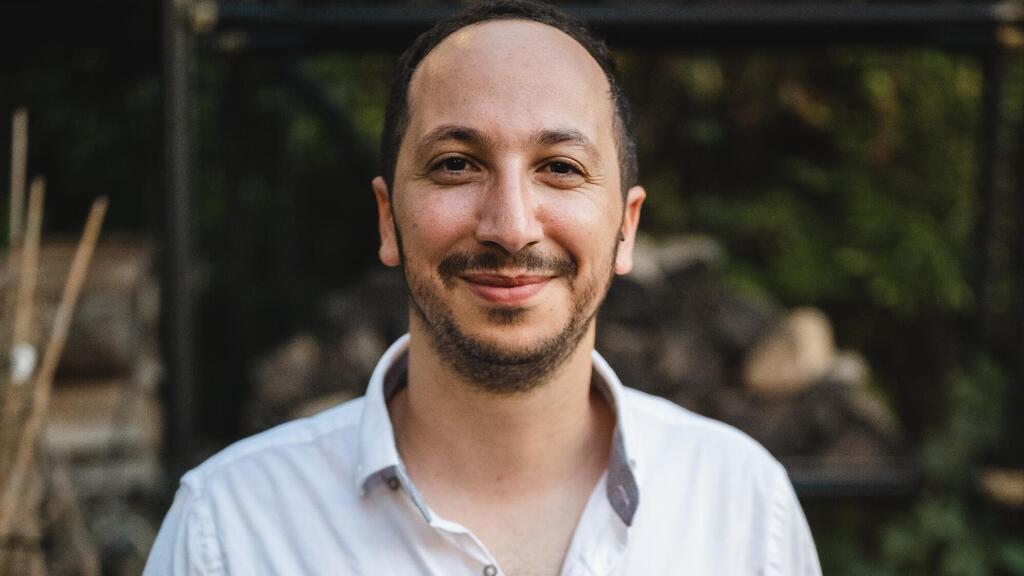
At Surf AI, the research team is composed of six domain experts operating in what Danino describes as a Mixture of Experts (MoE) model. The structure combines individual "superstar" ownership with cross-disciplinary collaboration. "Our premise is that today’s complex challenges cannot be solved through a single lens, but only by integrating multifaceted perspectives," he explains. On a personal note, Danino mentions, “what led me to specialize in vulnerability research is pure curiosity. I've always liked to understand in depth how things work, whether it's a fax or a compiler."
You can read the entire interview below.
ID Card
Company name: Surf.ai
Founders: Yair Grindlinger (CEO), Elad Horn (CPO), Roie Cohen Duwek (CTO), and Brenton Gumucio (VP Customer Success)
Year of founding: 2024
Current number of employees: 70
Company Description:
Surf AI allows organizations to continuously eliminate exposure by leveraging its assets, context graph and agentic workflows.
About Surf AI's Security Research Team:
Our research team consists of six people: a team leader and five specialized domain experts, each with a distinct background. Structurally, we combine individual 'superstar' ownership, where each member drives an end-to-end project with cross-disciplinary collaboration to solve complex research challenges.
What is your background in cyber, and what led you to specialize in security research?
My cyber background began as a graduate of the elite Havazalot program, followed by nine years in various cyber roles within Unit 8200. I then spent four years at the startup Trustdome and Zscaler (following its acquisition), advancing to Director of Research. In this role, I led both the Security Research and Data Science teams, driving technological innovation across Zscaler’s portfolio and co-authoring over 20 patents.
On the academic front, my research presenting a novel DNS server vulnerability method was published at USENIX 2024 and led to several global CVE disclosures. Ultimately, what led me to specialize in vulnerability research is pure curiosity. I've always liked to understand in depth how things work, whether it's a fax or a compiler.
What does your security research team look like in action?
Our research team operates in a Mixture of Experts (MoE) model. Rather than relying solely on traditional cyber researchers, we combine experts from diverse disciplines. Our premise is that today’s complex challenges cannot be solved through a single lens, but only by integrating multifaceted perspectives. Our research focus stems directly from our customers' operational needs in the field. While each researcher leads projects within their core domain, the final systemic solution is always holistic, interweaving insights across disciplines.
One of the most fascinating areas we explore is uncovering non-trivial connections between people, machines, and digital entities. Cracking this organizational DNA to understand how a client operates from within is an exceptionally hard problem with no off-the-shelf solution, requiring us to engineer a unique synergy of algorithmic innovation and security research that is unavailable anywhere else on the market.
How does the research team influence your company at large?
The Research Team is the beating heart of our startup and the primary engine driving our product. Our core responsibility is building the Context Graph, connecting the dots across all collected data to deliver actionable, high-value insights for our customers.
Unlike traditional research groups, our output directly impacts the product in real time. Our researchers hold end-to-end responsibility, taking projects from initial concept and algorithmic design straight into product deployment. Positioned at the very core of the company, we collaborate closely with all engineering teams, as the entire product is built upon the data and insights we generate.
On a personal level, this is the best team I have ever worked with. The synergy and extraordinary workplace dynamics between our team members are what truly make our product exceptional.
What has been your team’s most significant security discovery to date?
Some of our security discoveries are still under wraps, and you will be hearing about them in the future. However, for our customers, the most impactful discovery isn't just another vulnerability, but rather solving a deep-seated operational roadblock that has plagued the industry for years.
The true “wow” moment happens when our system fully automates a complex, cumbersome workflow that previously required tedious coordination across disparate teams. Across hundreds of thousands of findings, the system doesn't just surface issues, it explains exactly how to resolve them, why specific tasks are routed to specific individuals, and adapts dynamically in real time. Seeing a customer’s reaction when we turn that operational chaos into seamless automation is easily the most rewarding part of our work.
Who or what is your 'Moby Dick'?
SLH-DSAs (Stateless Hash Based Digital Signature Algorithms).
How would you characterize the competition between research teams today?
The cybersecurity research landscape is fiercely competitive, but it’s also deeply specialized.
While many teams focus on similar macro threats, differentiation comes down to hyper-specific expertise. Our edge lies in mapping and analyzing non-trivial relationships. We’ve mastered Context Graph architecture to isolate critical vulnerabilities, cut through the operational noise, and pinpoint what matters. Globally, very few teams operate at our level of depth in this domain.
What is your take on the future of the human security researcher?
AI is fundamentally transforming the security research landscape for the better. Historically, the primary bottleneck for researchers was implementation, turning a theoretical concept into a functional Proof of Concept (PoC) to test a hypothesis often took months. Today, with AI, we achieve that in a matter of days.
This shift radically changes how we iterate. We can now test and evaluate multiple hypotheses simultaneously, rapidly pinpointing the optimal solution. Ultimately, AI frees up our cognitive bandwidth, allowing us to focus on what humans do best: deep creative thinking, contextual research, and solving the most complex security challenges.



