










Israel's power plants battle a summer invasion of jellyfish
Dozens of tons clog cooling systems each day, but utility officials say wartime marine pollution has become an even bigger concern.
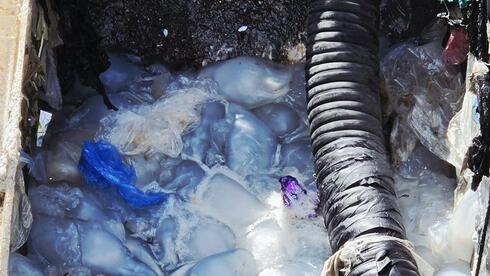
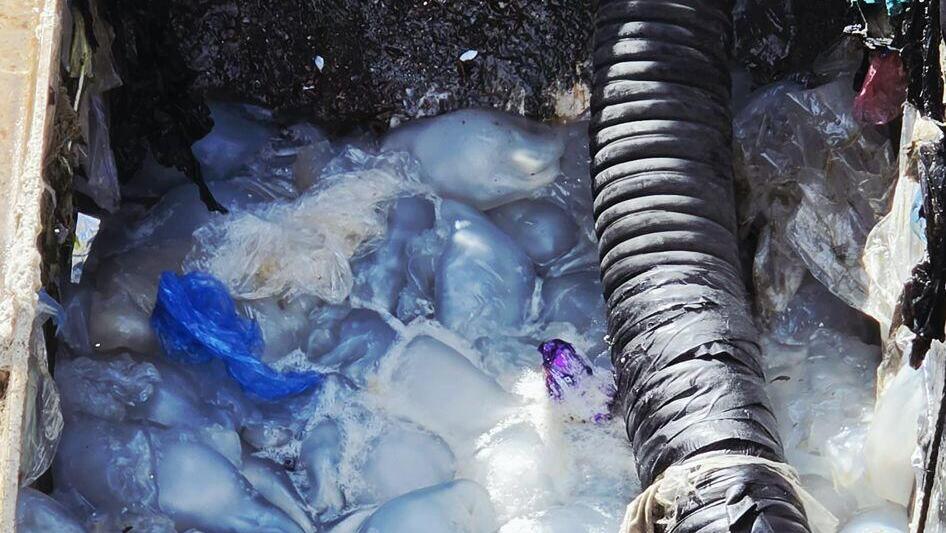
"Every 12 hours, between eight and ten huge garbage containers are filled with jellyfish here," says Eran Shani, manager of the Administration and Logistics Department at the Israel Electric Corporation's Rutenberg power station in Ashkelon. Every summer, the plant contends with massive swarms of jellyfish that drift into its cooling systems and clog them.
"This happens every year, between the end of May and August. We're used to it and clean the filters around the clock to ensure the continuous flow of cold seawater needed to cool the electricity-generating turbines. The station pumps enormous quantities of seawater at a very high flow rate, and the jellyfish are drawn into the cooling system in unimaginable numbers. We're talking about dozens of tons of jellyfish, sometimes even more. Such quantities could jeopardize the operation of the generating units. This happens all over the world, and even in 2026 there is still no more effective technology or solution to deal with the phenomenon."
The Rutenberg power station is well prepared to deal with the annual jellyfish invasion, and the Israel Electric Corporation stresses that all of its facilities are operating normally. However, Shani says an even greater challenge has emerged as a result of the ongoing war in Gaza.
"Wastewater treatment plants and waste management facilities are no longer operating, so untreated waste flows into the sea and eventually washes up on our shores. We now have to deal with huge amounts of garbage arriving on the beaches. Compared to that, the jellyfish clogging our cooling systems require relatively little effort," he said.



