











Opinion
The energy market has already entered the platform era
"Building more generation capacity is no longer enough. What matters now is when electricity is produced, whether it can be shifted to higher-value hours, whether it has a firm grid connection, where it is sold, and how well its revenues are protected from price volatility," writes Eyal Podhorzer, CEO and Co-Founder of Econergy.
For years, the growth of renewable energy was underpinned on a powerful combination: declining technology costs, government support mechanisms, regulatory certainty, and access to capital. The business model was relatively straightforward: Identify suitable project sites, secure grid access, contract offtake, close financing, build the project, and operate it. It was a clear, financeable model, and in many cases, a highly rewarding one.
But the very success of that model has created the next challenge.
As renewables capture an ever-larger share of Europe’s generation mix, a fundamental constraint is coming into sharp relief: not all megawatts are made equal. Solar, for instance, generates when the sun shines, not necessarily when consumers need power most. When greater volumes of solar capacity produce simultaneously, not necessarily during peak demand hours, wholesale prices compress, and can even turn negative. This is not a temporary market anomaly. It is a structural feature of a power system increasingly built around weather-dependent generation, commonly known in the industry as the cannibalization effect.
Grid access has become equally complex. Europe’s transmission and distribution networks were designed for a world of large, centralised power stations. The shift to renewables has produced a different reality: distributed, intermittent generation, often located far from centres of demand. As a result, grid connection - once regarded as a routine step in the development process - has become one of the sector’s scarcest resources. Many projects exist on paper but cannot be converted into actual megawatt-hours without an available interconnection point.
Together, these two dynamics are reshaping the economics of the industry. Building more generation capacity is no longer enough. What matters now is when electricity is produced, whether it can be shifted to higher-value hours, whether it has a firm grid connection, where it is sold, and how well its revenues are protected from price volatility.
This is why the industry is moving from a single-asset model to a platform model. The most forward-looking energy companies are building integrated systems that combine generation, storage, power trading, risk management, project finance, and multi-market operations under a single, coordinated structure.
At Econergy, founded around 20 years ago, we are seeing this shift up close. The transition from an industry focused mainly on building generation assets to one that requires the complex management of development, financing, grid connection, storage, asset management and energy management is also changing the capabilities required of companies in the sector. For a company operating across several European markets and managing a portfolio of approximately 12.5 GW, the ability to connect these disciplines is not merely an operational advantage. It is becoming a basic condition for creating value in a more complex and volatile world. At the centre of this transformation is battery energy storage. Storage makes it possible to decouple, at least partially, the moment of generation from the moment of dispatch: charging during periods of surplus production with low electricity prices and discharging when demand, and therefore prices, are higher. An asset once exposed to price cannibalization becomes a flexible asset capable of responding actively to market signals, shaping its market exposure rather than simply absorbing it.
The demand side is shifting as well. Artificial intelligence, data centres, cloud computing and large-scale data processing are creating an entirely new category of power consumers. These customers are not simply seeking green or low-cost electricity. They require reliable, always-available power that can support continuous operations and match an increasingly demanding load profile.
This is the convergence point between the energy transition and the artificial intelligence revolution. Renewable energy is no longer merely an environmental solution. It is becoming the strategic infrastructure of the digital economy.
In the last decade, competitive advantage belonged to those who could build projects. In the decade ahead, it will belong to those who can operate complex energy platforms.
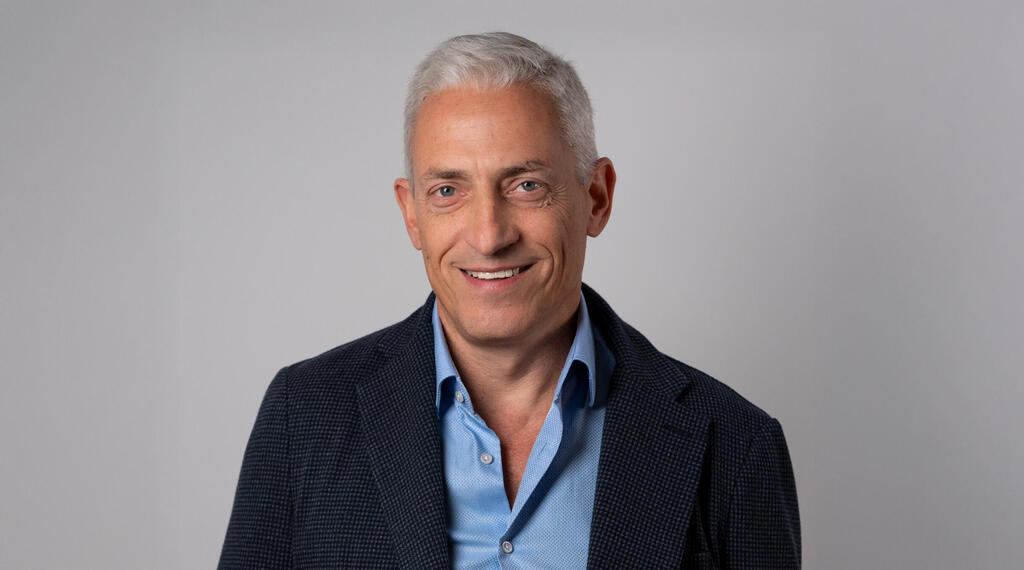
Eyal Podhorzer is the CEO and Co-Founder of Econergy.



