










Israel weighs deployment of Iron Beam in Eilat after Houthi drone strike
Mayor says laser defense system could arrive within two months, marking first operational use of world’s only field-ready laser interceptor.
Eli Lankri, the mayor of Eilat, said Thursday that Israel’s military is considering deploying the country’s new laser-based air defense system in the southern resort city, following a drone strike launched from Yemen the previous day.
“From what I’m receiving from the most senior commanders, the approach is to carefully examine why this happened, and to strengthen the defense, to introduce the new means that the army has, as I understand they are already in the implementation stages,” Lankri told radio station 103FM. “To the best of my knowledge, Magen Or (Iron Beam) is on the way, within the next month or two.”
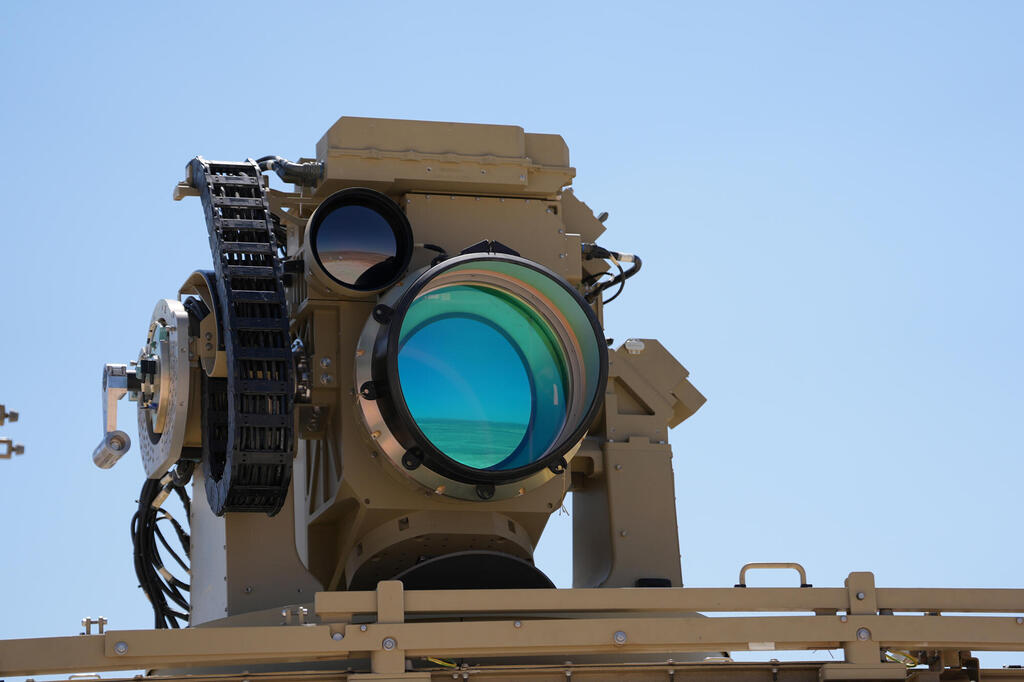
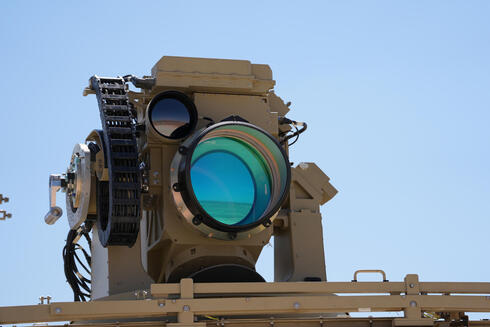
The system, officially named Or Eitan, has been under accelerated development and is expected to become operational in the Israel Defense Forces by the end of the year. The strike on Eilat appears to have sharpened the debate over where and how quickly the new technology should be rolled out.
Iron Beam represents the first laser system anywhere in the world to be fielded as part of a national, multi-layered air defense. In a series of final tests conducted at a simulated site in the Negev, the weapon successfully intercepted rockets, mortar shells, and UAVs. Officials say it has also proven itself in live combat, bringing down dozens of Hezbollah projectiles fired at Israel from southern Lebanon.
Named in memory of IDF Captain Eitan Oster, who was killed in Lebanon last year, Or Eitan was developed by Rafael Advanced Defense Systems with support from Elbit Systems, Shafir Systems, and SCD. The system will initially work in conjunction with Iron Dome, providing a lower-cost layer against short-range threats.
Unlike traditional interceptor missiles, which cost tens of thousands of dollars apiece, each Iron Beam shot consumes only a few shekels in electricity. Defense Ministry Director General Maj. Gen. (res.) Amir Baram has described the economics as central to the program: “Or Eitan brings us to an enabling economic model for interceptions, since we cannot rely on very expensive air defense.”
The technology is entirely produced in Israel, a feature officials highlight as crucial amid international restrictions on arms and components.
Developers are already working on mobile and naval versions of the system. The mobile platform is designed to shield maneuvering ground forces from drones and loitering munitions, while the naval version would defend ships and offshore infrastructure. Elbit is separately pursuing airborne laser systems intended to target ballistic and hypersonic missiles above cloud cover within the next five years.
While the system’s effectiveness can be diminished by heavy haze or cloud cover, engineers say it remains functional 90 percent of the time thanks to advances in optics and targeting.
The Houthi drone strike on Eilat, Israel’s southern gateway on the Red Sea, has underscored the vulnerability of the city, which lies within reach of attacks from Yemen. For the defense establishment, it is also a test of whether Israel’s most advanced defense technology can be integrated quickly into an already strained security framework.



