










VC Survey 2026
“Real value is moving away from the 'interface' and toward the 'engine' AI”
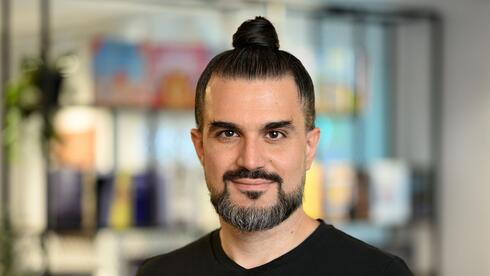
S Capital founding partner Aya Peterburg joins CTech as part of the VC Survey 2026: The Next Leap, to discuss why the hiring playbook is officially dead, the inevitability of Physical AI, and why integration remains Israel's greatest strength.
Aya Peterburg
(Video: Orel Cohen)


“Strong growth without discipline is no longer rewarded, just as efficiency without scale is insufficient,” says Aya Peterburg, founder and managing partner of S Capital. In 2026, Peterburg asserts that valuation “will be driven less by isolated numbers and more by the coherence of the overall financial story.”
Following the turbulence of recent years and the stabilization of 2025, the Israeli tech ecosystem is entering a new era: The Next Leap. Peterburg joined CTech to share insights for its VC Survey 2026, which invites prominent investors to discuss the topics, trends, and “leaps” expected in the year ahead.
While Peterburg contends that full replacement of highly regulated, human-centric professions by the AI revolution is not going to happen overnight, “it is inevitable over time.” Notwithstanding, she argues that “while the herd is chasing general-purpose generative AI and 'wrapper' applications… the real value is moving away from the 'interface' and toward the 'engine' AI.”

You can read the entire interview below:
Fund ID
Name of Fund: S Capital
Total Assets Under Management (AUM): $500M
Partners/Managers: Aya Peterburg and Haim Sadger
Notable Portfolio Companies (Active): Pecan.ai, SALT Security, Capitolis, Lumana, Sola Security
Notable Exits: Run:ai, which was acquired by NVIDIA; Oribi, which was acquired by LinkedIn; Lemonade, which went public
The Valuation Leap: Moving past the market correction, what is the single most critical metric (e.g. EBITDA, NRR) that will drive premium valuations in 2026?
There won’t be a single, magic metric that determines premium valuations in 2026. Investors are increasingly looking at a balanced equation that combines ARR or revenue growth, gross margins, and burn rate and, more importantly, how these metrics interact with one another. Strong growth without discipline is no longer rewarded, just as efficiency without scale is insufficient. Companies that can demonstrate durable revenue growth, healthy unit economics, and a clear path to capital efficiency will stand out. Valuation will be driven less by isolated numbers and more by the coherence of the overall financial story.
The Agentic Leap: As we transition from 'Copilots' to autonomous 'Agents,' which specific vertical will be the first to fully trust AI with independent decision-making?
There is a meaningful distinction between AI that assists professionals like doctors or lawyers and AI that makes autonomous decisions in the physical world. Full replacement of highly regulated, human-centric professions will not happen overnight, but it is inevitable over time. In the near term, we are already seeing agentic decision-making emerge in areas of physical AI, where systems operate in real-world environments and decisions must be made continuously and at scale. In sectors where regulation is heavy and liability is high, adoption will naturally take longer. But in physical systems, from robotics to industrial automation, autonomous decision-making is already becoming a reality. At the heart of physical AI lies the ability to sense, decide, and act in real time – without it, true autonomy is impossible.
The Sovereign Leap: Have the geopolitical lessons of recent years pushed Israeli startups to build independent, 'sovereign' tech stacks to reduce reliance on global platforms?
No, and for good reason. If you look at foundational models and cloud infrastructure, the entire global tech ecosystem remains deeply dependent on giants like OpenAI, Google, AWS, and Microsoft. Building a completely independent, 'sovereign' stack is not only practically impossible for a startup but also runs contrary to the DNA of the Israeli entrepreneur, who has always aimed for global scale. Our geopolitical situation is a constant, not a new variable. While we are mindful of independence, we must recognize that our growth is intrinsically linked to these global platforms. Furthermore, the Israeli tech industry thrives on being an integral part of the global market, both in terms of the infrastructure we use to build and the foreign players who eventually acquire our companies. Integration, not isolation, remains our greatest strength.
Related articles:
The Efficiency Leap: In the era of AI-driven hyper-productivity, is the traditional correlation between 'Headcount Growth' and 'Company Success' permanently broken?
Yes, absolutely. The old playbook where hiring was used as a proxy for success is officially dead. We are entering an era where AI agents can act as force multipliers, and we are seeing this change the game dramatically, especially in software development and the hiring process itself. The nature of employment is shifting. We are already seeing 'lean' companies reaching milestones that previously required hundreds of employees. Today, a manager isn't just managing people; they are managing a hybrid workforce of humans and autonomous agents. This allows companies to scale their output and revenue exponentially without a linear increase in headcount. In 2026, a high headcount might actually be viewed as a sign of inefficiency rather than a sign of prestige.
The Contrarian Leap: What is one sector or trend currently ignored by the herd that you believe represents the most undervalued opportunity for the coming year?
Three years ago, when LLMs were first emerging, the answer for us was clearly AI. We invested early and believed strongly in its potential long before it became a 'hype' cycle. Today, while the herd is chasing general-purpose generative AI and 'wrapper' applications, I believe the most undervalued opportunity lies in Deep Domain AI and its intersection with the physical world.
The real value is moving away from the 'interface' and toward the 'engine' AI that solves complex, industry-specific problems in sectors that have been slow to digitize, such as energy, heavy industry, and supply chain infrastructure. While everyone is focused on the next chatbot, the true contrarian play is investing in the invisible AI that will autonomously run the world's most critical systems. It’s less about 'talking' to a computer and more about computers 'doing' the work.
Finally, what are 2-3 startups that, in your opinion, are likely to make a leap forward in 2026?
1. Wing Security (S Capital portfolio company): AI is becoming operational at scale. As every team adopts a rapidly growing number of AI tools and autonomous agents, security must move at the speed of innovation. Wing is built for this moment, continuously discovering AI tools and agents across the organization, and controlling their access and behavior so progress doesn’t become a risk.
2. Legato: Legato is one of the few companies I’ve seen that truly understands where the SaaS AI race is heading. The next wave of winners won’t just add AI building capabilities for developers, but will empower business users to create and adapt products themselves. By enabling a native vibe app-creation capability, Legato creates a win-win: platforms keep their users building inside the platform, while users can customize the product without long and costly professional services.



