










Lasers, air defense and AI take center stage as Israel and U.S. enter post-aid era
New security talks signal a shift from direct funding to joint development of advanced military technologies.
Official talks between Israel and the United States on a new framework for American security assistance are set to begin next month, as the current agreement approaches its expiration in roughly two and a half years. These agreements typically span a decade.
Calcalist has learned that the Israeli negotiating team will be led by Defense Ministry Director General Amir Baram and will include Israel’s ambassador to Washington, Michael Leiter, alongside representatives from the Ministries of Defense and Finance, the IDF, and the National Security Council. On the American side, the team will be headed by Secretary of State Marco Rubio, with participation from his senior adviser Michael Needham and U.S. Ambassador to Israel Mike Huckabee. The timeline for launching the talks was set during Baram’s visit to Washington last month.
The negotiations will focus on defining the structure of U.S. security assistance to Israel for the decade spanning 2029 to 2038.
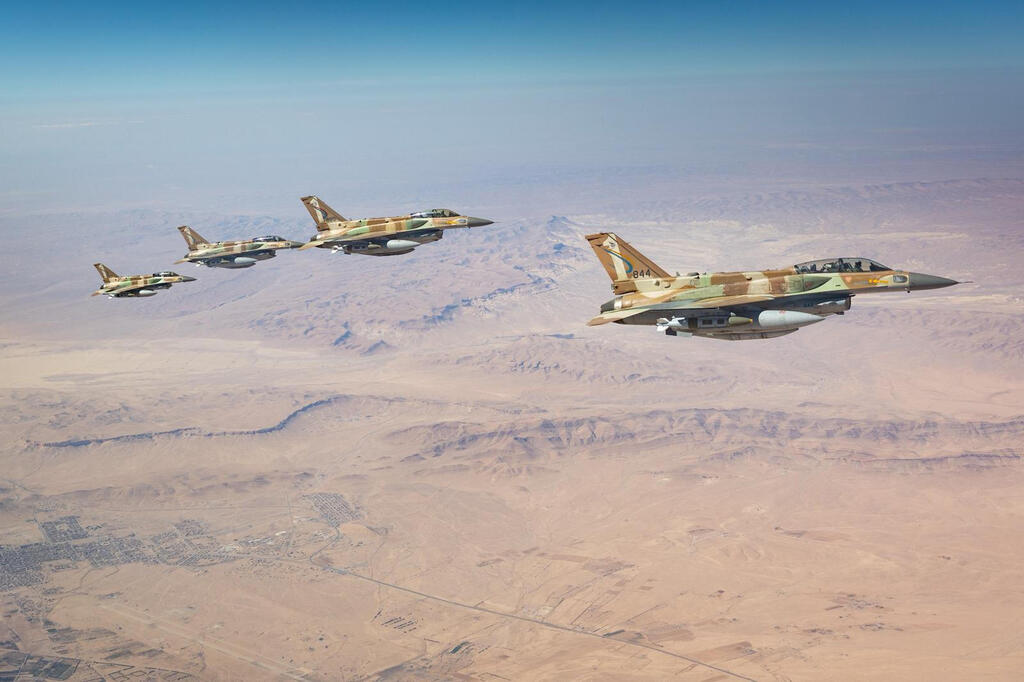
The current framework was signed in 2016, at the end of Barack Obama’s presidency, and took effect in 2019. It provides Israel with $38 billion over ten years, $3.3 billion annually for the procurement of major defense systems from U.S. manufacturers, including fighter jets, tanker aircraft, and helicopters, as well as an additional $500 million annually for the development and deployment of air defense systems.
The next agreement is expected to differ significantly. It is being shaped as a transitional framework, preparing Israel for a gradual phase-out of direct American financial assistance by 2038. Under the emerging model, funding for weapons procurement is expected to decline over time, while cooperation between the two countries will increasingly focus on joint development of advanced military technologies designed to preserve their strategic edge.
The scope, timelines, and substance of these joint projects have yet to be determined and will be a central focus of negotiations. According to security officials, potential areas of cooperation include directed-energy weapons such as high-power lasers, enhanced air defense systems to counter evolving threats including hypersonic missiles, and artificial intelligence.
“Operational needs change according to the security challenges posed by the various arenas, and we will need to maintain flexibility in the development of military capabilities in a variety of areas. It is clear to both us and the Americans that we cannot know from now on what exactly we will require in 12 years,” an Israeli security source told Calcalist.
U.S. security assistance currently accounts for approximately 0.5% of Israel’s GDP and around 15% of its annual defense budget. Beyond its strategic significance as a symbol of the close alliance between the two countries, the aid has long benefited the American defense industry, as the vast majority of funds must be spent on U.S.-based suppliers.
The new agreement is being negotiated against a shifting geopolitical backdrop. The war between Russia and Ukraine has driven unprecedented demand for U.S. defense manufacturing, leaving American arms producers with record order backlogs and reducing their reliance on Israeli procurement.
At the same time, political consensus in Washington regarding aid to Israel has weakened. Among Democrats, particularly the progressive wing, Israel’s actions in Gaza have drawn increasing criticism. Within Republican circles, some argue that continued large-scale support for Israel conflicts with the “America First” doctrine associated with President Donald Trump. This erosion of bipartisan support is reflected in shifting public opinion, raising concerns in Israel about the long-term reliability of U.S. taxpayer-funded assistance.
Security officials estimate that negotiations over the new framework will last approximately four months, although their pace could be influenced by regional developments, including potential escalations involving Iran or Hezbollah in Lebanon. One of the stated objectives of the talks is to establish a pathway under which direct U.S. financial aid to Israel would reach zero by 2038.
Officials in Israel’s defense establishment say that by the time the current agreement expires in 2028, Israel will still have several billion dollars in outstanding procurement commitments to the United States. These obligations are expected to be covered under the next agreement; otherwise, Israel would need to finance them independently.
They also maintain that Israel will be able to sustain its military buildup plans without American funding, though doing so would require a substantial increase in the defense budget.
Israel’s defense budget has already risen sharply, reaching approximately 144 billion shekels, with the defense establishment pushing for an increase to 177 billion shekels. Final figures remain uncertain and will depend on developments across multiple security fronts. A renewed conflict with Iran, escalation with Hezbollah in Lebanon, or a return to large-scale fighting in Gaza could add billions more to defense spending requirements.
The Ministry of Defense has defined the coming decade as a “decade of buildup,” emphasizing accelerated procurement of major platforms, including fighter jets, tanker aircraft, attack helicopters, naval vessels, satellites, and advanced air defense systems.
In response to the anticipated reduction in U.S. aid, the government, led by Prime Minister Benjamin Netanyahu, has proposed adding approximately 35 billion shekels annually to the defense budget base, as part of a broader plan to increase spending by around 350 billion shekels over the next decade.
Even so, given the pace and scale of recent security developments, there are growing doubts about whether this increase will be sufficient. The expanding defense burden is expected to come at the expense of civilian spending, including health care, welfare, and education, highlighting the broader economic and social implications of Israel’s transition toward greater defense self-reliance.



