










Shipping giant MSC submits bid for ZIM, challenging Hapag-Lloyd in takeover race
The Swiss carrier joins Hapag-Lloyd in the race, prompting resistance from ZIM employees and renewed regulatory scrutiny.
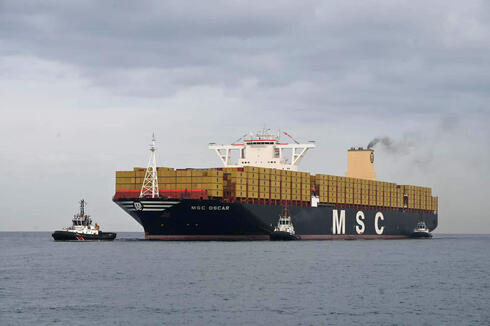
Who will buy ZIM? Calcalist has learned that the Swiss shipping company MSC, fully owned by the Aponte family and considered the world’s second-largest shipping company, has submitted a bid to ZIM’s board of directors to acquire the Israeli shipping company. MSC has now emerged as the leading contender, alongside Germany’s Hapag-Lloyd, which has also already submitted a bid.
Hapag-Lloyd, considered the fifth-largest shipping company globally by container capacity, is traded on the Frankfurt Stock Exchange at a market value of approximately €21 billion. Among its shareholders are investment arms linked to Qatar, which holds 12.3% of the shares, and Saudi Arabia, with a 10.2% stake. This ownership structure may be connected to ZIM’s 5.5% share-price decline on the New York Stock Exchange last Friday, following several consecutive days of gains.
Capital-market sources estimate that the decline reflects rising investor concerns that the Israeli government, particularly the Ministry of Transportation, may intervene to block the sale of ZIM, which currently has no controlling shareholder, to foreign entities. These concerns intensified after ZIM Workers’ Union chairman Oren Caspi met on Thursday with Transportation Minister Miri Regev and conveyed employees’ opposition to a sale to foreign companies.
According to the union, such a transaction could pose a national-security risk and harm Israel’s supply chain by granting Saudi or Qatari interests indirect influence over what it describes as the country’s maritime lifeline. The union further argues that ZIM is the only shipping company that maintained regular service to Israel during periods of war and that it directly employs around 1,000 workers in Israel.
The workers note that roughly 98% of Israel’s trade, by weight, depends on maritime transport. They argue that “ZIM was the only shipping company that called at Israeli ports during the Swords of Iron war, delivering food, medicine, ammunition, and critical military equipment,” and warn that “once control passes to hostile foreign entities, the country will completely lose this capability.”
Shipping-industry sources dispute this claim, noting that Hapag-Lloyd also continued to sail to Israel during the war and transported goods to Israeli ports. Industry estimates suggest that, beyond security considerations, ZIM employees are also concerned about potential layoffs should a foreign buyer acquire the company and consider relocating its headquarters abroad. As a result, the workers are demanding that the state exercise the powers granted to it through its golden share and prevent the sale of ZIM to foreign entities.
Transportation Minister Regev expressed sympathy with the union’s concerns and, according to sources familiar with the matter, even pledged to raise the issue for discussion at a cabinet meeting. However, the sale of ZIM was not discussed at the cabinet meeting held on Thursday evening. Regev attended only part of the meeting due to other personal commitments.
ZIM is currently conducting a structured sale process led by the investment bank Evercore. The process was launched several months ago after ZIM CEO Eli Glickman, together with Rami Ungar, Kia’s importer to Israel and owner of Ray Shipping, submitted a bid to acquire the company. That bid was rejected after the board determined it was lower than ZIM’s cash holdings.
Following the rejection, the board decided to initiate an orderly process to solicit acquisition offers. At this stage, the leading bids are from MSC and Hapag-Lloyd. Industry sources believe that Glickman and Ungar have not yet said their final word and may return with an improved offer. Should the two ultimately acquire the company, it is estimated that ZIM employees would not be adversely affected.
Alongside the sale process, ZIM’s board is preparing for a shareholder vote scheduled for next week on the election of a new board of directors. A group of Israeli shareholders, including More Gemel, Reading Capital, and Sparta, owned by Alon Gonen, founder of fintech company Plus500, has nominated three new board candidates, despite their lack of experience in the shipping sector.
The group holds approximately 8% of ZIM’s shares and is seeking to persuade additional Israeli institutional investors to support its slate, with the goal of replacing the current board chaired by Yair Seroussi, the former chairman of Bank Hapoalim.



