











“Prior to October 7, closing Bazan was based on a fixed conception. Since then, it has become a populist obsession”
Rafael Maman said at the Calcalist and Discount Energy Conference that Israel must maintain independent refining capacity and cannot rely solely on distillate imports. He said the government's 2022 decision to close Bazan remains in effect, but the prerequisites for its implementation have not yet been completed. Regarding the market, he said damage to Russian refineries and China's halt in exports have contributed to a global shortage of distillates.
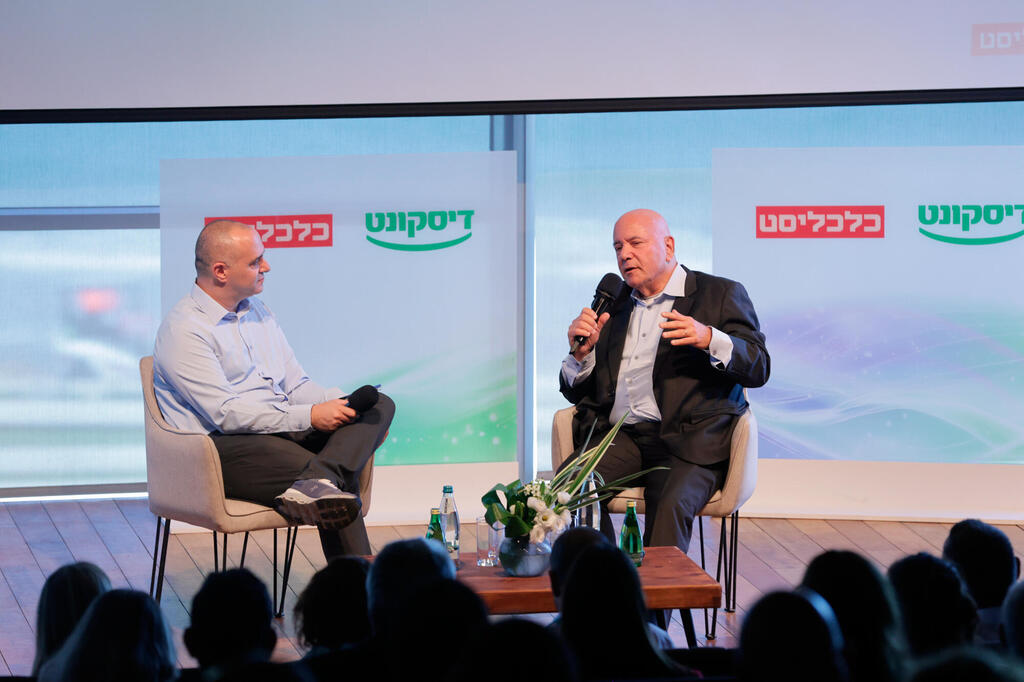
"The concept of relying exclusively on imports is utopian at best. The last thing I would want as an Israeli citizen in an emergency is to be dependent on Erdogan's mood in Turkey to supply fuel to the country," said Rafael Maman, CEO of Bazan, in a conversation with Roee Bergman, deputy editor of Calcalist, at the Calcalist and Discount energy conference.
How are geopolitical tensions and the surge in oil prices currently affecting the distillate and fuel market?
"The real crisis today is not a shortage of crude oil, but a shortage of distillates. There is currently a massive release of strategic reserves, so there is no shortage of crude oil in the world, but the price of distillates is rising for other reasons. The most significant geopolitical event in this context is taking place in Ukraine and Russia. The Ukrainians are successfully attacking Russian refineries and have reduced Russia's production capacity, which is a major distillate exporter, by almost 50%. At the same time, China has halted its exports. These two events have taken about 7 million barrels off the market and put it under pressure.
"In addition, global refining capacity is gradually decreasing relative to demand. As a result, energy companies with refining exposure, such as Exxon, Chevron and even Bazan, are now recording their highest valuations."
Where does the government's plan to close and relocate refineries stand now?
"On paper, the government's 2022 decision to close Bazan is still in effect. However, the decision states that the closure will take place five years after a set of infrastructure prerequisites are met, and this work has not yet begun. The October 7 deadline for closing Bazan was based on a fixed conception. Since then, it has become a populist obsession. Over the past three years, the understanding has permeated the professional echelons and decision-makers that Israel must have independent refining capabilities."
Is this about the closure taking place in 2029?
"No, and therefore framing the timetable is irrelevant at the moment. As stated, the five-year countdown will only begin after those preliminary infrastructure works are completed."
As an expert in the field, is it even possible for Israel to rely solely on distillate imports?
"With full responsibility: the answer is no. The concept of relying exclusively on imports is utopian at best. While an island nation like New Zealand could afford to close its refinery and switch to imports, our security and geopolitical reality is completely different. The last thing I would want as an Israeli citizen in an emergency is to be dependent on Erdogan's mood in Turkey to supply fuel to the country."
Did you really demand $5 billion in compensation in the letter to the government in the event of a closure?
"That was not the statement. In the letter, we clarified the economic reality: Bazan's previous valuation, before the energy crisis, was $3.2 billion to $3.7 billion. We explained that, as with any energy company, since profits have increased significantly in the past year, the company's value has jumped accordingly. We simply pointed out that this is an excellent time to own refining assets, and this is reflected in Bazan's value."
What is the state of the refineries today after the direct hits they have recently experienced?
"The refinery is currently operating at full capacity and in excellent condition. We did experience two incidents, but thanks to the hard work of our employees, who worked 24/7 in endless shifts, we were able to return to full operation in just 11 days in the first case. I am very proud of our teams for this achievement."
Can the country rely on one refinery in a threatened area, or is there a need to develop more?
"Ideally, having several refineries in Israel would provide valuable redundancy and could even make us a significant distillate exporter. However, realistically, I do not think that new refineries will be built here. Regarding the location of the refinery in the Haifa metropolis, we have proven again that the recent incidents did not pose a danger to the city or the environment. The events were completely contained within the refinery area, and we know how to overcome them quickly."



