










Ex-Mossad official calls for Netanyahu family to reveal foreign bank accounts and crypto assets
Dr. Udi Levy, former head of the Mossad’s Zalzal unit, responded to the Prime Minister’s half-million-shekel defamation lawsuit, calling it a “silencing suit” aimed at deterring him from pursuing the Qatargate affair. Levy demanded that Netanyahu disclose his and his family’s bank statements and digital wallets, and called for an investigation into the matter, claiming to possess documents and testimonies concerning funds allegedly transferred to the family.
Former senior defense official Dr. Udi Levy claims in his defense that the half-million-shekel libel lawsuit filed against him by Prime Minister Benjamin Netanyahu is a “silencing lawsuit.” He says it is part of Netanyahu’s attempt to deter his critics from addressing a central issue at the heart of Israeli public discourse, the connection between Netanyahu and Qatar, and the alleged claims that Netanyahu received funds from it.
According to Levy, he received, especially after the Qatargate affair broke, “a great deal of disturbing information (to put it mildly)... regarding individuals who were, on the face of it, witnesses to the receipt of funds that reached the Netanyahu family in Israel and abroad, and to the use of large amounts of cash through accounts in foreign banks opened for family members, as well as through digital wallets, to purchase assets around the world.”
1 View gallery
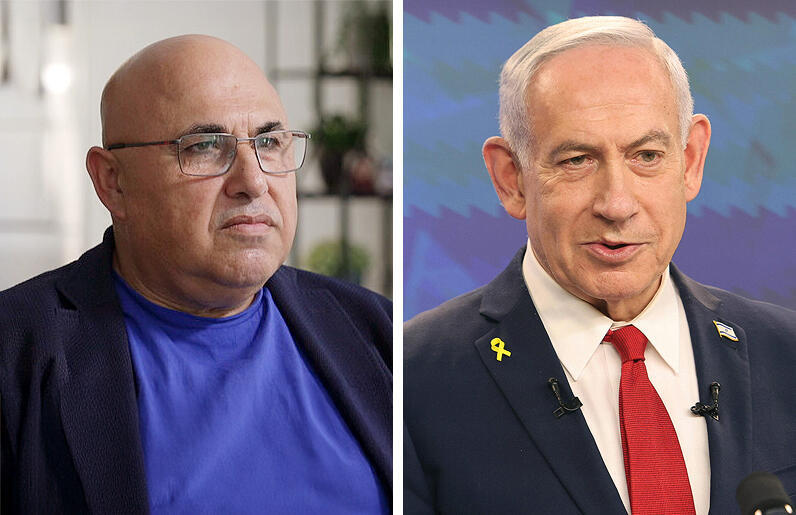
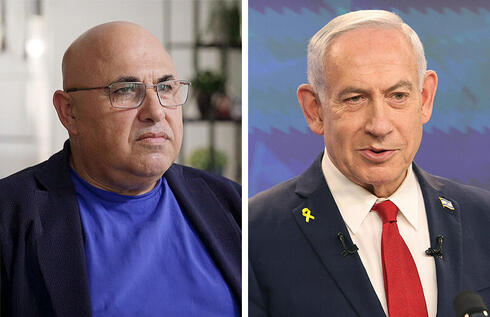
Dr. Udi Levy (left) and Benjamin Netanyahu.
(Photos: Marc Israel Sellem/The Jerusalem Post and Channel 12)
Levy claims that Netanyahu is making “serial” improper use of silencing lawsuits, allegedly funded by the Likud party, against critics who raise questions about his ties to Qatar and the Qatargate affair. Levy writes that he insists on fully investigating the lawsuit while demanding that Netanyahu present essential financial documents to the court.
Among other things, he demands from Netanyahu “details regarding election financing received by him and the Likud and Likud-Beitenu parties in the elections held in 2012 and 2018; verified bank statements of his personal accounts and those of his family members, including digital wallets and cryptocurrency accounts in Israel and abroad; and documents related to the purchase of assets, rights, and real estate by the plaintiff and his family members, in Israel and abroad, including legal documents relating to these acquisitions and their methods of financing.”
Levy served in Israel’s security establishment for about 30 years in various roles, including in Military Intelligence, the National Security Council, and the Mossad. One of his positions was as head of the Mossad’s “Zalzal” unit, which reported directly to the prime minister and focused on counter-terrorism through financial warfare against the funding channels of terrorist organizations. In 2017, Netanyahu decided to close the “Zalzal” unit. Since then, Levy has served as a research fellow at the Jerusalem Institute and advises governments on counter-terrorism.
“No one has ever investigated the family’s sources of money”
Netanyahu’s lawsuit against Levy follows an interview he gave to Liat Regev on Channel 2 in April of this year, in which Levy made harsh allegations against Netanyahu and claimed, among other things, that the sources of funding for Netanyahu and his family should be thoroughly investigated. He linked this to the Qatargate investigation being conducted by the Shin Bet and the police into alleged funds transferred by Qatar to Netanyahu’s advisers and spokespeople, enabling it to gain influence in the Israeli leadership, including during wartime.
Among other statements, Levy said that there are “very senior people who were involved in this issue, of Qatari bribery, and no one approached them. There is a lot of information about the economic empire built by the Netanyahu family, but no one has ever investigated the family’s sources of money.”
Immediately after the interview, which drew widespread attention, Netanyahu, through attorney Uriel Nizri, filed a defamation lawsuit against Levy, claiming that he had published “complete fake news of an unacceptable level,” and calling the publication “sick and crazy by any standard.”
According to Netanyahu, “Over the past few weeks and months, political elements have begun a despicable and dishonest campaign, deliberately and with the intention of harming a serving prime minister during a war, spreading extremely serious nonsense claiming that the Israeli Prime Minister received money from the State of Qatar illegally, as a factual statement, not merely as an insult, and that he received bribes and private funds from Qatar. These publications attempt to link the Prime Minister to extremely serious criminal acts connected to Qatar.”
He claimed that Levy “went too far and used his security background to give an illusion of credibility, presenting a factual misrepresentation as if the Prime Minister had received funds from Qatar.”
In his defense brief, filed through attorneys Zvi Bar-Nathan, Merav Baruch, and Dekel Zino of Goldfarb Gross Seligman, Levy claims he did not publish defamation as defined by law, but rather expressed “criticism of the manner in which the investigation into the Qatargate affair was being conducted,” arguing that the investigation “is being conducted inadequately while granting ‘concessions’ to the Prime Minister.”
He contends that his remarks in the interview reflected his opinion and position regarding additional matters that require investigation in the case, “to clarify or remove, once and for all, the suspicions regarding the Prime Minister’s conduct,” adding, “money leaves fingerprints... and this turns our Prime Minister into a blackmail target, and this is a terrible thing.”
According to Levy, his comments concerned the Prime Minister as a public figure, particularly in a matter of unprecedented public importance. He argues that the libel suit is therefore a “silencing claim,” filed for an unreasonable and baseless amount, intended to create a “chilling effect” and discourage others from participating in the public discourse or voicing criticism: “Unfortunately, Prime Minister Netanyahu is blatantly abusing his power and legal proceedings to deter his critics.”
Levy also claims protection under the legal principles of truth in publication and public interest. He maintains that he expressed his opinion on the need for “an intensive, thorough, and meaningful investigation into the Qatargate affair, which concerned funds allegedly transferred from Qatar (and possibly other sources) to the Prime Minister’s close circle, including, with all due respect, to the Prime Minister and his family.”
He adds that his statements “were based on numerous documents and testimonies” that came to his attention and that, if necessary, “will be presented in the proceedings.”
Levy writes that “these documents and testimonies, and others, compelled Dr. Levy to express himself as he did in the interview,” noting that his remarks were partly based on the Raven documents, a collection of materials produced by former U.S. National Security Agency agents and leaked by Reuters in 2019. These documents, Levy claims, included records of money transfers from Qatar to senior figures in various countries, including Netanyahu.
Based on the Raven documents, whose authenticity has been disputed, Levy said he called for an investigation into their reliability and expressed his opinion that a comprehensive, substantive inquiry was needed, without the “concessions” he believes are currently made in Netanyahu’s favor.
However, Levy stresses that his statements were not based solely on the Raven documents, but also on “additional information” he received, including testimony “from individuals who were, on the face of it, witnesses to the receipt of funds that reached the Netanyahu family in Israel and abroad, and to the use of large amounts of cash through accounts in foreign banks opened for family members, as well as through digital wallets, to purchase properties around the world.”
In this context, Levy refers to Calcalist’s report on the property purchase by Avner Netanyahu, the Prime Minister’s son, near London for half a million euros in cash, registered under the name “Avi Segal”, and on the purchase of property in New Haven by Netanyahu’s son Yair.
Levy concludes that there is a strong public interest in clarifying these matters while the Qatargate investigation continues, and that he has a good-faith defense for his statements, contrary to Netanyahu’s claim in the defamation suit.



