











“We proved there are no sacred cows in technology”: Island founder says the company can be worth tens of billions
Island co-founder Dan Amiga says the cybersecurity company has reached $200 million in revenue and is growing 100% annually, with eight of the world’s 10 largest banks using its enterprise browser.
“We have proven that there are no more sacred cows in technology. The largest organizations in the world buy Island before Google or Microsoft,” says Dan Amiga, co-founder and CTO of cybersecurity unicorn Island, which is valued at $5 billion, in an exclusive interview with Calcalist.
“Everyone thought that no one would succeed in developing a new browser in a world dominated by Google’s Chrome and Microsoft’s Edge, and we managed to put our secure enterprise browser on the computers of the world’s leading companies. Something has come out of Israel that competes with Google and Microsoft.”
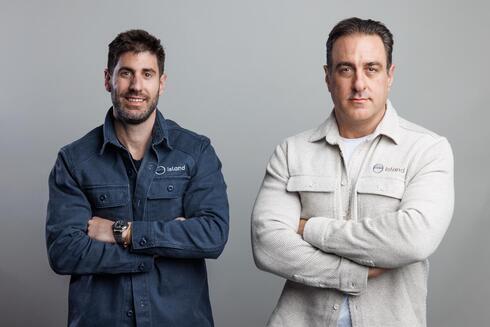
At 43, Amiga is both one of Israel’s younger serial entrepreneurs and one of its more experienced ones. He founded Island, which develops a secure enterprise browser, with Michael Fey, the former president of Symantec, in 2020. According to Amiga, the company now has $200 million in revenue and is growing at an annual rate of 100%. It employs about 250 people in Israel and approximately 650 in the United States. Most of its development activity is carried out from its offices in Tel Aviv and Glilot, while the rest of the company’s operations are based mainly in the U.S. Fey, 51, is the CEO, while Amiga serves as CTO.
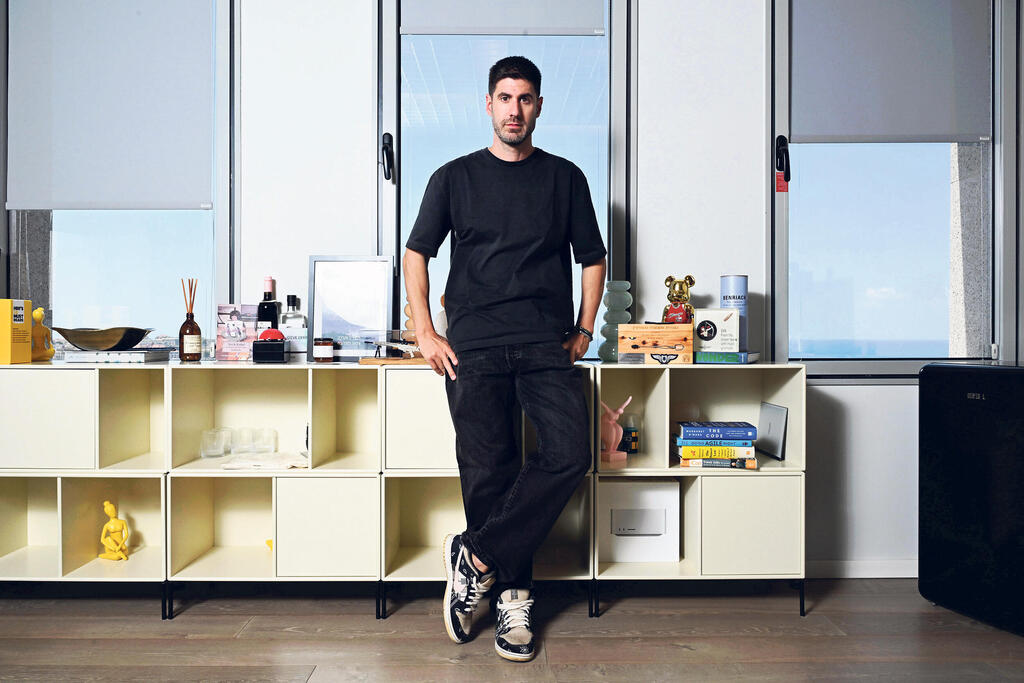
Island is the second cybersecurity company Amiga has founded. His first, Fireglass, developed a secure browsing solution for organizations and was sold to Symantec, while Fey was still its president, for approximately $300 million after raising just $20 million. Its investors included NVP, Singtel’s investment fund, Lightspeed, Mickey Boodaei and Rakesh Loonkar.
“Some people who exit at a young age enter a spiral,” Amiga says. “It allowed me to build a large company for the long term, with the patience not to sell.”
Island’s enterprise browser is designed for organizations, allowing employees, suppliers and external workers to access corporate systems securely and under controlled conditions from any device.
“We are critical infrastructure, essentially the foundation layer on which all organizational work is based. Unlike companies that built only an endpoint product or only a network product that runs on millions of users, we built both.”
You set out to compete with Google and Microsoft. Isn’t that a bit presumptuous?
“We are a special example of the fact that there are no sacred cows in technology. Since our founding, people have asked how Island would be able to compete with Chrome and Edge, the products of the world’s largest companies. As entrepreneurs, we were told, ‘Stay away, they won’t replace this, there’s no chance against giants.’ And here it is: eight of the 10 largest banks in the world are working on our browser. I came with expertise from the previous company, a strong team and a product that provides value, and we proved that it’s possible. I actually like being told, ‘Stay away, it’s very, very difficult.’”
What does that mean?
“We created a category of secure enterprise browsers, and today we are the leading independent player in it, with millions of browsers we have sold. Unlike cyber companies that produce products for cyber people, our product is intended directly for employees, and therefore it is the most significant in the organization. We enable them to work quickly and securely, which makes other security tools redundant.
“There are competitors, but many of them have already been acquired for hundreds of millions of dollars. We are building a company that could be worth tens of billions of dollars. I think we will exceed a value of $10 billion in the next three years.”
Where does your confidence come from?
“We are building additional products that address markets that customers around the world need, and this is what will move us to a double-digit valuation. It is still possible to build very large and significant companies in Israel, and much of this is possible thanks to AI.”
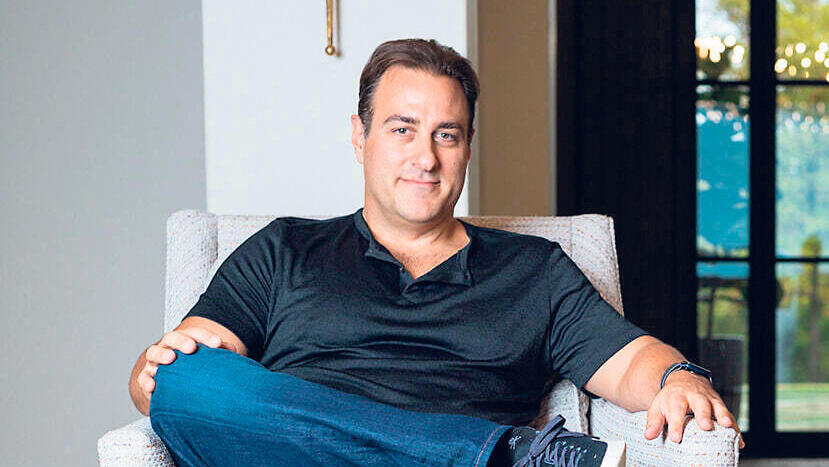
Fey acquired your company when he was president of Symantec, and today he is your co-founder at Island. A connection that became fateful.
“We became good friends who think alike, even though he’s from Dallas and I’m from Herzliya. Mike is very strong in sales and marketing, and in managing Americans, which is completely different from managing Israelis. We share the same vision. We both work very closely on hiring the best people. Mike is the CEO. There can only be one number one for the company.”
You’re the entrepreneur, you came up with the idea, and in the end you’re not the CEO of the company. Does your ego allow you to live with that?
“I love building a product. No arrogance or ego, it’s an honor for me to have someone like Mike as my partner. I had to work hard to woo Mike to work with me. He is a visionary and a great leader.
“After we sold Fireglass to Symantec, I brought Mike onto the boards of all the companies I invested in. He said, ‘Dan has been tempting me to work with him for three years.’
“In 2020, he saw my presentation for founding Island and said, ‘Holy shit,’ but he didn’t want to join. I brought the entire Symantec management team to Island, the sales manager, the customer success manager, the technical support people. They had all held those roles at Symantec.
“It turned out that a big company had bought an Israeli startup, and then the entrepreneur came and recruited all the executives from there. After three weeks, he said, ‘All my friends want to come work for you.’ His daughter told him, ‘Dad, this is your chance to start your own company.’ At Symantec, he was ‘just’ president. In the end, he was convinced.”
“I’m not looking at an exit”
Talon, your competitor, was sold three years ago to Palo Alto Networks for $625 million. Is that an attractive outcome for you?
“During the time we were competing with Talon [which was owned by entrepreneur Ofer Ben-Noon and was sold to Palo Alto for about $625 million, including about $115 million in shares] I asked why we were even being presented as equal competitors. Island already had sales of about $60 million, while the competitor had about $800,000. This illustrated how quickly you can win a category when you have a good product.”
Isn’t the valuation in the latest round a bit of a shot in the foot? Doesn’t that make you too expensive to sell?
“The good exits, like those of Wiz and CyberArk, were at high valuations. But I’m not looking at an exit. We’ll raise more money in the future to build more products. When do you sell a company? When you think you won’t be able to build it to the next level. Selling is a kind of concession.
“Wiz also said no to offers when they first approached it. The Wiz effect created a kind of precedent in the market, that this is the price that should be paid for a good company. It created a high bar for the valuation of products that make an impact.”
Investors don’t breathe down your neck to realize their investment, as they did with Talon?
“They don’t want to realize the investment now. When they invest in you at a valuation of billions, it shows that they think the company will be worth tens of billions. Funds like Sequoia Capital, Cyberstarts and Insight Partners know that the longer they hold the company, the better the results. They didn’t sell shares, they just invested more in the company. Why is Island getting such valuations? Because they look at the rate of revenue growth.”
Island was founded in 2020, during the coronavirus pandemic, and raised capital at an unusually rapid pace in its first few years. Before coming out of stealth, the company raised about $100 million from investors including Cyberstarts, Sequoia, Insight Partners and Stripes.
In early 2022, Island completed a Series A round of approximately $100 million. It subsequently raised another $115 million in a Series B at a valuation of $1.3 billion, becoming one of the youngest cybersecurity companies to reach unicorn status.
Later in 2022, Island expanded its cash reserves with a strategic investment from Cisco and subsequently extended a round by about $60 million. In October 2023, it raised another $100 million in a Series C led by Prysm Capital at a valuation of $1.5 billion.
In April 2024, Island raised $175 million in a Series D led by Coatue and Sequoia. The round valued the company at $3 billion, roughly doubling its valuation in less than a year.
In March 2025, the company raised another $250 million in a Series E, again led by Coatue and with participation from existing investors, taking its valuation to $4.8 billion. Island said it had raised approximately $730 million from external investors.
An increasingly significant part of Island’s financing strategy since 2025 has also involved secondary share sales, allowing employees and existing shareholders to sell shares without waiting for an acquisition or IPO. Shares worth an estimated $250 million to $300 million were sold at a company valuation of approximately $5 billion, with buyers including existing investors and several new investors.
For employees, the transactions have provided a way to realize part of the value created by the company without having to wait years for an exit or public offering.
“Dozens of our employees have made hundreds of thousands of dollars this way, and we will do it again,” Amiga says of the secondary sales. “Selling 10% of the shares you have at a company value of $5 billion is much more economical than an exit of $500 million, because an employee received the same amount of money and still has 90% of their shares left, while the company continues to grow.”
Usually, the exit is sacred.
“We are building Island for the long term, and a retention tool for employees is to let them enjoy the fruits of success along the way. The secondary is more economical and interesting than an exit.
“When you start a startup, the chance of it succeeding is one in 50. In a growing company that supports secondary sales, you, as an employee, have a way to see money along the way.”
Is an IPO even on the agenda?
“This is an attractive direction that we are building ourselves toward. I don’t know if it will be in the next two or three years, or more. In the meantime, we are working to grow the company in terms of growth and sales.
“At the same time, there are other mechanisms today to give our employees access to liquidity and reward them for their hard work. If you remain a private company, you have to take care of the employees, and that’s what the secondary mechanism is for.
“I have allowed employees to participate in secondary sales twice, worth billions, and I intend to allow it in the future as well. It allows me to let them enjoy the fruits of their hard work. It depends on seniority, but close to 100 people have made hundreds of thousands of dollars this way.”
“I want 100% growth every year”
How do you see yourself in the coming years?
“I aim for continued aggressive growth of 100% every year, money in the bank. Ninety-five percent of my development is in Israel. We will increase it significantly, and I leverage AI to build more products.”
The AI revolution is affecting Island in opposite directions. On the one hand, it is creating new security threats that need to be blocked through the browser, which has become a key window through which employees interact with an organization. On the other, AI is giving Island new tools for developing products around its secure browser more quickly.
Can AI tools quickly create another Island, in the same way they threaten companies that build websites?
“I don’t think that tomorrow morning you can just get up and build a new Island that will copy our product using AI. There are technologies that have real barriers to entry, a browser is one of those things. Why do very few companies in the world manage to build leading language models? Because it’s very difficult. In the same way, that’s what Island does in cyber. It builds the most difficult things, which are in the infrastructure layer of the organization.”
Why?
“There are technologies that are easier to build with AI, which is why many companies, even those that have raised money, are at risk. That’s not our story. Few companies build complex products that sit in the infrastructure of the organization. It requires experience and technological depth that not many teams in the market have.”
We saw the shake-up that Base44, which builds management systems and applications based on verbal instructions, created.
“When you build an application in Base44 and there are small mistakes, for example, if it comes out green instead of red, it’s not the end of the world. But when you give cardiologists, stock traders or 10,000 hotel employees a browser, which is an infrastructure product, if it doesn’t work, doesn’t work fast or leaks information, that’s a problem.
“You can’t save lives, trade on the stock market in time or check people into hotels. A prompt simply won’t build you a browser or a web product. These are products that must have a very high level of reliability and be available all the time. These are products that are difficult to build.”
So who is in trouble?
“Young startups at the beginning are easy to compete with. The technological gap between companies has narrowed considerably. Anyone with access to AI can copy your product.
“When you’re a small company busy building and selling a product, you don’t have enough attention to build the next product and the one after that. In the meantime, technology becomes obsolete, competitors catch up and customers leave.
“AI allows us to move quickly in terms of adding more capabilities and products to the company’s arsenal. Today, every entrepreneur has to ask himself how he succeeds when the competitive advantage is no longer in building software.”
From teenage programmer to serial entrepreneur
Amiga currently lives in Ramat Hasharon. He grew up in Herzliya and began working as a programmer at the age of 15 at Ramdor Net, which developed a platform for managing construction projects. At the same age, he began taking undergraduate computer science courses at the Open University.
He later graduated from Reichman University and completed a law degree at Bar-Ilan University. He served in Unit 8200, working on the development of information security and cyber products and solutions. He subsequently worked at Microsoft, Israeli technology company Emblaze, which was traded on the London Stock Exchange, and French energy and technology company Schneider Electric.
In 2014, he founded Fireglass with Guy Guzner. The company developed Remote Browser Isolation, a technology that ran websites on cloud servers rather than directly on corporate computers, helping prevent malicious web content from reaching them.
In 2017, as mentioned, Fireglass was sold to Symantec for approximately $300 million after raising $20 million. Following the exit, Amiga founded the startup investment fund Picture Capital with Fey and Transmit Security founders Mickey Boodaei and Rakesh Loonkar.
What drives a child who doesn’t come from an academic background to start a computer science degree at 15?
“I played basketball at Bnei Herzliya. There’s a saying that they use at bar mitzvahs in America, at the age of 13, the child realizes that he won’t be a basketball player on a big team, but maybe he’ll buy the team.
“I have an investor who bought the Hapoel Tel Aviv basketball team, Gili Raanan, founder of Cyberstarts.
“So yes, my mother recognized that I was competitive and good at math, and pushed me to study at the Open University. She understood that I was strong in my studies and that I could be pushed forward. Today there is already a standard track for a degree from the age of 15.
“After that, I worked at a high-tech company, and today my boss’s son has been working for me ever since. My parents did not come from a technological or academic background. My father was self-employed, and my mother works as an administrator at a school, but they invested a lot in my education.
“From a young age I was drawn to computers, and my parents made sure there was a computer at home. I had a competitive instinct from a young age, and I was drawn to computers. I felt that this would be the next big thing.
“My mother was very perfectionist. If I got a mediocre grade, she was surprised that I didn’t get an excellent one. This attitude gave me another push.”
In an era where AI writes code, would you recommend that your children study computer science?
“Yes, because in mathematics, algorithms and computers you get tools to solve problems and invent things. That’s why I would recommend that they study computers. But even seemingly unrelated professions like psychology and art are a necessary dimension today, in design and in working with people.”
Are you happy or cursing yourself for embarking on a business journey for the second time?
“I started Island at 37, and I feel 28 again.”



