










Ex-Unit 8200 commander's Sentra raises $150 million to secure corporate data as AI agents proliferate
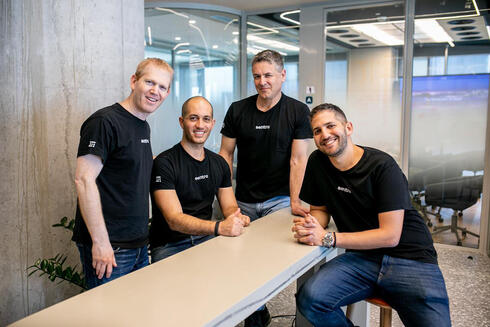
The investment, led by Capital One Ventures, brings Sentra’s total funding to more than $250 million. The company, co-founded by former Unit 8200 commander Asaf Kochan and former head of the unit’s Cyber Department Yoav Regev, together with Ron Reiter and Yair Cohen, says it has grown more than 300% over the past year.
Israeli cybersecurity company Sentra has raised $150 million in a strategic investment led by Capital One Ventures. The investment follows a year in which the company reports growing more than 300% year over year, bringing its total funding to more than $250 million.
Sentra employs 130 people, including 65 at its Tel Aviv offices. The company did not disclose the valuation at which the investment was made. However, CEO Yoav Regev said its valuation has tripled since its previous funding round. While Sentra has not yet reached a $1 billion valuation, estimates suggest it is close to doing so.
The investment also included existing investors Bessemer Venture Partners, Zeev Ventures, Standard Investments, Munich Re Ventures and Key1 Capital. A representative of Capital One will join Sentra's board of directors. The investment includes a small secondary component for employees, with most of the capital going directly into the company.
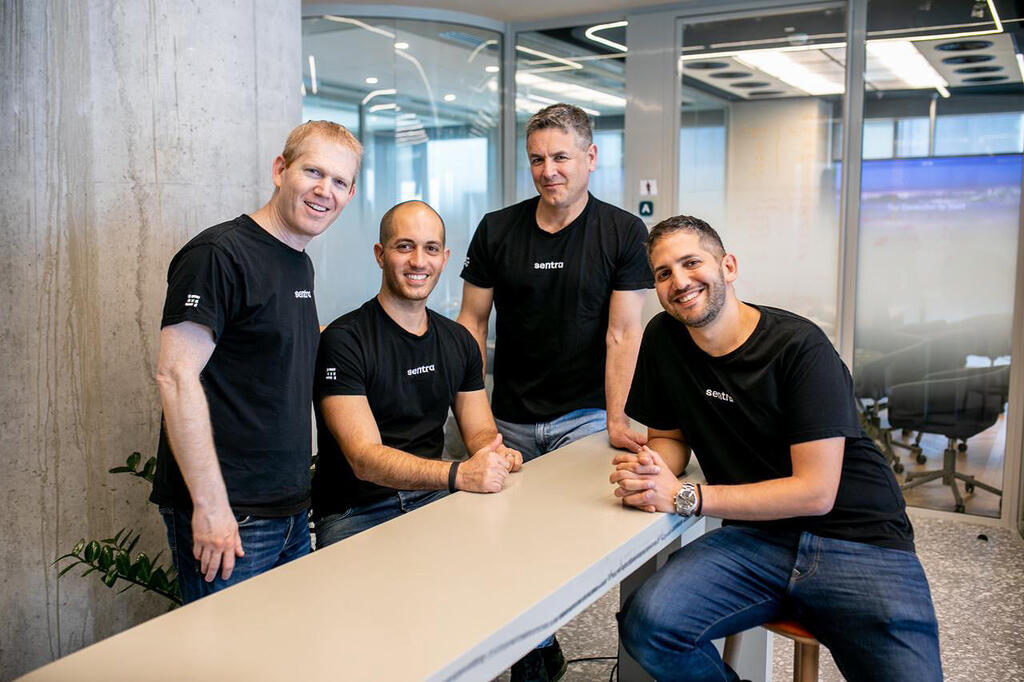
Sentra was founded in 2021 by Regev, who serves as CEO and previously commanded the Cyber Center in Unit 8200; Asaf Kochan, a former commander of Unit 8200 who is now the company's president; Ron Reiter, its CTO and former head of Oracle's development center in Tel Aviv; and Yair Cohen, its VP of Product, who previously held senior product positions at Microsoft and Datadog. The company is headquartered in New York and Tel Aviv.
In a conversation with Calcalist, Regev said growing awareness of the importance of cybersecurity, alongside the rapid adoption of AI, has increased demand for solutions that protect corporate data. He pointed to vulnerabilities exposed at companies across the market, as well as incidents such as the breach at Binance, as reminders of the risks organizations face.
"When we started five years ago, the topic of data was not yet a major focus. About two years ago, people began to understand that data had become the most important thing."
"AI is a data problem. There's no need to chase after the agents. Tens of thousands of agents within massive organizations are running the world. What matters is focusing on the data. Every organization needs our solution," he said.
Sentra says it has around 100 major enterprise customers across the United States and Europe and generates tens of millions of dollars in revenue. The company plans to double its workforce in Israel and the United States and is opening an office in London. It also plans to enter the U.S. federal market, with sales expected to begin in the second half of 2027.
Sentra wants to establish itself as a leader in the data security market, which Regev says remains open despite competition from companies such as Cyera and Varonis.
"We aim to be the leading company in data security. Even Cyera, one of our competitors, has yet to capture the market lead. That top spot is still up for grabs," he said. "We aim to reach $100 million in sales and establish, beyond any doubt, that we are the leaders in this space. Varonis also operates in our sector, but it has been acquired, and the competitive landscape is quite limited."
Regev said Sentra's growth strategy includes expanding its existing product offering and potentially acquiring another company to accelerate development in areas such as data loss prevention (DLP) and identity management.
"We believe in a growth trajectory that enables us to compete with any other company. Currently, we provide end-to-end data security. Thanks to AI, we have the capability to develop solutions in-house at a very rapid pace. We have several growth engines, including DLP, identity management and more. In the areas of agents and DLP, we are considering an acquisition to accelerate our development," he said.
The company argues that organizations increasingly need dedicated platforms for data security, rather than relying solely on broader cybersecurity systems. As AI agents become more widely deployed, they can create new risks by accessing sensitive information without the knowledge or oversight of security teams.
"The agent acts as both a friend and a foe. Agents are already proliferating within organizations, often without the CISO's knowledge. The CISO is left scrambling to catch up and looking for a management layer to oversee these agents," Regev said.
Traditional cybersecurity systems were designed primarily around human users. Sentra argues that the rapid adoption of AI, the growing volume of corporate data and the spread of autonomous agents are changing the requirements for protecting organizations.
First, companies are under pressure to adopt AI tools such as Copilot, intelligent assistants and cloud services. Security teams must balance the demand to deploy these technologies quickly with the need to maintain control over data and access permissions.
Second, sensitive information is increasingly distributed across cloud environments, software-as-a-service platforms, data warehouses and on-premises systems. This fragmentation makes it harder for traditional monitoring tools to identify where sensitive data is stored and who or what can access it. Without continuous oversight, organizations can end up granting excessive permissions and exposing information to unnecessary risk.
The spread of autonomous AI agents adds another layer of complexity. Each agent effectively becomes a new identity with the ability to access corporate data, often continuously and at machine speed. Some agents inherit permissions that were originally granted to human users or other systems, potentially giving them access to sensitive information that has not been properly classified or governed. Sentra says that while the number of agents deployed by large organizations is growing rapidly, only a small minority have the visibility and controls needed to manage what those agents can access.
Rather than trying to inspect every request made by an agent in real time, Sentra protects data at rest, where it is stored. Its platform is designed to operate across cloud environments, SaaS applications, data warehouses, on-premises file shares and the knowledge repositories used by AI systems. By identifying sensitive information and governing access in advance, the company aims to limit the exposure of data before an agent or attacker can reach it.
The platform operates across three stages. Before an incident, it identifies and classifies sensitive data, maps which human users, service accounts and AI agents can access it, and seeks to enforce the principle of least privilege. It can also identify redundant, obsolete and high-risk data that should not be accessible to agents.
During an incident, the system looks for unusual access patterns involving sensitive information. When it detects suspicious activity, it can automatically revoke permissions and remove risky sharing arrangements, while directing high-risk issues to data owners and existing security workflows.
After an incident, the platform helps organizations establish which information an agent could have accessed and provides business context about the affected datasets. This is intended to give security, legal and compliance teams the evidence needed to investigate and respond.
Sentra says the entire process takes place within the customer's environment, meaning sensitive information is not transmitted to the company. Its platform combines data security posture management (DSPM), data detection and response (DDR), data access governance (DAG) and data loss prevention (DLP).
The new investment will support further development of the platform, including broader visibility into AI agents, copilots and models, as well as tools for governing access by human and non-human identities. Sentra also plans to expand its sales and channel operations, increase marketing activity and enter additional markets.



