











Nice puts Actimize up for sale at a $1.5-2 billion price tag
Despite contributing nearly a third of operating profit, the division is being offloaded to help fund the company’s costly shift into AI-driven customer-service software.
Israeli software company Nice is pursuing a major strategic shift and has begun searching for a buyer for one of its most significant business units: Actimize, which specializes in financial-fraud prevention. Calcalist has learned that Nice has hired Goldman Sachs and J.P. Morgan to run the process, with an asking price of $1.5-2 billion.
Nice acquired Actimize in 2007 for $280 million. The unit develops financial-risk management products, including anti-money laundering tools, fraud-detection systems, and regulatory-compliance solutions. In 2009, Actimize was reorganized as a formal division within Nice and rebranded Nice Actimize.
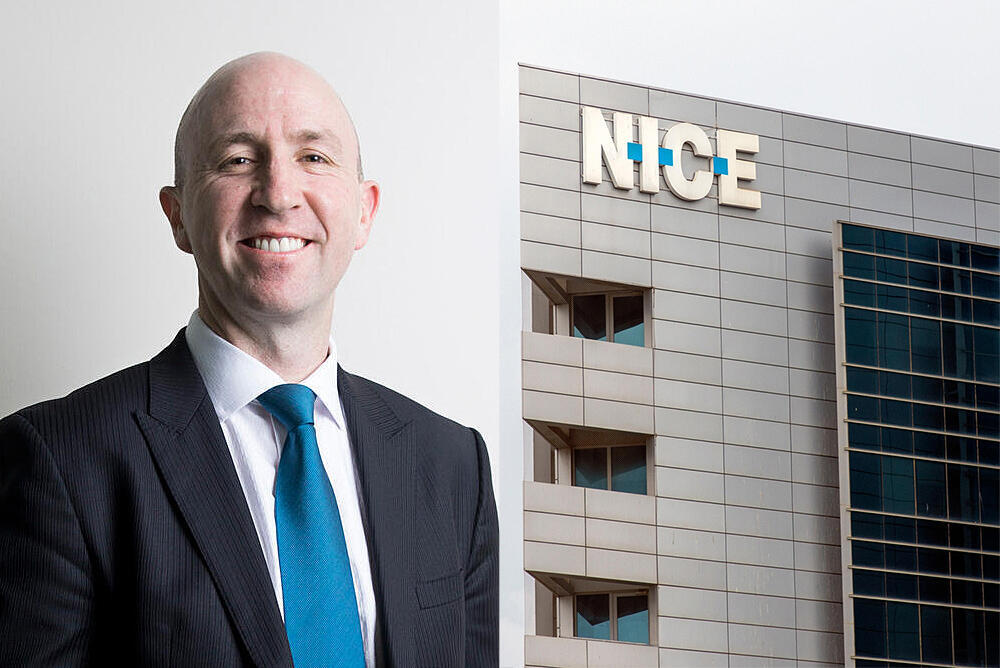
The decision to sell comes shortly after Nice completed a major purchase of its own, the $955 million acquisition of German AI startup Cognigy, one of the largest deals in company history, rivaling its $960 million acquisition of inContact in 2016. With only $667 million in cash at the end of Q3 2025, Nice needs additional capital to finance the Cognigy transaction. Management views Actimize as an operation that is gradually moving away from Nice’s core focus: cloud-based customer-relationship management (CRM) and AI-driven customer-service automation.
Yet Actimize remains a crucial profit engine. Although Nice does not report Actimize’s results separately, the unit drives most of the company’s Financial Crime and Compliance segment. In 2024, Actimize generated $453.5 million in revenue (16.6% of Nice’s total) and $158.3 million in operating profit (29% of total operating profit), though profitability has declined from 2019, when Actimize contributed more than half of overall operating profit.
Nice reported total 2024 revenue of $2.73 billion, up 15% year over year. Operating margins rose to 20%, from 18.3% in 2023, while net income increased from $338.3 million to $442.6 million. However, the first nine months of 2025 reflected a slowdown: revenue fell 13% to $1.75 billion, operating income slipped from $945 million to $874.5 million, and net income dropped 25% to $256.6 million. Current liabilities stand at $1.42 billion, compared to $2.37 billion in current assets, including $666.7 million in cash and $860 million in short-term investments.
Led by CEO Scott Russell and Chairman David Kostman, Nice is facing heightened investor anxiety amid uncertainty over how artificial intelligence will reshape its business. Since the departure of longtime CEO Barak Eilam at the end of 2025, the company’s share price has fallen 35%, while the Nasdaq has risen 16% over the same period. Following its Q3 earnings release and investor day, Nice shares dropped another 16% in Tel Aviv, pulling the stock back to 2019 levels and cutting market value to $6 billion, far below its $20 billion peak in 2022.
The selloff stems largely from Nice’s weaker profitability forecast for 2026. After projecting a 31% operating-profit margin for 2025, the company now expects 25-26% for next year, a decline it attributes to heavy investment in AI capabilities tied to the Cognigy acquisition. Cognigy’s AI agents automate customer-service operations, reducing reliance on human support staff and strengthening Nice’s CRM platform.
But investors worry that the rapid rise of AI agents and “vibe coding” could push some organizations, especially startups and smaller firms, to build simpler, cheaper tools instead of buying Nice’s enterprise software. Microsoft’s entry into the CRM space with a Copilot-based product has heightened these concerns. The potential sale of Actimize could signal to the market that Nice is betting its future squarely on AI-driven CRM.
At the same time, the risks posed by AI may actually expand the market for Actimize. As Nice outlines in its annual reports, financial crime and regulatory-compliance needs have surged, driving demand for sophisticated systems. Cyber intrusions, identity theft, fraud, and account takeovers are rising sharply, overwhelming financial institutions and increasing the need for advanced monitoring tools. Regulatory oversight continues to intensify, extending beyond major banks to mid-sized and small institutions.
Meanwhile, the shift toward digital banking is introducing new challenges in identity verification, KYC, and real-time surveillance, areas that require AI systems capable of detecting anomalies instantly. These trends suggest Actimize may benefit from the very technological shifts that complicate Nice’s broader business.



