










Opinion
Tech is breaking records again, but has it learned its lesson this time?
New fundraising highs signal a return of confidence in the market, but they also remind us how short the collective memory of Israeli tech can be. Between euphoria and responsibility, this may be the moment to pause and choose a different path for growth.
In recent months the Israeli tech sector has been filling up with optimism again. Seed rounds of tens of millions of dollars are closing quickly, venture capital funds are offering amounts we have not seen in a long time, and young companies are springing up faster than at any point since the days of the bubble. It feels as though the market is coming back to life, that a sense of capability has returned along with fresh hope. Yet alongside the excitement rises a simple but essential question, are we once again rushing to raise money before we have built a real foundation.
Only a moment ago we saw what happens when money flows without limits. The market overheated, rounds closed in seconds, and it felt as if anyone with an idea could turn overnight into a well funded company. The influx of capital changed the rules of the game. Instead of searching for a real market and a clear business model, many companies found themselves competing on speed, team size and the headline figure of their latest round. Success was measured by the size of the check rather than the depth of the value. Before long the boom gave way to a wave of shutdowns, layoffs and returns to investors. Not because the people were not talented or the ideas were not promising, but because the money arrived too soon and turned from an engine of growth into a burden that limited freedom of movement and long term thinking.

From that difficult experience, a different path becomes visible. Companies that choose to grow from within, without external capital in their earliest stages, face reality as it is. They are forced to learn quickly, sharpen their value proposition and build a business culture rooted in responsibility and discipline. When there is no surplus capital, every shekel is counted and every decision is examined. It may be a less glamorous route, but it creates more stable and adaptable companies, ones that focus on customers rather than investors and build real value before chasing valuations.
This approach also creates a tighter connection between the company and the market in which it operates. Without an investor safety net, there is no room for guesses or unnecessary development. Every decision is judged by customer reaction, and every mistake has a direct financial cost. Out of this reality grows a clearer understanding of what works and what does not. Teams learn to streamline, to collaborate with greater precision and to create real solutions instead of attractive concepts.
Beyond business clarity, there is an advantage in control as well. A company that is not dependent on external factors maintains freedom of thought and freedom of decision. There are no artificial timelines, no pressure to meet forecasts set by someone else. When nothing is dictated from outside, it becomes possible to act out of judgment rather than fear of disappointing the next quarter. This independence is not only a managerial value but a strategic asset, because in times of crisis it enables maneuverability, flexibility and long term survival.
Still, not every company can take this route. Certain fields require significant capital from day one, such as infrastructure, hardware or deep technologies like artificial intelligence. In such cases external funding is not a mistake but a genuine necessity. Yet even then it is possible to adopt the spirit of bootstrapping, to proceed cautiously, to maintain transparency and to remember that money is a means rather than a goal. The question is not whether to raise funds but how to raise them, and to what degree the company can preserve the independent mindset that separates responsible growth from a chase after capital.
Ultimately, the difference between the two paths is not only financial structure but an approach to building. A company that chooses to grow out of responsibility rather than out of euphoria does not only create a better product, it creates a culture that endures. Headlines about funding rounds will continue to rise and fade, but the real value is measured in the quiet between the rounds, in the place where a company proves it can stand on its own. It may not be the most glamorous story, but it is the one that lasts.
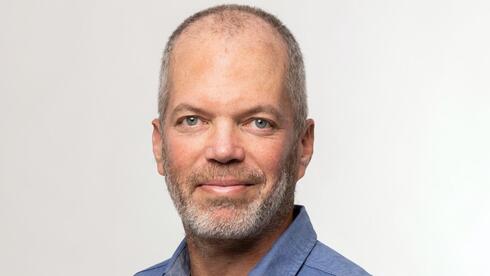
Daniel Shnaider is the CEO of AnyBiz.



