











Tenet raises $6 million in Seed funding to address risks of autonomous AI agents
The startup focuses on runtime protection for autonomous systems accessing sensitive data and workflows.
Tenet Security, a cybersecurity startup focused on protecting autonomous AI agents, has emerged from stealth with $6 million in Seed funding led by The Westly Group and MizMaa Venture, with participation from angel investors including Tomer Schwartz, founder of Dazz (acquired by Wiz), and Lior Tal, former CEO of Coralogix.
The company is building tools aimed at what it sees as a growing gap in enterprise security: the lack of visibility and control over AI agents once they are deployed in production environments.
At the center of its platform is a patent-pending approach called “Agent-side Simulation.” The system predicts an AI agent’s likely next actions before they are executed against live systems. If an action appears risky, Tenet can intervene to block it and generate a trace explaining why it was stopped.
The company argues that traditional cybersecurity tools were designed to monitor users, endpoints, or prompts, but are not built to understand autonomous agents that can independently write code, access databases, and interact with enterprise systems.
“AI agents may be the biggest productivity unlock enterprises have seen in decades,” said Barak Sternberg, co-founder and CEO of Tenet Security. “But we're also entering a world where autonomous agents are interacting with systems, data, and other agents in ways most security tools were never designed to understand.”
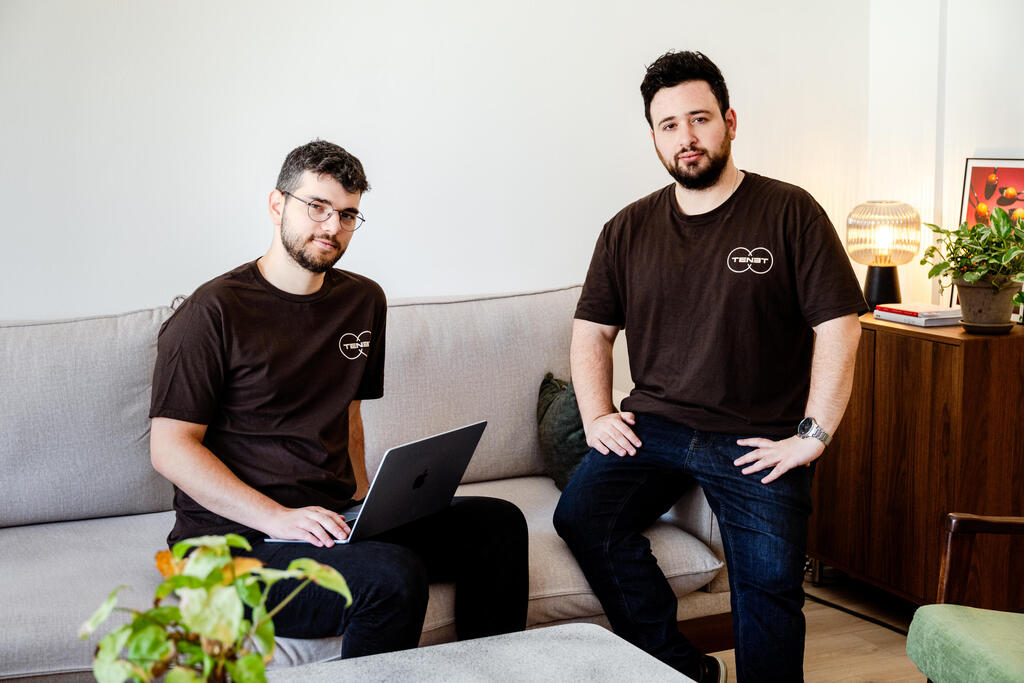
Tenet was founded by Sternberg and Nevo Poran, former cybersecurity researchers at Cisco who worked on AI security and defenses against autonomous systems. Before Cisco, they founded Wild Pointer, a cybersecurity company serving Fortune 500 customers.
The founders say their focus shifted as enterprises began deploying AI agents beyond experimental use cases and into production workflows, where they can take independent actions across systems.
The company’s launch is also tied to research from its Threat Labs into what it calls “Agentjacking,” a type of attack where malicious instructions embedded in emails, documents, logs, or databases can influence AI agents to take unintended actions. Tenet says it tested the technique across more than 100 enterprise environments and found thousands potentially exposed.
According to the company, these attacks often bypass traditional security controls because agents operate within their assigned permissions.
Tenet estimates that enterprises may be running up to five times more AI agents than security teams are aware of, creating gaps in oversight and governance.
Early deployments cited by the company include a legal-sector enterprise that increased AI agent usage from two to more than twenty deployments over six months. Tenet says it detected and blocked more than ten attempted attacks during that period, including a cross-site scripting attempt. In another Fortune 1000 company, it identified an autonomous agent generating unnecessary token costs over a single weekend.
“We're increasingly seeing AI agents become part of the attack path itself,” said Poran, co-founder and CTO. “The challenge isn't just monitoring prompts or API traffic, but controlling agent behavior in real time.”



