








Sderot opens $3 million innovation center focused on health and emergency technologies
The RiSE.Hub project seeks to attract startups developing AI-driven solutions for resilience, rehabilitation and mental healthcare.
For years, Sderot has been defined by its proximity to conflict. Now, Israeli government agencies, healthcare institutions and private-sector partners are betting that the city's experience with repeated emergencies can become the foundation for a new innovation ecosystem.
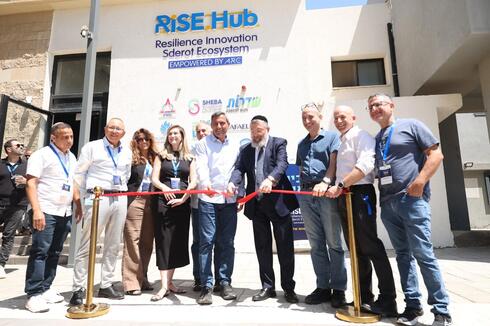
The partners last week inaugurated the permanent home of RiSE.Hub, an innovation, health and resilience center backed by a total investment of NIS 9 million ($3 million). The initiative aims to establish Sderot and the western Negev as a center for developing technologies focused on resilience, rehabilitation, mental health and emergency preparedness.
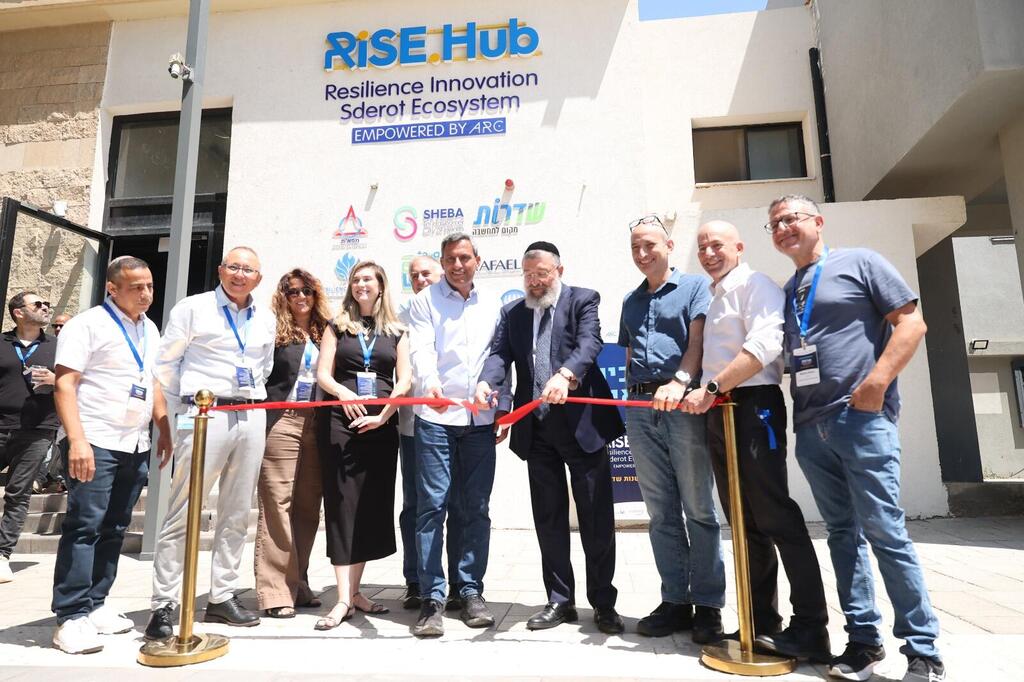
The facility was established through a partnership that includes the Tekuma Administration, which contributed NIS 4 million ($1.3 million), the Sderot Municipality, Sheba Medical Center's ARC innovation arm, the Israel Innovation Authority, the National Insurance Institute's Funds Division, the Negev Development Authority and the Sderot Resilience and Health Innovation Hub.
Organizers say the center is intended to become both an innovation platform and an economic development engine for the city. The facility will host startups and technology companies while supporting applied research, product testing and the implementation of healthcare, rehabilitation and functional continuity technologies.
The project brings together entrepreneurs, academic institutions and healthcare organizations under one roof, offering startup acceleration programs, research and development infrastructure, entrepreneurship initiatives for local youth and connections to Israeli and international investors.
Additional partners include Rafael Advanced Defense Systems, the Defense Ministry's Directorate of Defense Research and Development (DDR&D), Teva's "Metofulim BaNefesh" initiative and the Sderot International Resilience Center.
Alongside the inauguration, the partners also announced the launch of the "Between Sheba and Sderot" initiative, a separate project backed by NIS 12 million ($4 million) in joint funding from the Sderot Municipality and the National Insurance Institute's Fund for the Development of Services for the Disabled.
The center is built on the premise that the expertise accumulated in the western Negev through years of managing emergencies represents knowledge that can be translated into technologies with broader national and international applications.
As part of the launch, four startups were selected to receive grants of up to NIS 700,000 (about $233,000) each to relocate and expand their operations in Sderot. The grants are part of a NIS 4.7 million ($1.6 million) funding program, with additional recipients expected to be announced in the coming weeks.
The selected companies reflect the center's emphasis on mental health, rehabilitation and AI-driven healthcare.
Bpreven is developing an artificial intelligence system for the early detection of mental distress and personalized patient care.
NEAO combines AI and virtual reality to provide anonymous group therapy for young adults, with the aim of reducing stigma and improving access to treatment.
Cognishine has developed a digital platform focused on cognitive and functional rehabilitation for patients in clinical and rehabilitation settings.
Mentality, developed in collaboration with Microsoft and Sheba Medical Center, is building an AI-powered mental health platform designed to improve patient diagnosis, triage and prioritization.



