











Delek Automotive moves $215 million in Veridis shares as Hailo losses deepen pressure
The unusual transfer to its automotive subsidiary comes as Delek Motors faces a 42% plunge in vehicle deliveries and the group absorbs another $54 million Hailo-related write-off.
Delek Automotive’s investment in Israeli chipmaker Hailo continued to weigh on the company in the second quarter, prompting it to transfer NIS 645 million ($215 million) worth of shares in environmental services company Veridis to its automotive subsidiary in an effort to strengthen its equity and protect its bank covenants.
The transfer, disclosed in a section of Delek Automotive’s second-quarter financial statements, was carried out “among other things, to strengthen Delek Motors’ equity.” The move is an unusual consequence of the losses stemming from the Hailo investment and highlights how the damage from the failed technology bet is now affecting the structure of Delek Automotive’s core business.
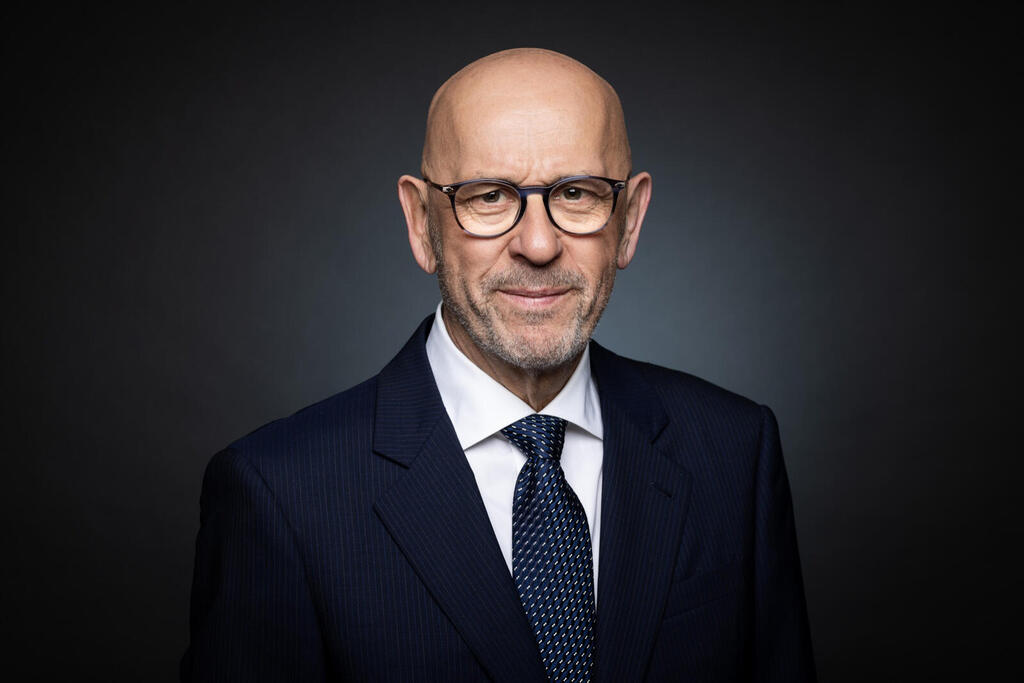
Delek Automotive, controlled by Gil Agmon, said the 15 million Veridis shares were transferred to Delek Motors to prevent a potential deterioration in the subsidiary’s equity from causing it to breach financial covenants attached to loans taken out to finance the acquisition of Veridis in 2018.
The company said there had been no actual breach of the covenants. But because compliance is measured toward the end of the year, management apparently decided to strengthen Delek Motors’ balance sheet in advance.
The Hailo investment has already resulted in significant write-downs. Delek Motors recorded a NIS 242 million ($81 million) write-o ff at the end of 2025, and the latest financial statements include an additional NIS 161 million ($53.7 million) write-off.
People familiar with the company’s affairs say that over the years Delek Motors, which is wholly owned by Delek Automotive, transferred approximately NIS 650 million-NIS 700 million ($217 million-$233 million) to the parent company, including funds used in connection with the acquisition of Veridis. The latest transfer can therefore be viewed as a return of funds to the automotive subsidiary, effectively closing the Hailo episode in one operation while reducing the risk of repercussions for Delek Motors.
Following the transfer, Delek Motors holds 10% of Veridis, while Delek Automotive retains a 37% stake.
The financial maneuver comes as Delek Automotive is facing a separate challenge in its traditional business: a sharp decline in vehicle deliveries.
Delek Motors is the group's operating company for its automotive business, importing and selling Mazda, Ford, BMW, Nio and Dongfeng vehicles. The business has historically been the group's main source of cash flow and the center of its profits.
But vehicle deliveries have deteriorated sharply this year.
In the first half of 2026, Delek Motors delivered 9,005 vehicles, down 42% from 15,500 in the same period of 2025.
The decline was particularly severe at Mazda, traditionally one of the company's most important brands. Mazda deliveries fell 68%, to 1,786 vehicles from 5,571 in the first half of last year.
In the second quarter alone, Delek Motors delivered 2,411 new vehicles, compared with 2,697 in the corresponding quarter of 2025. Its market share fell to 3%, compared with 5.7% a year earlier and around 25% at its peak two decades ago.
Despite the decline in deliveries, automotive revenue actually increased in the second quarter, reaching NIS 748 million ($249 million), compared with NIS 568 million ($189 million) a year earlier. For the first half, however, automotive revenue fell to NIS 1.67 billion ($557 million), from NIS1.72 billion ($573 million).
The pressure on the business is reflected in Delek Automotive’s share price. The stock has fallen 41% since the beginning of the year, leaving the company with a market value of approximately NIS 1.75 billion ($583 million). The decline has pushed the company back to a valuation last seen at the end of 2020. Since reaching its peak in August 2022, Delek Automotive has lost roughly two-thirds of its market value.
The transfer of Veridis shares is particularly significant because of the way Delek Automotive financed its 2018 acquisition of control of the environmental company.
At the time, the company received a NIS 1.05 billion ($350 million) loan from banks. The loan covenants include requirements linked to the capital-to-balance-sheet ratio of Delek Motors, the group's cash-generating automotive subsidiary.
Delek Automotive does not disclose the standalone figures for Delek Motors in its financial statements. It emphasized, however, that there had been no event of non-compliance with the subsidiary's covenants.
The concern appears to be forward-looking: the covenant will be tested toward the end of the year, and Delek Automotive has transferred the Veridis shares to strengthen Delek Motors' equity ahead of that test.
The move illustrates how the consequences of Hailo have intersected with the financing structure of a group whose traditional automotive business has itself been under pressure.
At the group level, Delek Automotive reported revenue of NIS 3.26 billion ($1.09 billion) in the first half of 2026, up 1% from the corresponding period of 2025. The figures include the results of recently acquired Eurodrive, as well as improved activity at Veridis.
Second-quarter revenue stood at NIS 1.5 billion ($500 million).
Operating profit also improved in the second quarter, reaching NIS 132 million ($44 million), compared with NIS 118 million ($39.3 million) a year earlier.
But that improvement was overwhelmed by financing expenses of NIS 226 million ($75.3 million), largely reflecting the Hailo-related write-off.
The result was a net loss of NIS 88 million ($29.3 million) for the quarter, compared with a profit of NIS 55 million ($18.3 million) a year earlier.
For the first half, Delek Automotive moved from a profit of NIS 92 million ($30.7 million) in 2025 to a loss of NIS 13 million ($4.3 million) in 2026.
The company's balance sheet has also weakened. At the end of the second quarter, Delek Automotive reported a working capital deficit of NIS 481 million ($160 million), while equity attributable to shareholders fell to NIS 1.25 billion ($417 million), from NIS 1.475 billion ($492 million) at the end of the first half of 2025.



