









Israeli startup raises $5 million to map the seabed with AI
HydroSight's AI platform integrates marine survey data to identify changes and anomalies on the seabed, helping ports, energy companies and telecom operators better plan and manage underwater infrastructure.
Haifa-based startup HydroSight, which is developing an AI platform for mapping and understanding the seabed, is emerging from stealth with $5 million in Seed funding. The round was led by StageOne Ventures, with participation from Vertex Ventures and the National Center of Blue Economy, which operates under the HiCenter Ventures investment fund.
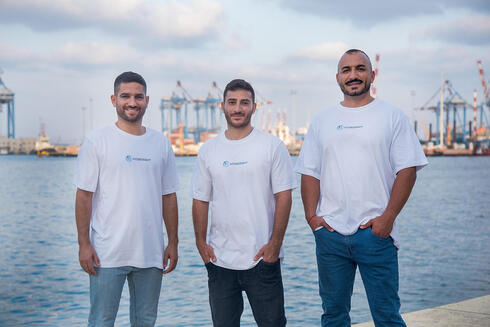
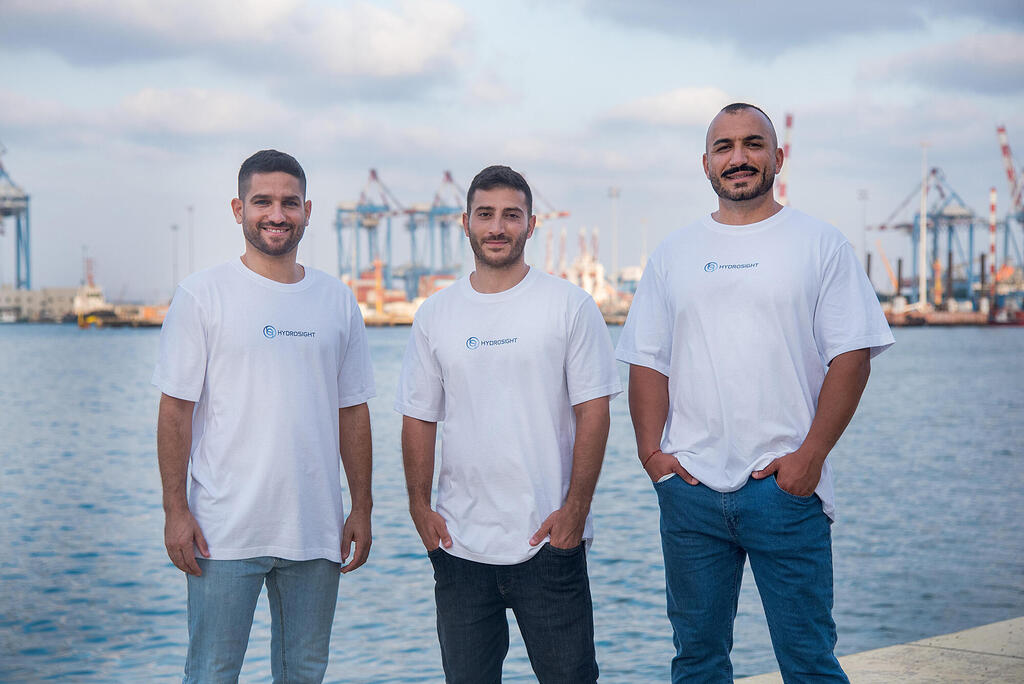
HydroSight was founded in late 2025 by CEO Tomer Adler, CTO Haitham Ezzy and COO Chen Megera. The three founders bring deep familiarity with the marine environment and the challenges of working with underwater data, drawing on hands-on experience aboard vessels and in maritime operations.
The company was created around a problem the founders encountered firsthand: While sonar systems and advanced marine survey technologies can collect increasingly large volumes of data about the seabed, turning that information into a clear, up-to-date picture still relies heavily on complex, manual processes that require specialized expertise.
That challenge is becoming more significant as more infrastructure and economic activity moves offshore. Energy projects, communications cables, ports and other marine infrastructure are expanding, while available land and coastal space is becoming more constrained. The ability to accurately understand the seabed is therefore becoming increasingly important for planning, developing and operating these projects.
HydroSight’s platform integrates marine survey data from different sources and time periods, automatically identifying changes, anomalies and patterns to create a detailed, continuously updated map of the seabed. The company says the technology can give marine infrastructure owners a clearer picture of what has changed underwater, helping them plan, develop and operate infrastructure more precisely and efficiently.
The platform is designed to reduce processes that previously required many hours of manual work, turning data collected in the field into an intelligence layer that can be incorporated into infrastructure planning, operations and management.
HydroSight is already running projects with marine infrastructure owners in Israel and internationally, using its technology on real-world data collected in the field. The company operates on a B2B enterprise model serving ports, energy companies, telecom cable operators and other marine infrastructure providers.
The new funding will be used to expand the company’s team, deepen its AI and analytics capabilities, accelerate commercial activity and expand its work with customers in international markets.
“Beneath the surface of the sea lies a vast world we still know very little about, even though a significant part of our lives already depends on it,” Adler said. “Roughly 30% of the world’s oil and gas is produced at sea, and more than 99% of international data traffic runs through cables laid on the seabed.”
“In the coming years, with the shift to clean energy, growing density along coastlines and the need for more marine infrastructure, we will depend on this world even more,” he added. “We founded HydroSight to help the world better understand what’s happening beneath the sea’s surface, and to enable more precise, intelligent and sustainable development of the underwater environment.”



