









Landwer Group among bidders for KFC Israel as chain collapses under NIS 50 million debt
A poultry supplier and other restaurant-industry players are also considering acquiring the franchisee, which has been unable to meet its obligations despite NIS 37 million in shareholder loans. The chain's financial filings reveal mounting losses, rising rents and unpaid bills to landlords, employees and suppliers.
The Landwer Group is interested in acquiring the KFC chain in Israel, which has entered a stay-of-proceedings process, Calcalist has learned. Another potential buyer is a poultry supplier considering an acquisition that would allow it to supply chicken to the chain and create operational synergies. Several other parties, mostly from the restaurant industry, have also expressed interest in the fried-chicken chain.
KFC's Israeli operation entered the process after accumulating approximately NIS 50 million in debt. Its financial difficulties raise questions about how the chain reached this point, particularly after its owner, a Russian company called Smart Service, injected NIS 37 million in shareholder loans. The collapse is especially puzzling given the growing popularity of fried-chicken restaurants in Israel, including Lucky Chicken, co-owned by Nir Maatuk, who also owns the Chooka chain; Aharoni's Fried Chicken, founded by chef Israel Aharoni; and several other chains.
One of the company's shareholders is a Russian national. According to the application for a stay of proceedings, the owners are no longer able to inject additional capital "in light of sanctions imposed on institutions in Russia, which have prevented the transfer of additional funds from Russia to Israel." It remains unclear whether the sanctions were the primary reason for KFC's collapse or whether the owners simply decided to cut their losses and stop financing the operation.
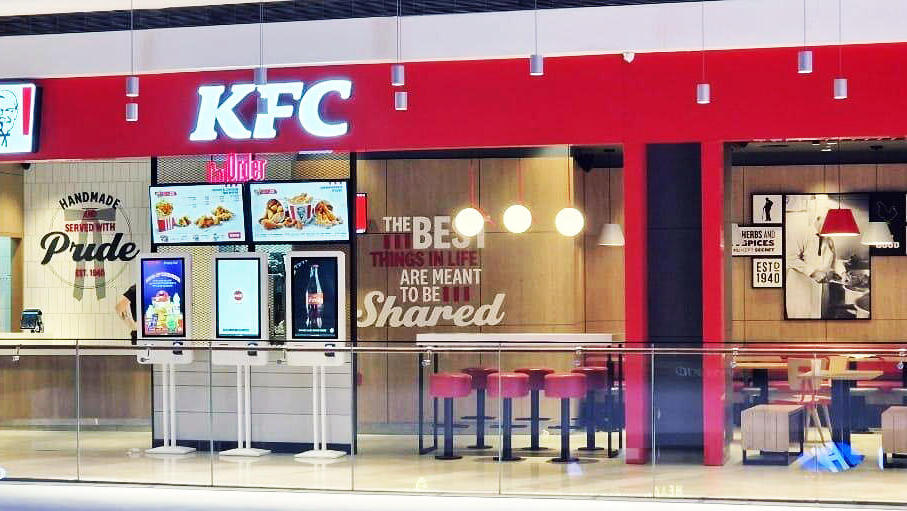
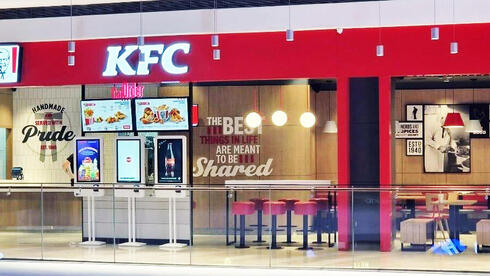
Since the outbreak of the war, the chain has suffered from declining profitability, driven by reduced customer and tourist traffic and a broader slowdown in consumer spending. The American brand owner also prohibited the Israeli franchisee from advertising during the war, dealing a further blow to the business. At the same time, the company continued opening new branches, adding to its operating costs.
KFC has undergone several transformations in Israel. In 2020, the international brand, owned by U.S. corporation Yum! Brands, returned to the Israeli market through two franchisees. The first, Mefko, operated eight branches, accounting for approximately 40% of the chain's Israeli operations, across the north and south of the country and in the Arab sector. In early 2025, Mefko encountered financial difficulties and closed all eight locations.
The second franchisee, Smart-Service K&K, opened 13 branches in Israel. Its location at Renanim Mall in Ra'anana closed last August, leaving it with 12 branches, all in shopping malls. According to the Registrar of Companies, the company is jointly owned by Konstantin Kotov, an Israeli citizen who also serves as a director, and Andre Oskolkov, a Russian national.
Industry sources in the shopping mall sector say KFC's latest attempt to establish itself in Israel was more successful than previous ones because, unlike earlier franchisees, the chain did not seek kosher certification. Previous operators had made the fried chicken kosher, a change that altered its taste compared with the product sold abroad.
"In 2020, they returned to Israel without changing the product recipe; the non-kosher concept worked exceptionally well for them until October 7, 2023. Since then, things have gradually begun to deteriorate," one industry source said.
Over the past year, the chain sought to switch to a kosher model as part of a strategy to restore profitability and return to growth. Management identified the move as a potential growth driver, viewing it as a way to expand its target audience and increase sales. Last August, the chain conducted a pilot offering kosher chicken at three locations, which reportedly received positive customer feedback.
The franchisee explored two options: operating fully certified kosher restaurants or adopting a "kosher-style" model, in which the ingredients would be kosher but the restaurants would remain open on weekends and holidays without formal certification. The plan also included a return to more aggressive marketing, with an advertising campaign highlighting the kosher offering.
The broader strategy was intended to win back customers and attract families, particularly children, through the introduction of kids' meals with toys. It also included price adjustments and promotions on core products to encourage visits.
However, the chain says the war and restrictions on transferring funds from Russia have hurt its operations. Over the past year, it sought a strategic investor or buyer without success, despite claiming that there was significant interest in the business. Since 2023, the company's focus has shifted toward improving operational efficiency rather than investing in product quality or the customer experience.
The application for a stay of proceedings also sheds light on the financial terms of the franchise agreement. Royalty payments to the global brand owner amounted to 6% of revenue, with an additional 5% charged for advertising. The agreement also stipulates that if the franchisee wishes to sell a branch to an investor or a new operator, the international company charges $6,700 per location, in addition to legal expenses.
In 2022, the chain reported revenue of NIS 30 million and a cost of revenue of NIS 25 million, ending the year with a loss of NIS 2.5 million. Revenue jumped to NIS 63 million in 2023, but costs also rose sharply, reaching NIS 49 million. The annual loss narrowed to NIS 1.7 million, partly thanks to a NIS 650,000 government grant related to the war.
The chain's financial position deteriorated further in 2024. Revenue increased to NIS 71 million, but costs climbed to NIS 60 million, while its annual loss widened to NIS 9.4 million.
The financial statements also detail the main components of the company's expenses, including purchases from suppliers, rent paid to shopping malls and other landlords, employee wages and depreciation. In 2023, these expenses totaled NIS 49 million, including NIS 22 million in purchases, NIS 15.8 million in rent, NIS 8.7 million in wages, NIS 835,000 in domestic travel and transportation, and NIS 1.7 million in depreciation. Financing expenses that year amounted to NIS 2.3 million.
In 2024, the corresponding costs exceeded NIS 60 million. Purchases rose to NIS 25 million, while rent surged to NIS 22 million, partly as a result of the chain's expansion. Wage expenses reached NIS 9 million, and depreciation amounted to NIS 3 million. Financing expenses increased to NIS 2.8 million.
In addition to the shareholder loan, the company owes NIS 3 million to CAL (Israel Credit Cards), NIS 3 million to KFC Global, NIS 1.9 million to employees, NIS 1.9 million to suppliers, NIS 1.6 million to landlords, and NIS 1.2 million to tax authorities and municipalities. KFC Global waived royalty payments last year in light of the Israeli franchisee's financial difficulties.
The company also failed to pay rent to landlords in September and October, prompting shopping malls to issue notices seeking to terminate their agreements and demanding that the chain vacate its premises.
The company's assets include approximately NIS 400,000 in an account at Israel Discount Bank; NIS 1.7 million in deposits held by shopping malls, which have been or are expected to be forfeited; and NIS 500,000 in receivables from Wolt and consumer clubs. The chain also values its equipment at approximately NIS 800,000 per branch.



