










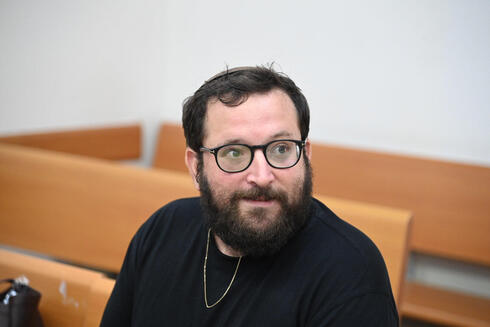
Two weeks before Israel's elections, WhatsApp exchanges attributed to Netanyahu's right-hand man leak online
Messages attributed to Yonatan Urich, Prime Minister Benjamin Netanyahu's senior strategic adviser and close aide, have been published on social media. They allegedly include conversations with politicians, lawyers, journalists and campaign consultants.
WhatsApp exchanges attributed to Yonatan Urich, a senior strategic adviser to Prime Minister Benjamin Netanyahu, were published on social media on Sunday, two weeks before Israel's elections. The material allegedly includes conversations with seven contacts spanning a range of fields, including politics, law, journalism and political consulting. The person behind the publication claims that additional conversations will be released later.
The identity of the party responsible for the publication remains unknown, and the authenticity of the exchanges has not been independently verified. Urich has not commented on the alleged leak.
The publication follows a Calcalist report revealing that Urich had linked his personal WhatsApp account to an external service based in the United Arab Emirates, potentially giving the service access to his private correspondence in unencrypted form. However, no definitive evidence has established a connection between the potential security vulnerability and the current leak.

The service was designed to monitor media mentions of Netanyahu and his wife in real time and send alerts to designated WhatsApp groups when necessary. Urich developed the tool using Anthropic's Claude AI model. Its existence came to light after he published the source code on GitHub, a software development platform, allowing the tool's operation and its connection to the external service to be examined.
Urich is considered one of Netanyahu's closest associates and a key figure in the prime minister's media and political strategy operations. He previously served as Netanyahu's spokesperson and new-media manager, as well as the Likud party's spokesperson. The potential exposure of his correspondence raises questions about the relationships between Netanyahu's inner circle and politicians, media figures and advisers. However, without independent verification of the published material, it is impossible to draw firm conclusions about its contents or significance.
The leak also comes against the backdrop of the "Qatargate" investigation, in which Urich is a key suspect. He is being investigated on suspicion of offenses including contact with a foreign agent, brokering bribery, money laundering, fraud and breach of trust. These are allegations, not findings of guilt. The investigation concerns suspicions that Qatar sought to advance its interests in Israel by funding entities and campaigns linked to Netanyahu's inner circle, including Urich and Srulik Einhorn, a political consultant who has worked with the prime minister for years.
One focus of the investigation is an alleged influence campaign known as "Lighthouse." Investigators have examined suspicions that Perception, the consulting firm where Urich works alongside Einhorn, developed and ran a positive public-relations campaign for Qatar, including during the war, when Qatar was supporting Hamas. The inquiry has examined allegations that the campaign promoted messages portraying Qatar as a key and constructive mediator while undermining Egypt's standing in negotiations. These allegedly included claims that "Egypt cannot be trusted" and that "only Qatar will lead the negotiations."
Urich denies the allegations. He maintains that his work for Qatar was a private undertaking carried out abroad and did not constitute an offense. His role as a close adviser to Netanyahu has raised questions about potential conflicts of interest. Throughout the past year of the investigation, Netanyahu has continued to back Urich and rely on him in political and policy matters.
It remains unclear whether the leaked material will provide new information about the ongoing investigations or the political and media activities of Netanyahu's inner circle. The identity of the person behind the publication, the source of the material and the method by which it was obtained also remain unknown. If further correspondence is published, its authenticity and context will be crucial to assessing the significance of the revelations.



