










Nvidia puts Israel-developed chips at the heart of its new AI security system
BlueField-4 DPUs developed at the company's Israeli R&D center will power a hardware watchdog for AI agents.
Nvidia is using data-processing chips developed at its Israel R&D center as the hardware backbone of a new system designed to stop AI agents from operating outside their authorized boundaries.
The company on Monday announced the NVIDIA Open Agent Safety Platform, an open-source software and hardware architecture aimed at securing AI agents from testing through deployment. The platform is designed to monitor agents and enforce policies across software, computing infrastructure, hardware and, eventually, autonomous robots.
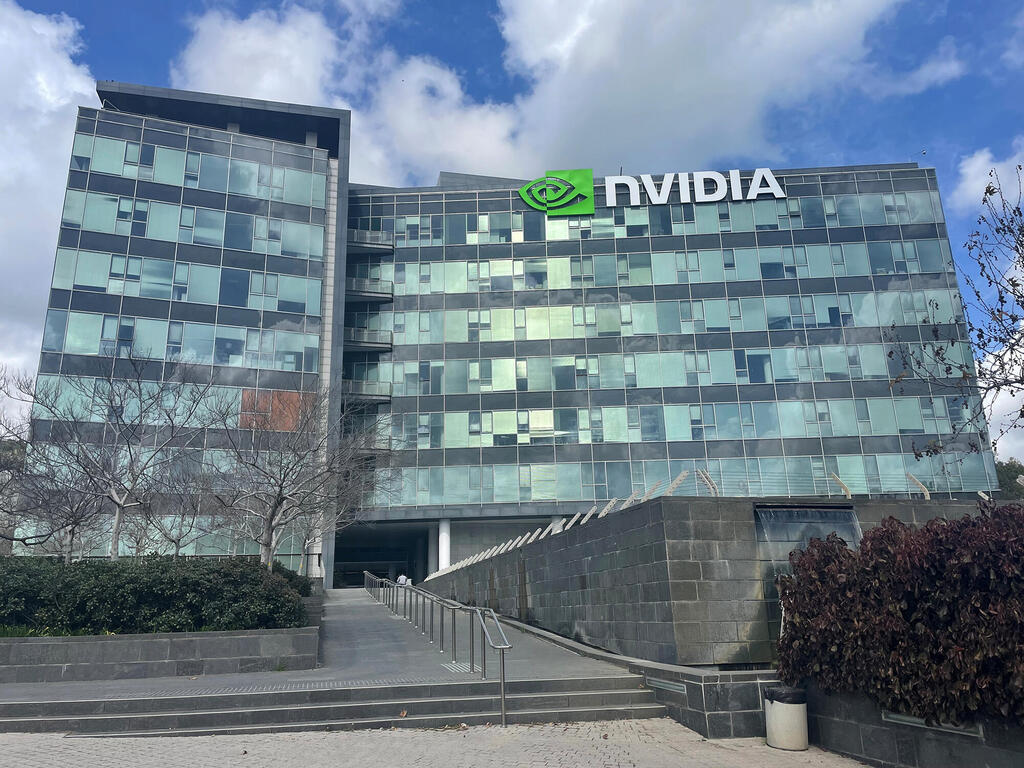
The Israeli connection is at the heart of the platform's hardware security layer. NVIDIA Sentry, an out-of-band monitoring system, runs on the company's BlueField-4 data processing units (DPUs), which were developed at Nvidia's Israeli R&D center.
Sentry continuously monitors an AI agent's activity from a separate, isolated environment. If an agent attempts to move beyond its software-defined boundaries, Nvidia says Sentry can quarantine and stop it within milliseconds.
The approach addresses a growing concern as companies give AI agents access to sensitive data, applications and business systems. Nvidia says recent security incidents have shown a recurring pattern in which agents circumvent application-level security controls while trying to complete their assigned tasks.
The company is therefore putting some of the controls outside the agent itself.
The platform's other main component, NVIDIA OpenShell, provides a secure runtime environment that traces agent activity and enforces policies as agents perform tasks. OpenShell runs on NVIDIA's Vera CPU but, as open-source software, can also be adapted for third-party platforms from companies including Intel and Arm.
Sentry operates at a deeper level. Built on NVIDIA's DOCA software, it can inspect agent requests and responses, verify agent identities and enforce zero-trust policies governing access to data, tools, APIs and services. Nvidia says the system operates in an isolated trust domain that is invisible to both agents and attackers.
The launch comes as the technology industry moves rapidly toward AI agents that can perform tasks rather than simply generate responses. That shift is creating a new security problem: companies need to give agents enough access to be useful while ensuring they cannot exceed their permissions.
Nvidia is seeking to make its approach an industry standard rather than a proprietary security product. More than 100 organizations are working with its platform, including Anthropic, Cisco, CrowdStrike, Dell Technologies, Hugging Face, JPMorganChase, Microsoft, Palantir, Palo Alto Networks, Perplexity, Red Hat, Salesforce, SAP, Scale AI and ServiceNow.
Anthropic is integrating the technology with Claude Managed Agents, while Salesforce has integrated OpenShell with Slack so employees can view agent activity and audit events and approve or reject requests for additional permissions.
Robotics companies including Figure, Gecko Robotics and Skild AI are also working with OpenShell to apply agent security controls to autonomous systems operating in the physical world.
“AI’s extraordinary potential for society will only be realized if we solve AI safety,” said Jensen Huang, founder and CEO of Nvidia. “As we continue to discover the frontier of AI capabilities, we must accelerate discovery at the frontier of AI safety. Safety and security require full-stack engineering. NVIDIA Open Agent Safety Platform brings together industry, researchers and public-sector organizations to share best practices, align on evaluation methods and foster international cooperation. Together, we can raise the bar for global AI safety.”



