










Rafael seizes opening in auto industry slump to expand in Europe
Talks over a Volkswagen plant reflect a broader shift as defense demand rises and carmakers retrench.
In recent weeks, signs have emerged of a convergence between the automotive and defense industries. In Europe, reports indicated that Volkswagen is considering selling a factory in Germany to Rafael Advanced Defense Systems. In the United States, the Pentagon has reportedly urged automakers to prepare to manufacture weapons.
These developments are not coincidental. Together, they reflect a deeper shift: a global auto industry under mounting economic pressure colliding with surging demand for military production.
Last week, European media reported that Volkswagen was preparing to sell its Osnabrück plant to Rafael, though both sides declined to comment. At the same time, following reports in the U.S. about outreach to automakers, Fox News quoted a Pentagon spokesperson as saying the department is working to expand the defense industrial base “using all existing industrial and technological solutions.”
For Rafael, industrial activity in Germany is not new. The state-owned company already maintains partnerships and subsidiaries across the country. Among them is EuroTrophy, which produces variants of the “Windbreaker” active protection system for armored vehicles, and EuroSpike, which markets “Spike” anti-tank missiles across Europe, systems sold to more than 40 countries, including Germany.
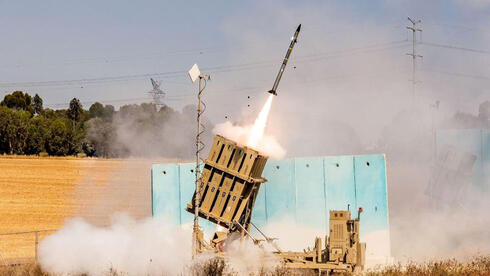
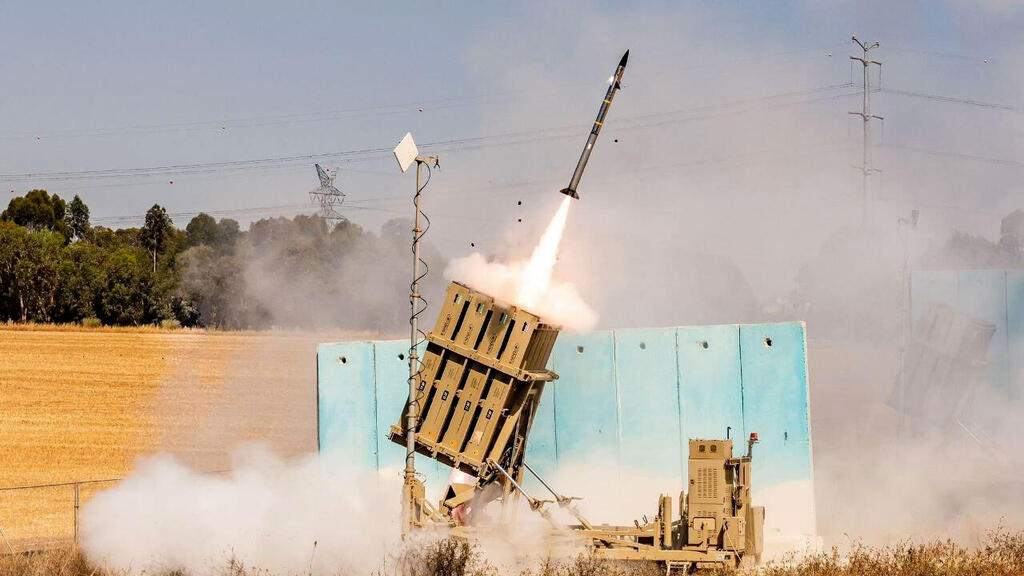
If the Osnabrück deal materializes, Rafael is expected to use the facility to manufacture components for the Iron Dome air defense system. These components, including interceptor missiles, are currently produced in Israel and the United States. So far, the U.S. remains the only country to have acquired Iron Dome, and only on a limited scale.
According to unconfirmed foreign reports, an Iron Dome battery was recently supplied to the United Arab Emirates during the confrontation with Iran.
Establishing production in Germany would reflect Rafael’s ambition to expand in Europe, where governments are rapidly increasing defense spending amid fears of escalation in the Russia-Ukraine war. Any sale of Iron Dome to European countries would require U.S. approval, given Washington’s role in funding its development.
The U.S. has already approved the export of the David’s Sling system to Finland and the Arrow 3 system, developed by Israel Aerospace Industries, to Germany, in deals totaling nearly $7 billion.
From Israel’s perspective, Germany is a strategic partner: roughly 30% of the weapons used by the IDF are estimated to originate from German industry, including engines for Merkava tanks, submarines, and naval vessels.
The war in Ukraine has triggered a broad rearmament cycle across Europe. After decades of underinvestment, countries are rebuilding military capabilities in response to rising geopolitical threats.
Israeli defense companies, with extensive operational experience, are positioning themselves to capture a share of this demand.
At the same time, U.S. President Donald Trump has pressed NATO members to increase defense spending to around 5% of GDP, an ambitious target whose implementation remains uncertain.
For automakers, the shift toward defense production is not without precedent. During World War II, General Motors produced weapons including the FP-45 Liberator pistol and became a major manufacturer of rifles. Ford Motor Company built thousands of B-24 bombers and contributed to tank production. Volkswagen manufactured military vehicles and components for Germany’s war effort.
But today’s transition is driven by different forces.
The global auto industry, particularly outside China, is under significant pressure. Financial results reflect this strain: General Motors reported net profit of $2.7 billion in 2025, down sharply from $6 billion in 2024, and posted a $3.3 billion loss in the fourth quarter. Volkswagen reported net profit of €6.9 billion, a 44% decline year over year.
A common thread runs through both companies: heavy investments in electric vehicles that have yet to deliver expected returns.
This challenge extends beyond GM and Volkswagen to Ford Motor Company and Stellantis, which have also scaled back EV ambitions.
Meanwhile, Chinese automakers are intensifying competition. In Europe, demand for relatively affordable electric and plug-in hybrid vehicles, many produced in China, has surged. According to industry data, approximately 149,000 Chinese-made vehicles were sold in Europe in March, nearly double the level a year earlier. Chinese manufacturers are also preparing to open production facilities in Europe, further increasing competitive pressure.
While Chinese vehicles are largely excluded from the U.S. market, they have gained a foothold in Mexico and Canada. BYD is already active in Mexico, and Chinese-built vehicles are beginning to appear in Canada as well.
Against this backdrop, Volkswagen’s potential sale of its Osnabrück plant appears less strategic than pragmatic. The facility employs about 2,300 workers, a small fraction of the company’s global workforce of roughly 680,000, and focuses on niche models, including the convertible version of the T-Roc, which has struggled commercially.
Production of Porsche’s Cayman and Boxster models has already been relocated, and the plant’s long-term viability is uncertain. Volkswagen is also reportedly exploring the sale of its Dresden facility, which produces the ID.3 electric vehicle.
In the United States, the pattern is similar. Automakers including GM, Stellantis, and Ford have announced plant closures or production cuts in recent years, particularly in response to declining demand for electric vehicles.
This has created a political and economic dilemma. One of Trump’s central campaign promises was to revive American manufacturing, with strong backing from labor unions. With auto production slowing, defense manufacturing offers an alternative source of industrial employment.
Recent upheavals in the auto sector are closely tied to U.S. policy shifts. Under the previous administration, automakers invested heavily in electrification. Under Trump, subsidies for electric vehicles have been rolled back, and manufacturers are pivoting back toward gasoline-powered models.
GM recently announced development of a new large gasoline engine, while Stellantis is reviving its Hemi engines and Ford is expanding its lineup of traditional SUVs and pickup trucks.
At the same time, rising fuel prices, driven by geopolitical tensions, are pushing consumers toward more fuel-efficient vehicles, an area where U.S. manufacturers remain less competitive.
For European automakers, additional pressure comes from trade policy. While tariffs on European cars exported to the U.S. were previously reduced, Trump has threatened to impose new tariffs of up to 25%, citing Europe’s limited participation in recent military efforts.
For an industry already grappling with structural change, the convergence of war and market disruption is accelerating a shift few would have predicted: car factories, once symbols of consumer growth, may increasingly become part of the global defense supply chain.



