










The $200 billion shadow economy of Iran’s Supreme Leader
A vast network of companies, charities, and confiscated assets helped anchor the regime’s grip on power.
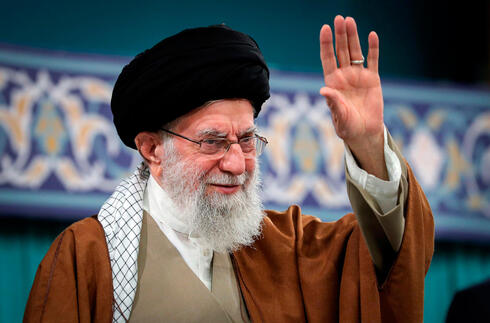
There are many reasons for the long-standing hatred directed at Iran’s Supreme Leader, Ayatollah Ali Khamenei. Yet unlike many notorious figures in modern history, one thing could be said about him: he was not known for personal extravagance.
That is not to say Khamenei did not preside over enormous wealth. Like other authoritarian leaders, including Russian President Vladimir Putin, he was widely believed to control a vast shadow fortune. But in his daily life, Khamenei cultivated the image of an austere cleric.
He consistently wore the traditional religious robe, spoke more than once about his admiration for Victor Hugo’s Les Misérables, and was never seen traveling the world in private jets. His official wealth declaration listed assets worth only about $50,000.
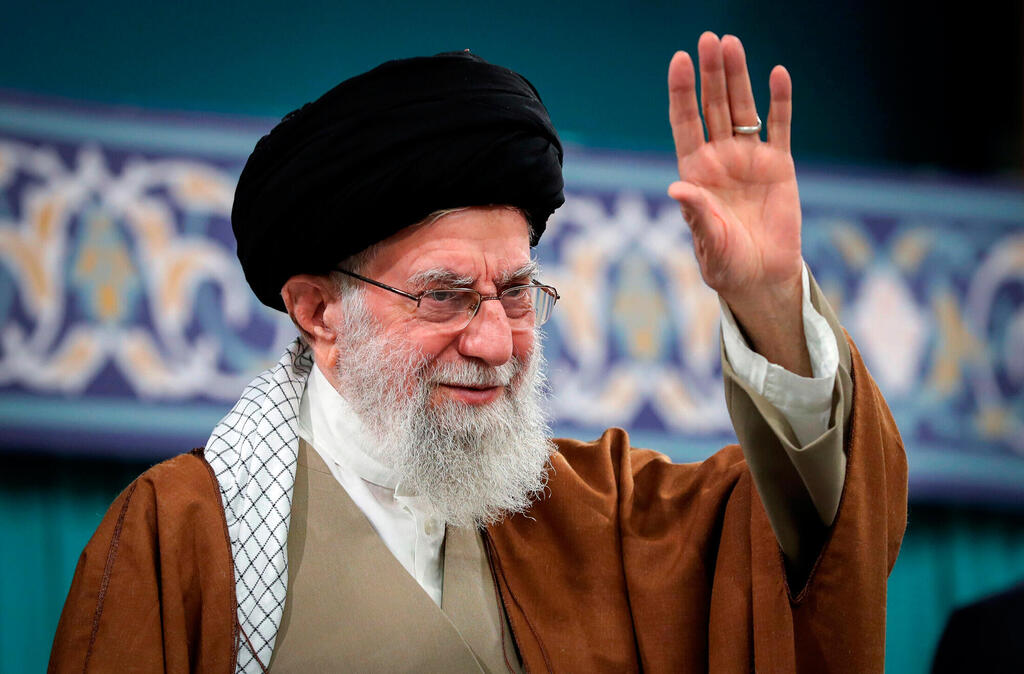
Behind that ascetic image, however, Khamenei built and controlled one of the most powerful and opaque economic empires in the Middle East.
This empire operates largely outside the authority of Iran’s elected institutions. It is inaccessible even to the Iranian president or parliament, and its managers are among the most powerful figures in the country.
The network functions like an octopus, reaching into nearly every sector of Iran’s economy. It is also one of the reasons that, despite years of economic crisis, Iran’s political system has remained remarkably resilient.
Money and status, not only ideology, bind large segments of Iran’s elite to the regime, even when doubts about its legitimacy have begun to surface.
“The regime in Iran will not collapse tomorrow or the day after,” says Prof. Meir Litvak, head of the Alliance Center for Iranian Studies at Tel Aviv University. “It has an extremely wide network of influence across every corner of the country. Too many people have a financial connection to it, and if it collapses they lose their money and their social status.”
“Khamenei maintained an ascetic facade,” Litvak adds, “but at the same time he created a shadow economic system that touches almost every aspect of Iranian citizens’ lives. For many people it is a source of livelihood and influence. Therefore, removing Khamenei alone is not enough to change the regime. At least part of the elite would have to conclude that the country must be saved, even at the cost of changing the leadership.”
At the center of this system is an organization known in Persian as Setad, and in English as EIKO, the Execution of Imam Khomeini’s Order.
Although Khamenei was first and foremost a religious leader, he understood early on that political power in the modern world rests heavily on economic control.
Following the 1979 revolution, the Iranian regime began confiscating property belonging to political opponents and wealthy families connected to the monarchy. Many assets were also abandoned as hundreds of thousands of Iranians fled abroad.
In 1989, shortly before the death of Iran’s founding Supreme Leader, Ayatollah Ruhollah Khomeini, Setad was created to manage confiscated and abandoned properties.
Under Khamenei, however, the organization expanded dramatically.
Very little is known about the full scope of Setad’s holdings. A major Reuters investigation in 2013 estimated the value of its assets at $95 billion. Later estimates have suggested the total could reach $200 billion.
Iran’s currency collapse in recent years has reduced the dollar value of many assets. At the same time, however, the organization has continued expanding its holdings, offsetting much of the decline.
Litvak stresses that Setad should not be viewed simply as Khamenei’s personal fortune. Rather, it functions as a vast conglomerate with stakes across the Iranian economy.
According to Reuters, the organization’s real estate holdings alone were worth about $52 billion, larger than the total value of Iran’s oil industry and exceeding even the fortune accumulated by the Shah before the 1979 revolution.
Setad’s growth has been fueled partly by political repression.
Over the years, the regime has imprisoned dissidents and persecuted religious minorities, including members of the Baha’i faith, confiscating their homes and other assets. Many of these properties were quickly sold on the open market.
The capital generated from these sales was then used to acquire stakes in companies across the Iranian economy.
Some investments were made through Iran’s official privatization programs, but in many cases these privatizations were largely symbolic. In practice, state companies were simply transferred from government ownership to entities controlled by Setad.
Analysts estimate that the organization typically acquires around 30% stakes in companies it targets.
Its holdings span almost every sector: telecommunications, banking, insurance, chemicals, agriculture, oil, media, and more.
“The story here is not merely the enrichment of the leadership,” Litvak explains. “It is the breadth of the network that allows control over the population.”
He compares the system to Russia’s oligarchic structure, where powerful businessmen dominate key industries. But in Iran the network is broader, encompassing thousands of individuals whose economic survival depends on the regime.
“This is essentially a massive job-creation system that produces deep loyalty to the government,” he says.
Companies affiliated with Setad often win the country’s largest infrastructure projects and government tenders, reinforcing the organization’s dominance over the private sector.
Alongside its commercial activities, Setad also oversees a network of charitable foundations designed to secure loyalty among Iran’s poorer populations.
These foundations operate under the banner of public welfare, building schools and kindergartens, distributing medicines, and providing assistance such as wheelchairs for the disabled.
One of the most prominent is the Barakat Foundation, established in 2007 to support development in Iran’s peripheral regions.
During the COVID-19 pandemic, Barakat coordinated much of Iran’s response. It oversaw production of N95 masks and diagnostic kits and later developed the country’s domestically produced vaccine, COVIran Barakat.
Other powerful foundations include Mostazafan, which holds major economic assets including stakes connected to the Iranian oil industry, and Astan Quds Razavi, which manages revenues generated by religious institutions.
These charitable networks play a crucial political role.
By providing services that the struggling state often cannot, they reinforce dependence on the regime and help cushion the social impact of Iran’s economic crisis, seen most clearly in the collapse of the national currency and soaring consumer prices.
Not everyone benefits from this system.
The protest movements that erupted across Iran in late 2025 largely came from sectors outside the Setad network and therefore experienced the economic crisis directly.
2 View gallery
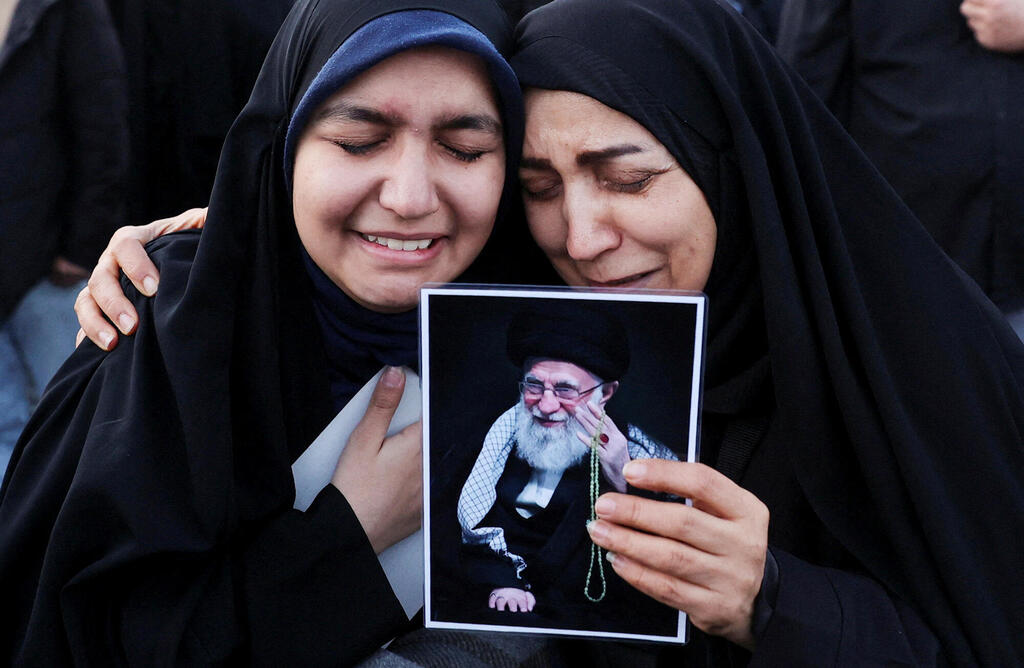
Women in Tehran, Iran mourn the death of Ali Khamenei
(Majid Asgaripour/WANA/via Reuters)
Setad itself does not fund the Islamic Revolutionary Guard Corps or the Basij militia, which receive their own state budgets and also control large business interests through pension funds and holding companies.
These military-linked institutions also dominate major construction and engineering projects across the country.
Nevertheless, Western governments have long suspected that Khamenei’s economic empire helps finance both domestic repression and Iranian activities abroad.
For a period, Setad was subject to Western sanctions. But after the 2015 nuclear agreement, many restrictions were lifted, returning much of its activity to the shadows.
Even within Iran, the organization remains largely opaque. Government institutions, including the president and parliament, have limited visibility into its finances.
That lack of transparency is likely to become even more significant as the country debates its future leadership.
Among the names frequently mentioned as potential successors is Mojtaba Khamenei, the Supreme Leader’s son.
Unlike his father’s austere public image, Mojtaba represents a different generation of Iranian elites.
According to Litvak, he belongs to a group often referred to in Iran as “the sons of the masters,” children of senior political, military, and religious officials who enjoy privileged lifestyles.
Recent estimates suggest Mojtaba Khamenei owns real estate assets worth around $3 billion, including properties in London and Dubai.



