







Former IDF spokesman warns: The next war for public awareness will increasingly play out on AI-powered platforms
Daniel Hagari was speaking at the New Era Capital conference in Boston. Rob Bair, a senior executive from Anthropic, revealed that state-sponsored actors are already utilizing artificial intelligence to autonomously execute most stages of cyberattacks. Alissa Knight, CEO of Assail, warned that security vulnerabilities are being transformed into offensive tools within a matter of hours.
“Defenders have always been at a disadvantage against cyber attackers because an attacker only needs to succeed once, whereas those developing defensive systems must succeed every single time,” said Alissa Knight, CEO of Assail, during a panel on the intersection of cybersecurity and national security at the New Era Capital conference in Boston.
Knight pointed to the sharply shrinking window between the discovery of a security vulnerability and its exploitation, noting that today, zero-day vulnerabilities can be turned into practical attack tools within just a few hours, sometimes on the very day they are discovered. The discussion, moderated by Gidi Argov, a managing partner at New Era, focused on how advances in autonomous artificial intelligence are changing the division of responsibility and authority between technology companies and governments. Joining Knight on the panel were Brigadier General (Res.) Daniel Hagari, former IDF spokesperson; Rob Bair, head of industry transformation for cybersecurity at Anthropic; and Daniel Kelly, co-founder and president of Method Security.
1 View gallery
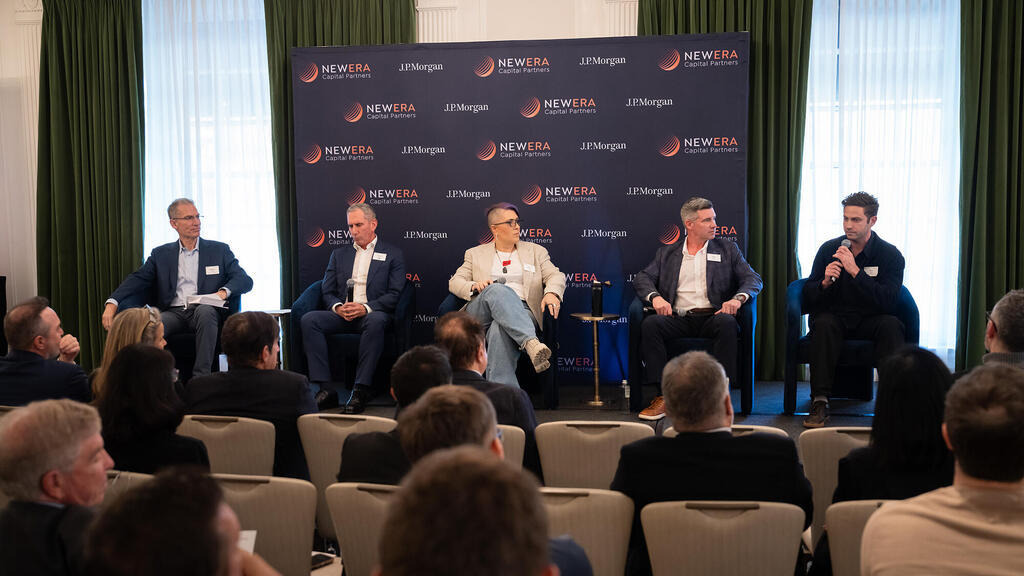
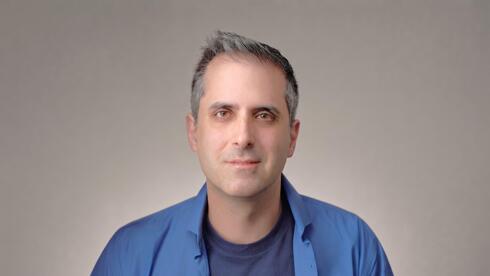
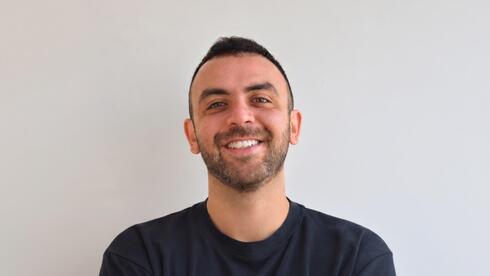
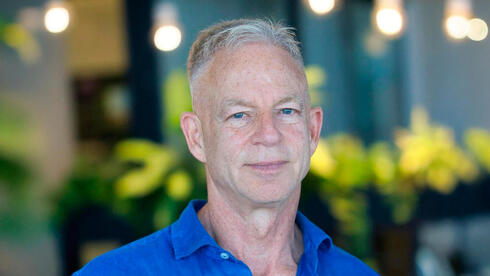
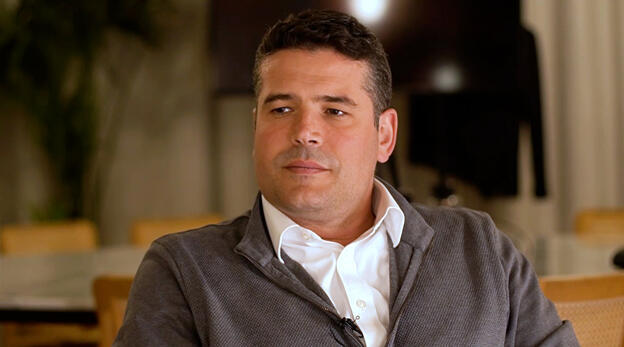
New Era Boston Conference (from right): Daniel Kelley, Rob Bair, Alissa Knight, Daniel Hagari, Gidi Argov
(Pierce Harman)
Issues of trust and vulnerability took center stage, emerging as key battlegrounds in the age of artificial intelligence. Hagari emphasized that establishing credibility requires the rigorous collection and verification of facts before they are made public. He added that the struggle for public awareness and trust will increasingly play out on AI-powered platforms. Reflecting on Israel's management of strategic communications during the war, Hagari said: “First and foremost, I believe the two most critical elements are trust and credibility.”
He recalled how, following allegations surrounding an explosion at Al-Ahli Hospital in Gaza, the IDF prioritized collecting radar data on the rocket's trajectory, footage from unmanned aerial vehicles (UAVs), and intercepted communications. The evidence was intended to establish that the explosion had been caused by a rocket fired by Palestinian Islamic Jihad that had fallen short of its target.
Hagari acknowledged that “we paid a price for the time spent gathering facts,” given the speed at which news unfolds, but stressed that the battle over a nation's strategic narrative will increasingly be fought using digital tools. He argued that states must move beyond traditional defense paradigms and establish a “qualitative advantage in the cyber domain” to protect their national narratives and prevent crises triggered by the spread of disinformation.
The discussion then turned to the capabilities of threat actors. Bair described how state-sponsored groups have dramatically reduced operational friction over the past year. He said Anthropic had recently tracked cyber operations planned and managed by foreign state actors that used AI models to autonomously carry out “80% to 90% of the steps required in the cyberattack chain.”
Bair pointed to the rapid evolution of these systems, warning that as models become increasingly capable of independently constructing the operational stages of an attack, “virtually all the friction that previously existed, and which attackers once had to account for, has vanished.” He said this made it especially important to ensure that models adhere to established values and constraints, and that advanced systems have the safety protocols and protective mechanisms needed to limit their misuse.
Turning to the technology behind offensive tools, Knight argued that restricting access to advanced cloud-based AI models would not stop cyberattacks. “I believe the future does not necessarily lie with cloud-based AI models,” she said, adding, “I believe the future belongs to small, domain-specific models, and that the future is AI sovereignty.”
Threat actors, she argued, “do not need trillions of parameters to attack a target.” Specialized models with 14 billion parameters can be adapted locally and used to carry out sophisticated attacks. Knight also argued that the real agentic capabilities, and the potential for AI systems to become powerful offensive tools, do not reside in the underlying models themselves but in the software infrastructure built around them. “Agentic capabilities are not found within the model itself, but rather in the framework that operates it,” she said.
On corporate governance and oversight, Kelly emphasized that deploying autonomous AI agents does not absolve human operators of legal or operational responsibility. “The agents do not change the law: the responsibility for how the technology is deployed ultimately rests with the operator and his superiors,” he said.
Kelly argued that managing autonomous systems is primarily “a problem of software engineering and a problem of alignment, not a problem of regulation.” Organizations, he said, must embed strict control mechanisms, auditability and clear operating limits into their systems. Referring to defense and government procurement, he noted that public-sector buyers sometimes show a “tendency not to make real decisions about investing in organizational information security, but to continue with pilots indefinitely.”
Nevertheless, Kelly expressed cautious optimism about the near future. He estimated that by 2027, defense organizations could gain the upper hand if security institutions move quickly to equip their cybersecurity teams with tools tailored to their specific operational needs.
Concluding the discussion on cyber defense, Bair said the main bottleneck in organizational cybersecurity had shifted. The central challenge is no longer identifying vulnerabilities, but managing the delays and gaps in fixing them. “Detecting security vulnerabilities was never truly the problem,” he said, adding that the main systemic burden stems from “the remediation process itself and the fact that vulnerabilities often remain unaddressed.”
To address this imbalance, Bair recommended integrating automated scanning tools directly into developers' workflows. “What I find truly exciting is putting these capabilities into the hands of the security team,” he said. Moving security checks earlier in the software development lifecycle, he argued, allows engineers to identify and fix vulnerabilities in code before software reaches production environments.