









“There’s a price where you have to say yes”: CyberArk founder on the $25 billion Palo Alto deal
Udi Mokady reflects on resistance, responsibility, and the sale that changed Israeli cyber.
First Image
May 11, 2026, afternoon, "this is the day"
Udi Mokady finishes his workday and drives home. He knows it's the end. He has already completed the sale of the company he founded and led, CyberArk, and now he has also finished overseeing its merger into the buyer, Palo Alto Networks. An Israeli-American cyber giant buys an Israeli cyber success story, $25 billion changes hands, the merger is complete, and Mokady realizes that he is parting ways with his life's work after 27 years. He gets into his car and turns on Spotify. And he knows exactly what he wants to hear.
"It was a hard winter in Boston, but that day the sky was already blue and everything around me was green. And I had a feeling that I needed to remember that moment. In every chapter of my life, I associate a specific song with it," he recalls. "For me, what captured the feeling in that bittersweet moment was the song This Is the Day by The The. I played it at full volume in the car. It was a moment of sadness, but also of joy and pride. It's not a party song. It looks back on memories. 'This is the day your life will surely change / This is the day when things fall into place.' There was a sense of liberation in that moment, there you are, you've handed over the keys. But it's also your child. Throughout the entire sale process, I kept my heart in the freezer, and that day I took it out to thaw and started to process everything."
First Thought
Never say never, or you'll eat your hat
Mokady (57) founded CyberArk with Alon Cohen in 1999. The company focuses on identity security and privileged access management, ensuring that only authorized users in an organization have access to sensitive information and systems. Since its founding, Mokady has served as COO, CEO, president, and chairman. It is his child.
Although he emerged from the sale with a substantial stake in Palo Alto Networks shares, which market estimates currently value at about $250 million, he did not want to sell CyberArk. He had said so for years, to the media, to investors, to employees, and to himself.
"Everyone knew my view, that we should continue growing independently and on our own terms. I believed in it more than 100%. If you woke me up in the middle of the night, that's what I would have told you," he explains to Calcalist in his first interview since the deal and, in fact, his first magazine interview. "We were constantly acquiring companies ourselves. Only in mid-2024, a little over a year before our sale, we acquired Venafi for $1.5 billion, the largest acquisition ever made by an Israeli high-tech company."
And a year later, negotiations with Palo Alto began.
"Yes, but when Nir Zuk and Nikesh Arora (Palo Alto's founder and CEO, respectively) met with us for an exploratory call at the end of April, we told them we were not interested in selling and started discussing a partnership. My intention was to continue growing organically and through acquisitions. Teams from both companies began working on how that could happen. But in early June, the Palo Alto team made it clear that they weren't interested in partnerships, they wanted to acquire us. From that point on, the negotiations focused on price, and because we believed we had an excellent independent future, we were able to negotiate from that position. I clearly did not want to sell."
So why did you sell?
"Because I have a fiduciary duty to shareholders and customers. An offer of this magnitude is not a matter of the founding chairman's personal preferences. And the combination of CyberArk with Palo Alto creates an integrated offering for customers. We provide identity security, an area that will become increasingly important with the rise of AI. They provide network security, endpoint protection, and cloud security. Palo Alto can offer our solutions to its customers, and CyberArk can reach another 60,000 customers. I genuinely believe in the combined future of the two companies."
So AI led to the deal?
"Yes. For years, Palo Alto looked at us from the sidelines as a successful independent ship sailing alongside them and minding its own business, until AI arrived. They said to themselves: 'We'll enter the identity space only when there is a major inflection point,' and that moment arrived.
"The world of identity management is complex. It sits deep within the organization and is not something you can deploy in 24 hours. And it is only expanding. At first, we managed human identities. Then machines, applications communicating with one another, and computers interacting with other computers. Now every employee has AI agents, meaning every company has exponentially more identities whose security must be managed. Palo Alto realized they could not manage security comprehensively without entering this world."
4 View gallery
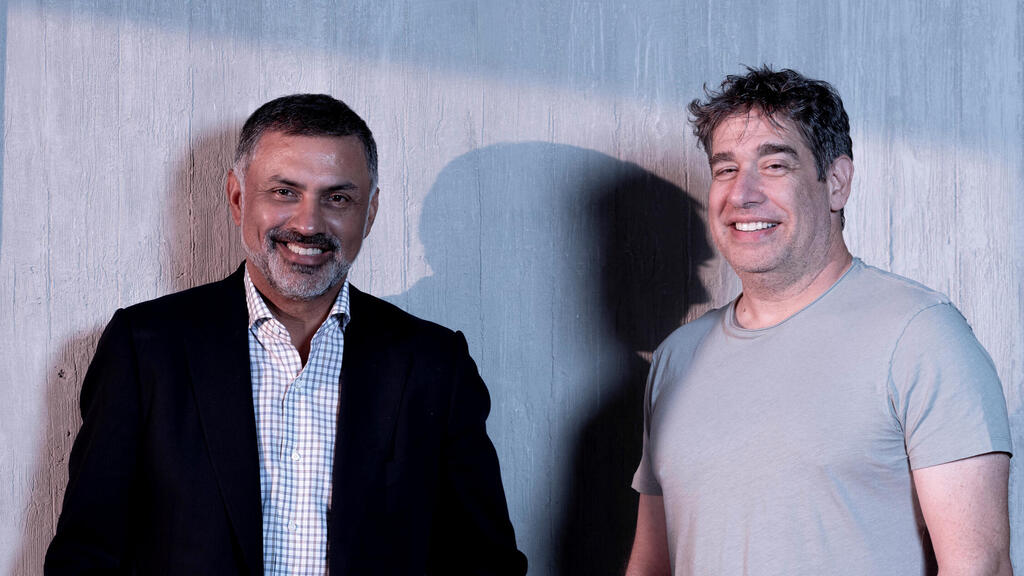
Palo Alto founder Nir Zuk (right) and Palo Alto CEO Nikesh Arora.
(Photo: Yuval Chen)
Shlomo Kramer, a senior cybersecurity executive, criticized the deal on precisely those grounds, arguing that Palo Alto was entering too many different areas.
"And he was wrong. Customers are tired of buying products from a hundred different suppliers instead of purchasing one system that does everything. Palo Alto makes carefully considered acquisitions of the most successful companies in relevant technological fields, and made one massive acquisition in an area it wanted to enter in a significant way. And the proof is that Palo Alto's stock soared and its revenues increased dramatically."
So Palo Alto realized it needed you. And what did you realize?
"If you're going to be acquired, you want a successful and ambitious buyer, one that is buying you for the right reasons and genuinely believes in your field. Palo Alto is the right home, the best home, and one that also understands the importance of Israel and maintaining activity here."
A $25 billion price tag must have helped the decision.
"Yes. It was a very significant premium over CyberArk's share price. At the beginning of June we were trading at about $370 per share, and the deal that was signed at the end of July was valued at roughly $495 per share. Palo Alto really wanted the deal."
And you concluded it was the right move for the company's stakeholders, even though it meant abandoning a strategy that had been in place for decades.
"Yes. And yet, with my hand on the Bible, I swear that part of me hoped the sale wouldn't happen. I truly believed the sky was the limit for us. But as chairman, from a governance perspective, I knew we were doing the right thing, and I have no regrets. There's a price at which you're allowed to say no, and there's a price at which, as a public company, you have to seriously consider the offer because it is what's best for the organization and its shareholders. You can't continue operating solely according to the DNA of the founders and executives."
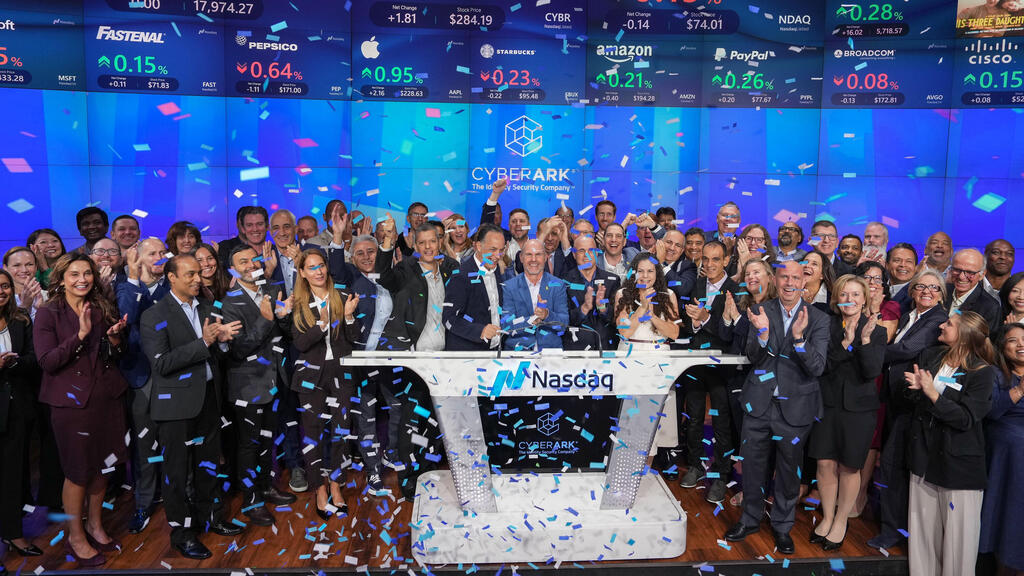
Three months before the sale was announced, at the Calcalist conference in New York, you said following Wiz's sale: "I applaud Wiz and I'm very happy for them, but I wouldn't trade places with them (...) As a public company, you can create value over time. Nothing is stopping us from reaching $100 billion (...) We are only at the beginning of the journey of creating value and increasing our valuation."
"And I ate my hat. I won't give a politician's answer here. Since then, I've learned: never say never. The facts speak for themselves."
Second Image
July 29, 2025, afternoon, locked in a room so as not to bluff
Although the negotiations to sell CyberArk had been underway for about two months, the world only learned about them at the end of July, in a report by The Wall Street Journal.
"We were sitting in our conference room in Boston, the CEO, the CFO, and I," he recalls, "and we heard that there had been a leak to The Wall Street Journal. I just didn't want to leave the room."
Why?
"To avoid running into people, so I wouldn't have to bluff. I didn't want to put employees in a position where I'd tell them, 'No, no, it's nonsense, just rumors.' There had been previous cases where incorrect things were published and we said, 'Guys, you know this is a public company, we're not allowed to respond to rumors publicly, but trust us, it's nonsense.' But this time I couldn't say that. I don't know how to fake it, and I don't have that distance.
"When I was CEO (until 2023), I was a CEO of hugs. I even brought that culture to the American office, teaching people to say 'nice,' 'beautiful,' to call someone a 'cannon,' and then explain what that meant," he laughs. "Those were the relationships. So I couldn't fake it."
What did you do?
"We stayed in the conference room. We started calculating how many hours we could stay there without leaving, not even to go to the bathroom, because to get to the bathroom you had to walk through the main hallway of the office. We sat there, held it in, stared at a flower pot, and regretted that it was plastic. We waited there for about two and a half hours, but it felt much longer.
"We waited until as many employees as possible had gone home, and then we realized we had to accelerate the closing of the agreement. When darkness began to fall and the office emptied out, we slipped away while the legal teams worked around the clock to advance the deal. The next morning, we announced that the agreement had been signed."
Was there any sense of relief afterward?
"My father passed away a few days later. That's life. So I wasn't really on a high."
Second Thought
AI and dollar-driven layoffs are just an excuse
The day after the deal closed, in February 2026, Palo Alto began laying off about 10% of CyberArk's workforce, approximately 500 employees. Mergers, by their nature, involve eliminating a significant number of overlapping roles.
When Mokady lists the advantages of the merger, he also notes that "from the employees' perspective, it meant becoming part of the largest cybersecurity company in the world, but I knew they would have to give up the organizational culture they were used to."
You mean those who stayed, because some went home.
"It still bothers me to this day. The deal was good and the right thing to do, but I feel bad for the employees who were affected by it. During the negotiations, I assumed that if there were layoffs, they would be limited to the margins, for example, where two parallel departments had to be merged.
"I didn't anticipate the scale of what happened, and I was surprised that we, CyberArk's management, had no advance knowledge of it at all. We heard about it the same way the employees did. It hurt me on the level of every individual employee, but I understand that in a merger of this magnitude, laying off about 10% of the workforce is not irrational."
And now AI will also lead to layoffs?
"So far, neither we nor Palo Alto have carried out layoffs for that reason. CyberArk was never one of those companies that recruited excessively during the boom years and then cut people later. We've always operated with discipline.
"In companies that did overhire, AI is now being used as an excuse for layoffs. We use it to give employees the ability to do more. It multiplies productivity."
Is the strong shekel also just an excuse for layoffs?
"When you employ thousands of people, earn revenue in dollars, and pay salaries in shekels, you naturally want to reduce uncertainty, and companies know how to hedge that exposure. We did that. But yes, it's a challenging situation that requires creativity from finance departments, and also from regulators.
"There are traditional solutions, the Bank of Israel buying dollars, for example, and there are creative ideas. One proposal was that companies be allowed to pay taxes in dollars. Anything that can be paid in dollars can help."
What happened to the employees who were laid off from CyberArk?
"Many of them landed on their feet, and I helped, and still help, some of them find jobs. I told them, and I still tell them: 'You were part of building a globally successful brand. You have a strong reputation. Move forward with pride. One chapter is ending, and another will begin.'
"I genuinely believe that life is a collection of chapters."
You moved on as well.
"I helped integrate CyberArk into Palo Alto, and then I left. I felt a responsibility to keep my promises, to investors, employees, and the public. I felt I had to be the last person to turn off the lights in the locker room.
"You're used to managing, and suddenly you see an employee being moved from one department to another and think: 'You're wrong. He doesn't belong there.' But you learn to let go.
"I worked for the CEO. I attended conferences. I helped with acquisitions. I spoke with employees. I built an infrastructure for connections and future growth. But that chapter is closed as well."
And you walked away with the same sense of pride that you expected from your employees?
"Yes. I am proud of the second-largest deal in Israeli history (after the sale of Wiz), and the largest ever involving a public company. I am proud of what we built over nearly 27 years, the legacy, the jobs we created, the taxes we paid, the donations we made.
"And yet, on a personal level, I am sad that my baby was given up for adoption."
Very few people lead a company for 27 years.
"Very few, in Israel or anywhere else in the world. I was all in. Investors genuinely liked seeing the founder still there, sitting with them, passionate about the business. I had investors who told me, 'We only invest in companies where the CEO is also the founder, because we believe he'll die for the company.'"
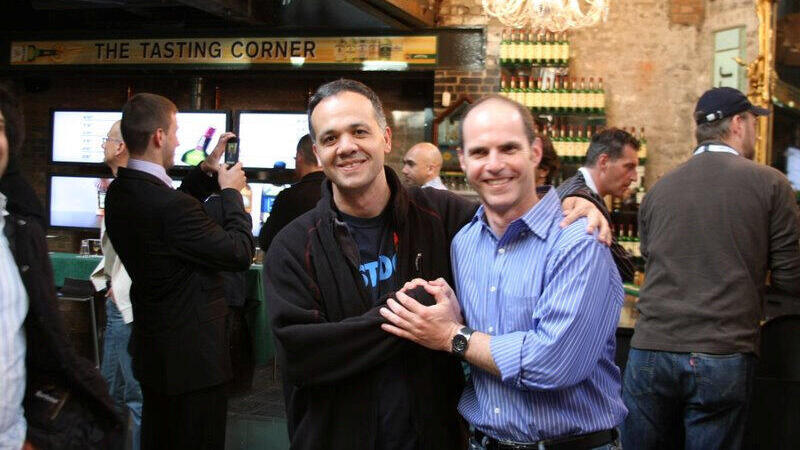
Your entire office, which I can see on our video call, is filled with CyberArk memorabilia. Don't you have anything from Palo Alto?
"I left before I had a chance to change into the team uniform," he laughs. "Everything I own is CyberArk, the water bottle, the shirts, the sign they removed from our building in Boston that's now hanging in my house. People always used to say about me: 'Udi bleeds CyberArk.'"
Palo Alto continues without you, and ended the third quarter with $3 billion in revenue, a 31% increase compared with the same quarter last year.
"We're already seeing the impact of the merger, and it's probably running about six months ahead of the company's expectations. And this is only the beginning of bringing CyberArk's capabilities to Palo Alto's customers."
Third Image
June 11, 2026, afternoon, home in Brookline, a suburb of Boston
Mokady is moving at a different pace today. What is he doing? Playing guitar. “I need to move from the stage I was in during high school to the next stage,” he explains.
And what else?
“I work with young entrepreneurs, guiding them not necessarily to look for a quick exit but to build something big and challenging. I have invested in about 20 companies, most of them Israeli or with Israeli connections, and I serve on the board of the IAC (Israeli-American Council, an organization of the Israeli-American community).”
How is life after all that?
“I am an energetic person. I love doing things, I love meeting clients. I was always the Minister of Foreign Affairs, and I never got tired. But when I became CEO, I went from 200 km/h to 80 km/h. During the 34 quarters in which I ran a public company, the pressure was very heavy; I took things seriously. I use the legendary quarterback Tom Brady as a model, he was the first to arrive at practice and the last to leave. That’s how I felt as CEO. When I became chairman, there was a significant reduction in workload. And now there is even more relief.”
And what about starting another company?
“Never say never. I learned something from eating my hats.”
Third Thought
A new administration for the country
Mokady’s professional and personal stability came after years of wandering that began at birth. “My father, Daniel Mokady, was a diplomat, and I was born in Zambia while he was serving there,” he explains. “Then we moved to Guatemala, and I didn’t live in Israel for the first years of my life. When I was four, we moved to Jerusalem, and when I was eight, we moved again, to New York and then Los Angeles.”
At age 13, when he returned to Jerusalem, he met a new friend, Alon Cohen. “He enlisted in the IDF’s central computer and information systems unit, and I joined Unit 8200, before it was considered a glamorous unit.” He was exposed to technology in the army, but later earned a law degree and worked for a time as a legal consultant and business development manager at a technology company. “I knew from day one that I didn’t want to work in law; I did it to please my parents.”
In 1999, the long-standing friendship with Cohen led to the founding of CyberArk, focused on software that secures computerized access to sensitive systems - “in the army, in banks, in insurance companies. Each time we discovered a new field where there were no tools to control access,” he says.
Cohen, who left CyberArk in 2011, previously told Calcalist that the original idea was born during his military service, after a love letter he wrote to a female soldier in the unit was leaked. If even that unit, the IDF’s central computer and information systems unit, had a data security problem, he realized, then it represented a large market opportunity.
Back in 2000, at the beginning of CyberArk, Mokady moved to Boston. “It was clear that one of us had to be in the United States,” he explains. He lives there to this day with his wife Ilana, an artist, and their three children (ages 29, 26, and 21 - a mechanical engineer turned real estate developer, a social worker, and an acting student). “It was a journey for all of us, all in. No hesitation, no ‘this is inconvenient right now.’ Everyone joined the journey. Our lives are here.”
In other words, there’s no way you’re coming back, even after leaving the company.
“We haven’t looked back over all these years, and my family is already rooted in the United States. I’ve always visited Israel often, but now, after stepping down, I can go even more. And I feel I can help Israel more from here, speaking in various forums, emphasizing that CyberArk is an Israeli story. That is more useful than being one of thousands of entrepreneurs in Israel.”
Continuing your father’s diplomatic mission.
“In all my roles at CyberArk, I felt like an unofficial ambassador for Israel. From the moment we opened an office in the United States in 2000, there was an Israeli flag at the entrance next to the American flag, and everyone who came in asked about it, and I explained that we were an Israeli company. Everywhere I went, I spoke about the jobs we created in the United States, and it was received positively. Today, it’s difficult to fight radicalism, with the billions of dollars invested in efforts to tarnish Israel, but maybe after the elections we’ll be able to talk about a new administration for the country.”
What was the beginning of the company like?
“Each time we only had funding for a short period, but with a strong belief that we had to succeed no matter what. Some investors were not easy, and we had to educate the market, stand at booths at every remote exhibition, and fly in the middle of the night for feasibility tests with customers. The Americans were always surprised to see how happy I was with every small order, from Singapore or Sweden. Today we have almost ten thousand customers, including the world’s largest banks, huge companies, and government organizations.
“During the next stage, in the 2008 crisis, I was pressured to lay off employees, and I refused. We cut salaries only for ourselves, for management. There were years when some investors focused only on the short term and made me feel I couldn’t steer the ship for the long term. I lived with that tension for years, until the IPO in 2014.”
After the IPO, did the big money arrive?
“Only then, and even then in small amounts. It came late in the journey, which is a good thing. Today entrepreneurs get rich earlier, but we were a broke family, the children grew up broke, and that’s healthy.”
How did you handle the pressure over the years?
“There are two books that shaped my view of management. The first is Built to Last (Jim Collins and Jerry Porras), which is about building companies for the long term. The second is The Happiness Advantage (Shawn Achor). My younger sister gave me that book and said, ‘It’s about you.’
“The idea is that success does not bring happiness, but happiness brings success. Positive, optimistic thinking increases the chances of success. Before a test, if you tell someone, ‘You’ll fail,’ versus ‘You’re a genius,’ think about how that changes the wiring of the brain.
“So I’m optimistic but realistic, not complacent. I always worry about what’s around the corner, but I’m wired positively. And when you’re wired positively, you see more opportunities, discoveries, and turning points.”



