











Analysis
Anthropic IPO offers first major test of AI market in the post-Jensen Huang era
The AI giant is seeking to raise up to $64.4 billion publicly and another $26 billion privately, even as concerns grow over slowing revenue growth, mounting infrastructure costs and the industry's reliance on Nvidia-backed financing.
The AI industry is about to face its first major test in the post-Huang era, with Anthropic's IPO expected to take place today. The offering and the market's reaction could provide an important gauge of investor sentiment following the departure of one of the most influential figures in the AI revolution. They may also help answer a broader question: Is the market heading toward another phase of growth and expansion, or is this the turning point that signals a bursting bubble?
Anthropic is the first major pure-play AI company to go public. Elon Musk's SpaceX, which went public earlier this year, has substantial AI operations, but they are part of a broader business spanning space and satellite internet, making it harder to assess the impact of AI on the company's overall performance.
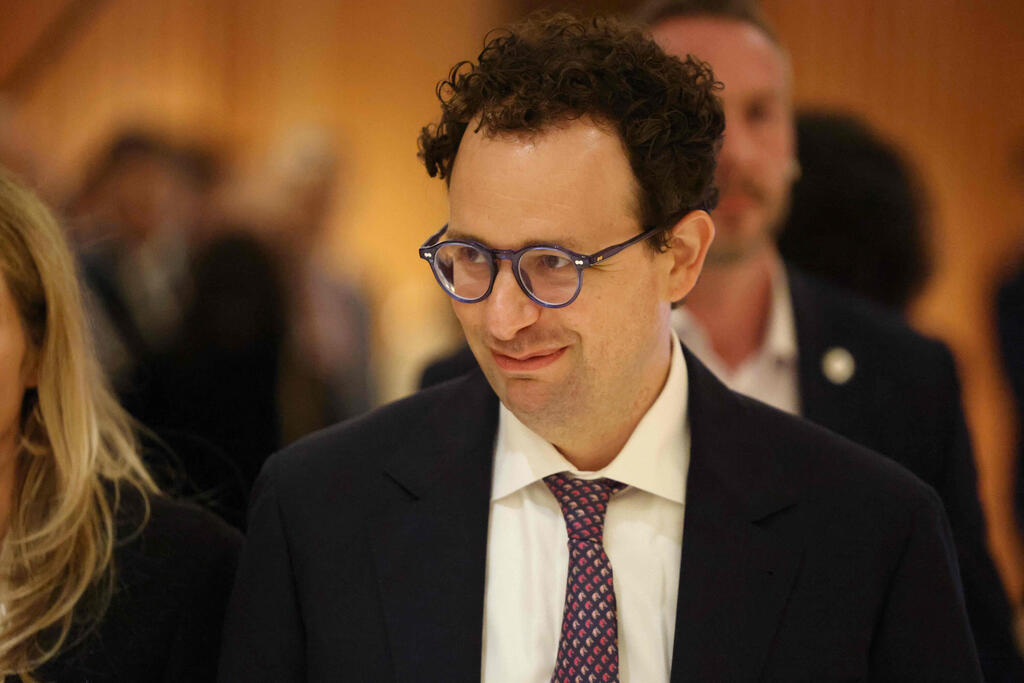
Anthropic is approaching its IPO under less favorable conditions than it had hoped. Until a few weeks ago, the company was targeting a valuation of approximately $2 trillion, which would have surpassed SpaceX and made it the largest IPO in history. But recent declines in technology stocks and growing investor concerns have forced it to lower its expectations, with its valuation now projected at approximately $1.4 trillion. That figure comes before factoring in the market's reaction to Jensen Huang's departure from Nvidia. The developer of the Claude AI model is seeking to raise up to $64.4 billion through the IPO, alongside another $26 billion through a private placement. Nvidia, meanwhile, is set to purchase $10 billion worth of shares in the private offering.
On paper, Anthropic's financial performance looks impressive. Earlier this month, it reported revenue of $33.24 billion for the nine months ended September 30, a 1,200% increase from the same period last year. Its net loss widened to $104 billion, compared with $25.1 billion in the corresponding period of 2025, an increase of 314%.
Revenue in the third quarter reached $16.8 billion, up 46.1% from the second quarter. The company also said it was profitable last quarter on an adjusted basis, excluding certain expenses. However, investors and analysts told the Financial Times that Anthropic's growth rate has slowed significantly compared with the beginning of the year. Revenue surged nearly 140% between the first and second quarters, making the subsequent slowdown a potential warning sign. If revenue growth continues to decelerate rather than accelerate, it could signal that the AI market is beginning to cool.
Nvidia's 121 AI investments
Revenue growth is critical not only as Anthropic seeks to move toward sustained profitability, but also because of the enormous financial commitments it has made to support its expansion. The company is expected to invest approximately $895.4 billion in AI infrastructure in the coming years through purchase commitments and signed agreements to lease computing capacity and physical infrastructure. That figure is equivalent to roughly half its projected IPO valuation and could rise further as its infrastructure needs expand. Of that amount, $447.5 billion is expected to be invested by the end of 2030.
These commitments come on top of substantial ongoing expenses, including short-term contracts to rent computing capacity from existing data centers while Anthropic builds out its own infrastructure. SpaceX alone is reportedly paid $3 billion a month by Anthropic. Meeting these current and future obligations will depend on the company's ability to sustain its growth and expand at an even faster pace.
Related articles:
The picture has become more complicated amid Jensen Huang's departure from Nvidia following a controversy involving his personal conduct. Huang was one of the most influential advocates of the AI revolution, using Nvidia's vast financial resources and dominant position in the chip market to help push the industry forward, including during periods of uncertainty.
Since the beginning of 2026, Nvidia and its venture capital arm, NVentures, have participated in 121 startup funding rounds in the AI sector, making them among the most active corporate investors in the industry. During an analyst call in August, CFO Colette Kress said Nvidia had invested nearly $50 billion in leading AI companies. That figure is in addition to more than $20 billion in acquisitions and other transactions across the sector.
Among the most notable moves over the past year were a $30 billion investment in OpenAI in the first quarter, a $5 billion investment in Ilya Sutskever's Safe Superintelligence (SSI), reported in August, and the $13 billion acquisition of Hugging Face in September. Since late 2025, Nvidia has also made a $10 billion investment in Anthropic and entered into a $20 billion licensing agreement and talent deal with chip startup Groq.
Those investments pale in comparison with the scale of the financing Nvidia had hoped to mobilize across the industry. In August, the company established a strategic partnership with six of the world's largest financial institutions, including BlackRock and Goldman Sachs, to create independent financing platforms capable of channeling up to $500 billion into AI infrastructure.
Many of these arrangements have raised questions about circular financing, in which money invested by Nvidia in AI companies is subsequently used to purchase Nvidia's chips. Such arrangements have helped sustain demand for Nvidia's products while also supporting spending across the broader AI ecosystem, including demand for the computing infrastructure used by companies such as Anthropic.
Investor sentiment
It remains unclear what investment strategy Nvidia will pursue under Huang's permanent successor, who has yet to be appointed. But if the investment frenzy that has fueled the AI industry begins to fade, or even slows significantly, it could expose weaknesses in the financial foundations underpinning the market's current expansion. Anthropic's IPO could offer an important indication of how investors view the industry following this dramatic change, and whether they still expect growth to continue or see signs of a reversal.
For now, investor appetite appears strong. Data released Friday, following Huang's departure, showed that Anthropic had attracted orders totaling roughly six times the number of shares being offered. But the real test begins today and will extend over the coming days and weeks, as investors assess the stock and the broader AI market in the post-Huang era.



