










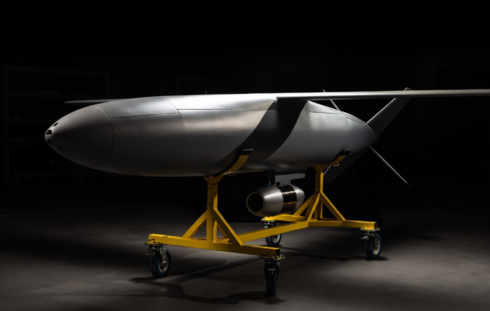
Covenant counts on Europe’s demand for defense independence to fuel a 5,000-missile factory
The defense startup has secured its first European contract and plans to begin mass production of its Anthem cruise missile in Germany in early 2027. It says less than 5% of the components used at its German facility come from outside Europe, with a goal of reaching zero.
Covenant is betting that Europe’s growing desire to reduce its dependence on American weapons will create a major market for its low-cost cruise missiles, with the startup founded by Israeli-American Michael Kaufman and Ofir Dayan (CTO) planning to begin mass production at its facility in Germany early next year.
The defense technology company, which emerged from stealth on Wednesday with more than $250 million in funding, has secured one European contract for its Anthem long-range missile and is in talks with additional potential customers, according to Reuters. It has not disclosed the countries involved.
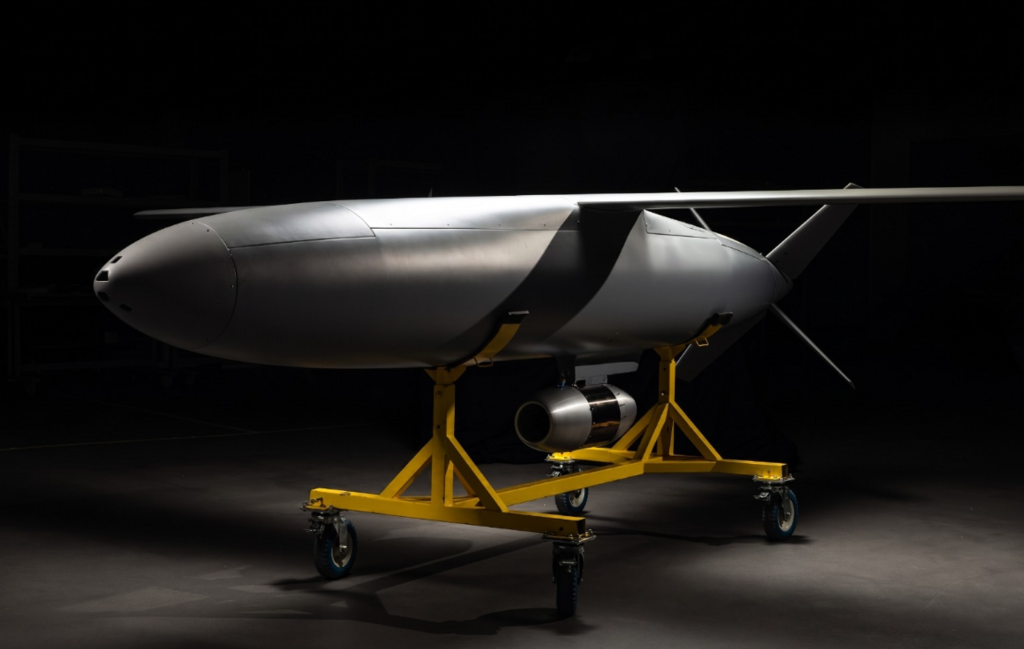
The company plans to build Anthem at its facility in Saxony, in eastern Germany, with production expected to begin in early 2027. Covenant co-founder and CEO Michael Kaufman told Reuters that the company aims to reach a production run rate of 5,000 missiles a year during 2028.
That ambition reflects a very different approach to long-range weapons from the one that has traditionally dominated the market. Covenant says Anthem is designed to combine a heavy payload and strategic range with production at a scale intended to give militaries much deeper inventories than they can achieve with expensive legacy cruise missiles.
The company said the missile costs in the “mid-six figures” per unit, putting it at a fraction of the cost of systems such as the Tomahawk. The U.S. defense industry is itself trying to expand production of Tomahawk, with Raytheon planning to reach 1,000 missiles a year from a current rate of roughly 60 to 90.
Covenant argues that there is a gap between the relatively cheap, short-range drones that have become ubiquitous in recent conflicts and the far more expensive long-range weapons traditionally used for strategic strikes.
“There is a gap in the middle of that for affordable mass and strategic range, and that’s the gap that Anthem was filling,” Abby Denburg, Covenant’s president and chief growth officer, told CNBC.
The European market could prove particularly important because Covenant has designed its German production operation around a largely European supply chain. Kaufman told Reuters that less than 5% of the bill of materials for the Saxony-produced version of Anthem comes from outside Europe, with the company aiming to reduce that figure to zero.
That could give Covenant an advantage in a European market increasingly focused on reducing reliance on U.S. defense technology. Germany and Britain are developing a long-range missile with a range of more than 2,000 kilometers, while European governments are facing growing pressure to strengthen their own ability to deter Russia and sustain a prolonged conflict without depending entirely on American weapons.
Covenant has not disclosed Anthem’s range, but said the system is well suited to the European theater. The missile has a payload exceeding 200 kilograms and is designed to strike targets both on land and at sea.
The company is also developing a naval version of Anthem under a roughly $70 million program with the U.S. Navy’s Rapid Capabilities Office. The project is intended to adapt the ground-launched system for maritime use and incorporate features designed to facilitate exports to U.S. allies and partners.
The emphasis on production capacity reflects lessons from recent wars, in which precision weapons have been consumed faster than defense industries have been able to replenish them. Covenant says its goal is not simply to produce a cheaper missile, but to make enough of them to give militaries the depth needed to sustain a conflict for weeks or months.
“The way in which to win a war or deter your adversaries is to be able to have the depth and arsenal to sustain that conflict ... for days, weeks, or months on end,” Denburg told Reuters.
Kaufman estimated that Germany and other European countries could ultimately need tens of thousands of long-range missiles to counter a distant adversary with a large territory.
Covenant is building that production capacity on both sides of the Atlantic. Its new 105,000-square-foot facility in Dallas is scheduled to begin serial production in the first quarter of 2027, initially targeting 1,000 missiles in its first year before eventually scaling to 5,000 annually. The company also operates production facilities in Germany and Northern Israel.
The startup has more than 200 employees worldwide, according to CNBC, and is expanding its engineering, manufacturing and program-management teams.



