









“We are not ready”: The psychologist preparing for alien disclosure
Jennice Vilhauer says confirmation of non-human intelligence could trigger fear, confusion and a crisis of trust unless governments prepare people for the news
Suppose that one morning, as you catch up on the news hoping that yet another disaster hasn't happened, you discover that while you were sleeping, U.S. President Donald Trump announced that the administration holds unequivocal proof of the existence of life beyond Earth. He will be very festive — here is another achievement to be credited to his name — and he will try to reassure everyone. "They want a deal," he will say, drawing on the conceptual world so familiar to him. Perhaps he will even present photos or videos. But you, what will you do on that morning? Will you rejoice? Panic? Tell your children about it while getting ready for school? And if you tell them, what will you say, and how? Will you dress up festively in honor of the invasion from Mars? Stockpile canned food? Tweet jokes online that cover up your anxiety? Be filled with gratitude that you get to witness a once-in-history event? Volunteer to board the spaceship?
These questions are not just another thought experiment; they are the professional focus of psychologist Dr. Jennice Vilhauer. As she sees it, the question of how we relate to the possibility of intelligence originating beyond Earth is an opportunity to learn, first and foremost, and a great deal, about human beings. For her, this is not an alien movie. "It's the most interesting human story I have ever come across," she says, "and as a psychologist I can't help but be interested in it. I'm stunned that there aren't more psychologists interested in it." Vilhauer is not merely interested in the subject; she is extensively engaged in it, and not on the professional fringes, but within established bodies that deal with the subject: on a special government council, and also on the advisory board of the Disclosure Foundation, which issues position papers aimed at "advancing the understanding of UAP through policy, legislation, and public education."
About two months ago, President Trump established the Scientific Advisory Council on UAP, Unidentified Anomalous Phenomena (professionals don't say "UFOs," and certainly not "aliens"; once the field began to be handled more seriously, the jargon changed too). The council is chaired by Israeli-American astrophysicist Prof. Avi Loeb, and it has 20 members - physicists, statisticians, anthropologists, biologists, philosophers and psychologists - among them Ben Lamm, the entrepreneur behind the de-extinction of the dire wolf at Colossal Biosciences, and Israeli psychologist Dr. Omer Eldadi. The council is meant to provide the administration, more precisely, its body dealing with the subject, the UAP Governance Board, with scientific analysis and advice on unclassified materials the Board passes on to it. One of the emphases of its work is the very one Vilhauer focuses on: "It is essential to understand human psychology in order to interpret these reports and to predict the future impact of UAP on society," Prof. Loeb explains to Calcalist. "That is why the expertise of Dr. Eldadi and Dr. Vilhauer is essential to the council."
On August 31, council members were informed that the administration has a plan for the event that it obtains confirmation of the existence of extraterrestrial intelligence, and that the United States is prepared to lead international preparedness on the matter. The contents of the plan have not been published, and Vilhauer, too, admits that she doesn't know them. And no, she also doesn't know whether there is any intelligence other than the one we know.
"Considering the sheer size of the universe, it would be ridiculous to assume we are the only intelligence in it, but I don't know yet," Vilhauer says in an exclusive interview with Calcalist. "I'm a member of the scientific council largely because I really want to find out. I take the evidence seriously. But as a psychologist I also know that people aren't always the most reliable when it comes to, for example, eyewitness testimony or memory. I don't doubt the testimony of people who have had experiences that raise such a possibility, I think they are sincere in their reports, but I'm also very careful about the kinds of conclusions I reach. So at this stage we still don't know what UAP are, and we don't know whether we are dealing with non-human intelligence (NHI). But it's clear that many people are convinced such an intelligence exists, and it's entirely clear that this will affect human beings."
Drop the stigmas. Start listening to the testimonies
Vilhauer, who lives in Los Angeles, is a clinical psychologist who also conducts research, specializing in anxiety, depression and low self-esteem. She is particularly interested in how expectations shape our mental state, and in that framework she developed a method called Future Directed Therapy (FDT), in which, instead of asking "Why am I not happy?", one asks "What can I create in the future in order to be happy?" This proactive approach also drives her activity in the UAP context.

She began taking an interest in the subject less than a year ago, in November, after watching the documentary "The Age of Disclosure." In it, director Dan Farah interviews 34 senior government officials, including the current Secretary of State, Marco Rubio, who claim that the United States has known about aliens since the 1940s, and who testify to aerial phenomena that are not bound by the laws of physics — for example, acceleration at rates unknown to us and sharp maneuvers within a small area. "It's a very convincing film," she says. "It was hard for me to see so many officials and politicians whom we are used to seeing on the news, people we believe know something about what goes on in government, talking about this, and in a way that sounded very reasonable. I found it hard to dismiss, and I started paying more attention to the subject."
Then came February, and two things happened: Trump announced PURSUE, an initiative established to release UAP-related materials to the public after they have been reviewed; and former President Barack Obama said that "aliens are real," while stressing that he had not seen them. The intensifying discourse led Vilhauer to publish an article on the Psychology Today website titled "Why Is No One Talking About the Aliens?", and it went viral. "Following it, a huge number of people reached out to me, from all over the world, with their perspective on the subject. The more people I spoke with, from different and diverse groups, the more surprised I was by the number of very intelligent and very credible people who are convinced there is something we need to investigate and examine."
In the article she explains, among other things, that mental health professionals struggle to deal with accounts of encounters and phenomena they don't know how to explain, and that their responses "may cause greater distress than the experience itself." "One of the reasons we don't know everything we should know by now is that people are afraid to report," she now explains. "Many of the people who hold the most information, for example, pilots and other professionals who are trained observers of what happens in the sky, are terrified of reporting, partly because of the stigma attached to people who talk about such experiences. If we are labeling such people as psychotic, that is a big problem that needs to be fixed."
How should one respond to someone who tells such a story?
"By listening and asking questions. Look, therapists do all sorts of things to assess the level of functioning of the person in front of them, and they need to do that in these cases too, while maintaining clinical objectivity, without preconceptions, including the assumption that what is being described to them isn't real or isn't possible. They need to use the same skills they use when they hear stories on other subjects."
How important are words in your fight against stigma? We, the general public, still talk about "aliens" or "flying saucers", including, for example, in a TIME magazine cover story on the subject last month.
"Those terms are part of the stigma, and they prevent serious discussion of the matter. I don't think they are used with bad intent, sometimes people simply don't know what to call such phenomena, and I myself am not sure I like the term 'unidentified anomalous phenomenon', but at least there is an attempt here to create more professional terminology, without the stigma that comes with the slang. Besides, 'flying saucers' are not necessarily what we are talking about: the term UAP also includes phenomena that occur at sea, for example. If we can at least agree on some common language, that alone will move us forward a great deal."
The question of reporting and the question of credibility are also bound up with disclosure. It is known that after reports of phenomena identified as originating beyond Earth, there is an increase in the number of further reports about them, which raises the question of credibility even more sharply.
"True, and that's one of the issues that interests me. There's a phenomenon called 'emotional contagion,' in which people get very swept up in a certain idea, and then it starts to feed itself. It's like the game of 'telephone.' Stories start to become an entity in their own right and take on a life of their own. And when the government doesn't release information on the subject, but hints that there is information and talks about information, as if it were dangling it in front of our eyes", a feeling stirred by the congressional hearings and by the PURSUE initiative (in the hearings in question, pilots and intelligence officials testified that they had encountered unexplained phenomena, including craft not known to humans, and claimed there are concealment programs), "that creates much more anxiety and stress."
We need to prepare for disclosure, so that it will be easier
The anxiety and stress caused by the idea that there may be intelligence beyond Earth and that it is being hidden from us are nothing compared to the anxiety and stress that could arise if we knew it for certain. What Vilhauer seeks to do is to prepare us for such a discovery: to reduce the anxiety and stress before the news arrives, and to allow us to receive it without it shaking us to our core. What will happen afterward? She is not dealing with that yet. We are not yet at the stage of preparing to prevent mass hysteria like the one that struck many Americans after the broadcast of the radio drama "The War of the Worlds"; we are still far from formulating rules of conduct for the day aliens come to visit, or for an encounter with intelligence from elsewhere. First, let us arrive prepared for the moment when we may be told that such intelligence exists at all.
Together with Prof. Carlos Eire, a historian at Yale University, and Christopher Mellon, a former senior Pentagon official, she published at the end of July a sharply worded paper in which the three wrote that "governments do not wait for certainty before preparing for cyberattacks, pandemics, or economic crises. The same principle should be applied to this issue as well." The authors explained that the United States has no preparedness for dealing with the possible psychological, educational, cultural, religious and social implications of disclosing information about UAP, and that in the absence of such preparedness, any announcement could create mass confusion, fake news and psychological distress among the public — not to mention what it would do to trust in the authorities.
The paper's central recommendation is to establish, within the Department of Health, a National Disclosure Preparedness Task Force, composed of psychologists, behavioral researchers, and experts in public health, education, communications, emergency management and religion. The task force would work with the UAP Governance Board, the Board would decide how to collect, review and release information, and the task force would prepare for the consequences of its release and formulate a national strategy on the matter, in cooperation with governors and local authorities, hospitals, universities, community and religious institutions, professional organizations, nonprofits and businesses.
Which of these recommendations were incorporated into the plan the administration announced? Vilhauer has no idea: "We only know that such a plan exists." She very much hopes the plan addresses every possible aspect. For example: "How will this information be delivered? It needs to be delivered in a way that helps people process it and receive it positively, as opposed to ways that would provoke a more negative impact. And how will the information be delivered to children? And what about training for mental health professionals? There is an enormous amount of work to be done, at many different levels, in preparation for disclosure."
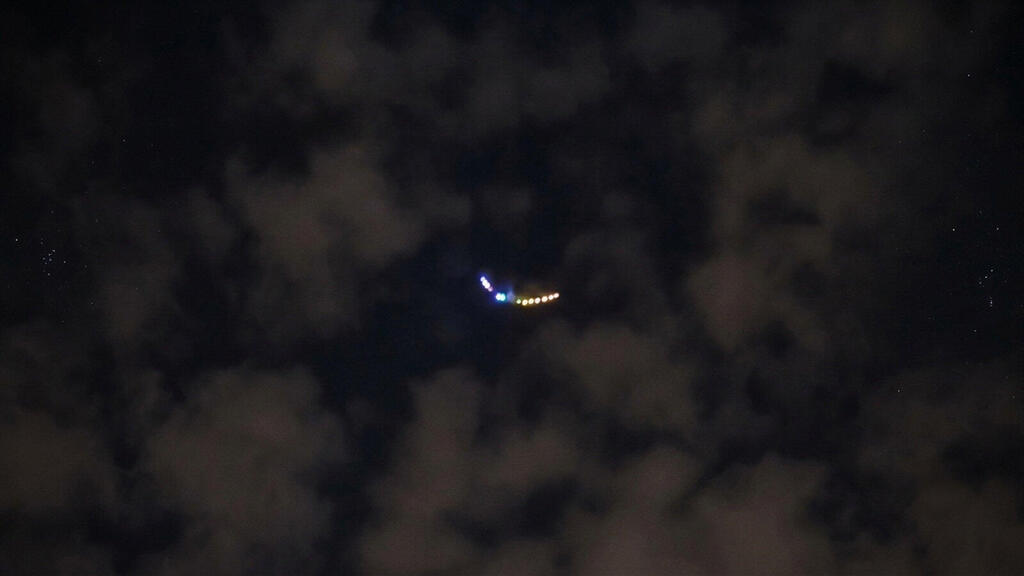
What is this disclosure, and what should it look like? In a paper that Vilhauer and five other psychologists (including Eldadi) published in June, they listed five recommended stages for a healthy process: from acknowledging the existence of information (the stage we are in now); through official disclosure by the authorities of phenomena that do not come from a known human source; continuing with official disclosure regarding non-human intelligence (including addressing what was known in the past and concealed); and up to integrating this news into all areas of life, including science, technology, the economy, and establishing contact.
"At this stage we are talking about releasing information that is in the government's possession and that it has not released in the past," Vilhauer says. "We hear that politicians have been exposed to such information, but the public has not, and our scientific council hasn't seen this information either. This information needs to be delivered to the public, so that people won't feel it is being hidden from them. Of course the government can't release everything, for example, if it touches on national security interests. But when there is an enormous gap between what we hear politicians and senior officials know and what we know, there is room to narrow that gap."
So in fact we may see gradual disclosure, which might help prepare us? Are we ready for a truly big disclosure?
"We are not. Because we don't even talk about the subject, and there is so much stigma around it, only very few people will know how to respond. If it is disclosed that non-human intelligence exists, I think there will be a very wide range of reactions, depending on how relevant people feel this information is to them, and how threatening they feel it is to them. Some people will be excited; some will think such information doesn't affect their lives, 'these things flying around in the sky don't really bother us, and they haven't bothered us until now'; some will be afraid and start thinking there's a good chance an alien will come and attack them; and some will struggle to integrate it into their belief systems. Most people will probably adapt to the information, but even if only a few react to it intensely, we are not prepared for that."
Who are the most vulnerable people, those who might be especially destabilized by such a disclosure?
"People who hold very rigid beliefs, whose identity rests on those beliefs, and who struggle to cope with information that doesn't fit them. Also, people with high levels of anxiety may sink into repetitive, circular negative thinking about the subject. And of course people with other mental health challenges, certainly disorders of a psychotic type."
Global consciousness will change. The question is how
Many things about news of the existence of intelligence beyond Earth could unsettle us. Our sense of human superiority could take a hard blow (similar to the Copernican revolution, which made it clear to human beings that the universe does not revolve around their planet). Horror scenarios we have seen in movies and read about in books for years could haunt us at night. Helplessness could overwhelm us. Not knowing is a difficult state to cope with. And to all of this one must add the fact that there were those who knew, and concealed it, that the authorities withheld such dramatic information.
"When I ask people what they would think if the government disclosed non-human intelligence, the initial reaction is 'Why did the government hide this?'" Vilhauer confirms. "That raises further questions, and I think there have to be answers to some of those questions, otherwise they themselves will become a problem. This is where the way the government mediates the information comes in, it will affect the trust people have in governments afterward. And this is also where the media comes in, which could significantly influence whether trust in them grows because the authorities disclosed information, or weakens because the public is left with questions and concerns." And as if questions and concerns weren't enough, there are of course also conspiracy theories. Vilhauer admits: "I recently discovered that a lot of people think an 'alien invasion' is one of the ways governments are going to try to take over the world."
And how will we even manage to think about the existence of non-human intelligence? After all, most depictions of aliens over the years have been humanoid, creatures with a head, eyes and limbs, in one form or another. Can we even conceive of entirely different intelligences, perhaps embodied in entirely different forms?
"Our imagination takes the little information we do have and develops it from there. I have no idea whether the existing images represent anything real, but once they have been seen enough times, they come to be perceived as a representation of non-human intelligence. That's also something I would like to research."
Beyond the way it is mediated, what else could help us receive such news? What could prepare our consciousness for such an idea?
"Consciousness is a big word, and hard to define. The very change in a person's belief about a certain matter is already a change in their consciousness. How do we change people's beliefs about things? We give them information and evidence. One of the reasons disclosure is so important is that information that fundamentally affects our understanding of ourselves and of how our universe works is a truly big thing, and concealing it is a big thing. If we have governments deciding what information we receive, and not just any information, but information that affects the way we perceive things, and that would change global consciousness, that is a situation that needs to change."



