







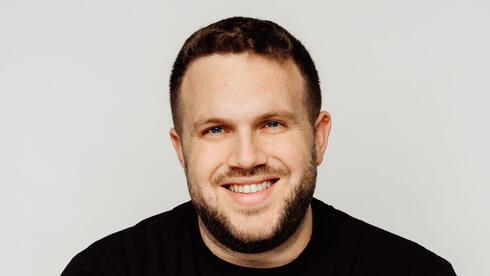



"Nir Zuk is an amazing entrepreneur, but he doesn't understand banking"
One Zero Bank CEO Eyal Gafni outlines his strategy, from waiving subscription fees to harnessing open banking, while confronting profitability and war-related setbacks.
Eyal Gafni, the new CEO of digital bank One Zero, is betting that competition from rivals like Esh and Revolut will ultimately help his bank grow rather than threaten it. In his first major interview since taking over, Gafni outlines a strategy centered on open banking, customer acquisition through waived subscription fees, and a push toward profitability, while insisting that Israel’s emerging digital banking market is big enough for more than one winner.
You surprised many with the campaign that welcomed competitors like Esh, with the slogan “we will leave behind the banking of the past.”
“Because I have no doubt they will know how to adjust and succeed. They are not our competition. On the contrary, expanding the category with new players will help us grow. Their success is our success. Our battles are with the traditional banks, that’s where customers are coming from.”

You moved from a subscription fee model to waiving fees in exchange for transferring wages to the bank. What’s the idea?
“We don’t believe in activity-based pricing, so we came up with subscription fees. But we’re willing to waive those fees if the customer transfers wages to us and does their activity with us. Using my products creates much more income, so if that means I have to cancel their fees, it’s acceptable. All the bank’s products are profitable even if a customer doesn’t pay directly for them. People prefer transferring money to you over paying a 50-shekel ($15) subscription fee. A third of customers transferred their wages that way.”
Is Nir Zuk, who launched his bank “Esh” this month, a threat?
“You can’t say you want competition without having players. Competition is good. Am I happy that players are coming in, including a giant like Revolut? No. But I’ll deal with it. Their products are thin compared to our value proposition.”
Esh Bank invites customers without overdrafts, who benefit from profit-sharing. They distribute 50% of revenues to customers under their ‘Equal Sharing’ model, ending the conflict of interest between bank and customer. Sounds original.
“Their basic idea is correct, a bank that shares with its customers the savings it generates thanks to technology. But this is exactly what we do at One Zero, where today we roll over an average of 70% of revenues back to customers through our terms. Profit-sharing is positive, even if sometimes more gimmicky than financial.”
Zuk called your subscription model ‘like Netflix or a gym.’
“Nir Zuk is an amazing entrepreneur and a talented person, but he doesn’t understand banking. A fixed and transparent price model, or alternatively, transferring activity from your parent bank, has been common in new banking for the past decade. Just look at Revolut’s reports, with a $75 billion valuation, to see this.”
What’s the catch in their model?
“The concept is nice, but they’re missing things. They don’t offer overdrafts, only debit, while most Israelis use credit. They don’t have an attractive deposit rate or securities trading. Right now, I don’t see the breakthrough. But I assume they’ll improve as they meet the market, it’s a natural process.”
Revenue sharing sounds appealing.
“It’s a nice idea, but I’m not sure it’s sustainable. First, customers want a simple, clear value proposition, without uncertainty. Second, if you have a thin product line, you generate less income and return less to customers than we already do. Their complex message will likely yield less favorable terms than what we offer. My main criticism is that their model focuses on fairness for depositors, but to pay them, they’ll have to charge small businesses high rates, the very ones already groaning under banking pressure. That creates a conflict of interest between two types of customers.”
Is profitability your main goal?
“It’s not the ultimate goal, but it’s the first and immediate task. The real goal is giving customers the value proposition we promised: availability and access to financial advice.”
You’re targeting 155,000 customers. When will you reach profitability?
“With a few tens of thousands, we’ll already be profitable. At our current pace, about a year. Profitability is a milestone, but the goal is hundreds of thousands of satisfied customers who entrust us with much of their financial lives. We’re constantly adding products, like pension insights. Some banks survive on fees. I believe that in 3–7 years, banks should be the financial information center for customers.”
Where did you go wrong at the beginning?
“We started with: ‘Leave the bank you’ve been with since you were 16 and come to us.’ That didn’t work. We changed the approach: ‘Stay with your bank, but open your next deposit at One Zero. Travel abroad with our card, no foreign exchange fees. Buy your next security here, no exchange fees.’ That’s what worked. It relies on open banking data, which is gold. Canceling subscription fees in exchange for salary transfer was part of that change. But this only works if you have enough products for real customer activity. That’s why we launched almost all retail banking products from the start. Open banking made customer acquisition very efficient.”
How do you convince people to share information with you?
“We tried explaining the benefits, better offers if you connect accounts. But uptake was low, until someone in marketing suggested giving a Roladin cake for connecting. Suddenly it jumped. My father even called me: ‘I got an offer from One Zero, if I connect my bank account, I get a cake. Should I?’ I said, do you want a cake? He said yes. I said connect. That’s how we learned: benefits were less convincing, but cake worked.”
Rakefet Russak-Aminoach, former CEO of Bank Leumi, said digital banks in Israel are uneconomical.
“I’d love you to ask her again. When she met with us, she came in saying there was no business model. I showed her the changes we made, and she changed her mind.”
Your predecessor Gal pushed the subscription fee model. Was that the wrong approach?
“When we built the business plan, after studying 200 banks, people said they’d pay 50 shekels for what we offered. At first, it worked. But as we expanded, fewer were willing. Surprisingly, weaker populations were willing to pay, while stronger ones refused: ‘Me? Pay the bank?’ We learned and adapted. I’m proud of that.”
What motivates you in this role?
“I was a nerdy kid, good at math. I even took the matriculation exam at Bar-Ilan in ninth grade. I tried martial arts but realized I love solving problems with tech. I worked on automating defense systems in the army, then started a startup for accountants. It wasn’t transformative but sold modestly. I wanted to pause, but then Gal invited me to co-found the bank.”
So Gal knew you were drawn to tough tech problems.
“Yes, and I couldn’t say no. It became part of me. I joined as employee #2. When I see a goal, nothing else matters. Gal and I are still close, we’re having a beer this weekend.”
You planned an Italian expansion that failed, and the bank is not yet profitable. Did investors lose patience, forcing Gal out?
“The plan was always for Gal to lead overseas, me in Israel. But the war changed everything. Italy seemed easiest, we partnered with Banca Generali, signed agreements, hired staff, but after October 7th, Italy became impossible. The regulator made clear Israel was a red flag. Continuing would have been reckless. So Gal decided to move on.”
Reports say you’ve burned hundreds of millions of shekels, around 70% of capital raised. What happens when the cash runs out?
“We’re close to breakeven. The bank is nearly self-supporting. If we need to grow more, we could IPO or raise privately, depending on market conditions.”
How close is your relationship with Prof. Amnon Shashua, One Zero’s controlling shareholder?
“We meet every two weeks. He’s brilliant, analytical, courageous, and visionary. When ChatGPT and LLMs first emerged, Amnon immediately said: ‘This is the biggest change coming, we must build our AI banking infrastructure around it.’ He saw it from day one, and he was right.”



