










Opinion
Silicon Valley adopts the work culture China banned
As tech layoffs shift power to employers, 996 spreads through San Francisco startups.
Saturday morning, ten o'clock, I'm at a gym adjacent to San Francisco's waterfront, running on the treadmill. Suddenly I notice a friend from back home. We knew each other in high school in Tel Aviv and somehow we both found ourselves in San Francisco around the same time. I approach her, suggest we grab coffee after the workout.
She immediately apologizes: "This is my only time to breathe." And she looks exhausted, not just from the physical exertion.

I say "Sure, so next week? Maybe Wednesday evening, or drinks on Friday?"
She just shakes her head: "No way. We're on 996. Saturday is the only day I have."
996. Nine in the morning to nine at night, six days a week, with "unlimited" vacation (= no vacation). That's how it is. Official policy at their startup, written in the contract as if it's the most natural thing. She used to always have a book in her bag, spent entire Saturdays reading philosophy and history, debating ideas over coffee that stretched into evening.
"You know me," she says. "I would have died for that - to sit, to think, to wander around with ideas. I haven't touched it in a year."
This transcends the tale of a single heavy-handed founder. We're looking at a phenomenon of significant scale. Last Saturday night, around eleven PM, I was returning from dinner in the city's office district, the financial district. Before my eyes stood one of the new tech industry buildings. A gleaming glass facade, floor-to-ceiling windows allowing a glimpse inside.
The view was almost absurd: all floors lit up as if it were midday. Rows of employees hunched over laptops, screen lights like fireflies in the night. In the kitchen corner someone drinking an energy drink, as if it were the beginning of the day and not its end. This is what the new culture in Silicon Valley looks like: Saturday night, and while most of the city has already closed up for the day, in startup offices time simply doesn't stop.
It wasn’t a hackathon. There are no pizza boxes, no excitement in the air or laughter between code sprints. This also isn't a deadline marathon, with a known end that can be marked on a calendar. It was just a regular Saturday night, and the building looked more alive than San Francisco's streets.
The security guard stood outside with a cigarette. I asked him if there was some special event. He laughed: "Event? This is every weekend. We had to turn off the building alarm. It wouldn't stop alerting for break-ins, because people are here around the clock."
This is a small picture, almost mundane, of the new work religion. Not community, not collaborative creation. A continuous worship of endless hours in front of screens, erasing the differences between night and day, between Saturday and weekdays. When employees are swallowed into the glass temple until the alarms themselves give up, perhaps it's time to ask who is actually serving whom: people serving technology, or vice versa.
And this is what drives me most crazy: no one even tries to hide it. It's not shame, not something hidden between the lines, it's actually a badge of honor. I scroll through LinkedIn and see job postings proudly declaring: "willing to invest at least 70 hours of work per week," in the same line where it says "5+ years of experience" or "strong proficiency in Python."
Founders tweet on Twitter (X) about weekends in the office as if it's proof that the team is more serious than any other team, that they're the ones who will take all the winnings. Investors ask in fundraising meetings not about the vision or the product, but whether there are beds in the offices and how much the team is willing to grind themselves for success, and smile with satisfaction when they hear "996."
Everyone throws out the same explanation: the AI race. Whoever didn't jump on the ChatGPT train in time will be left waving from the station. The giant companies are armed with infinite money, armies of researchers, and towers of servers. The startup with 20 employees runs like a mouse on a wheel, its only advantage is to burn more hours until the wheel breaks.
So why exactly is 996 becoming official policy now, and not say back in 2021? Why is it spreading in startups as if it's the only way to work?
It's not that technology suddenly became more competitive. What changed is who holds the cards. All power dynamics have flipped.
Interest rates jumped from nearly zero to over five percent. Money became expensive. Investors who were throwing money at every startup with "AI" in the pitch deck suddenly wanted to see real results. The "growth at all costs" model simply stopped working when capital had a price tag. Between 2022 and 2024, over half a million tech workers were laid off. Google threw out 12,000, Meta 21,000, Amazon 27,000. The market flipped: instead of employees choosing offers, employees started saying thank you they have a job at all.
Right then 996 started, when employees no longer had bargaining power.
I keep going back in my thoughts to the internet bubble of the late 90s. I wasn't there, I was a child in Beer Sheva then, far from Silicon Valley's ivory tower. But something of that period's energy still hovers over the city. 1999 was a year of round-the-clock work: people slept under desks, worked over 90 hours a week and barely left the office (or home-office).
Everyone truly and honestly believed they were going to get rich and become billionaires. In 1999, 457 companies went public. 100 of them were internet-related. The optimism wasn't for nothing, even if it was somewhat fantastical at times. People worked so hard because they believed it would pay off in the long run.
This time it feels a bit different. For many employees it's driven by fear. Not many of the people I know work 996 because they're sure they'll become rich. Most recognize the statistics that 90% of startups fail and their stock stays on the floor. They work so many hours because they think they'll be fired if they don't.
There's something almost poetic in this irony: in the West, which has always presented itself as a fortress of freedom and progress, office doors open into a system notorious in the East. A work culture that China was forced to denounce to protect its workers and here, in Silicon Valley, they present it as a promise for the future.
Jack Ma, founder of Alibaba, called the 996 model a "huge blessing" back in 2019. According to him it's a right, a real honor, that workers should be grateful for "the opportunity to work themselves to exhaustion." The response in China was swift: tech workers launched the 996.ICU movement - "work 996, end up in ICU." They developed an anti-996 open source license, created a GitHub repository that garnered over 200 thousand stars. The government tried to censor, but ultimately China's Supreme Court ruled in 2021 that the model is illegal. Determined it was cynical exploitation, bad for workers, bad for society - good only for companies squeezing every possible hour from employees' bodies and souls.
Meanwhile, in San Francisco, startups look at the same model and declare: let's adopt it.
Does this mean Israeli entrepreneurs should also adopt the 996 model to fall in line? Intensive work isn't foreign to those who've done military service, and in some way Israelis naturally work harder even without imported trends from China.
In a country where the pressure is high even without the technological race - the 996 phenomenon should stay out of the game.
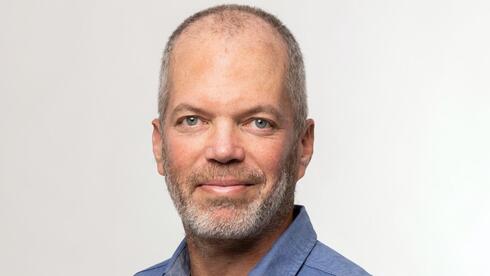
Nicole Levin is an executive in a stealth AI startup in San Francisco.



