










Turkey’s F-35 ambitions put defense industry at the heart of Erdogan’s NATO strategy
Progress on fighter jets and the Kaan aircraft program could transform Ankara’s military capabilities and global arms exports.
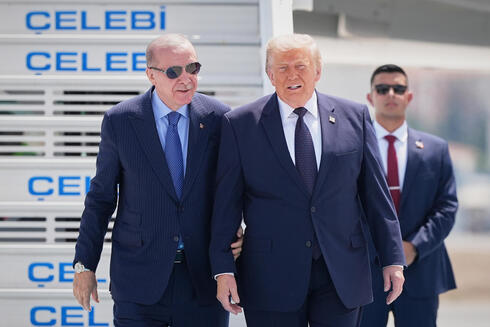
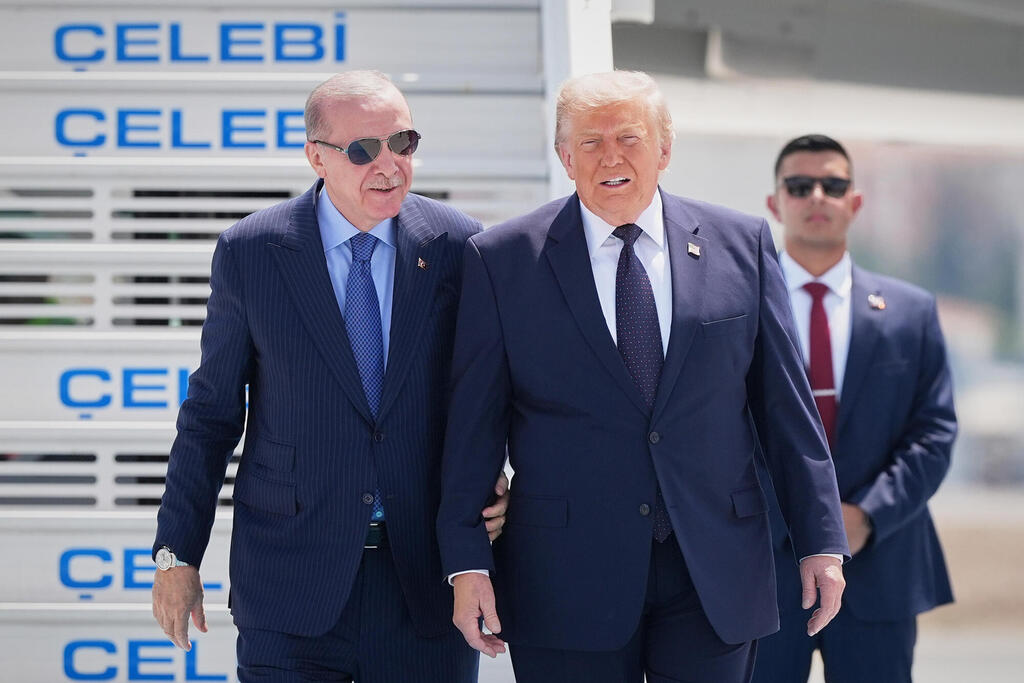
The NATO summit in Ankara this week provided Turkish President Recep Tayyip Erdogan with a rare strategic opportunity on the international stage. Hosting leaders of the Western alliance, led by US President Donald Trump, came at a moment when the global security debate is undergoing a fundamental shift. The West is moving beyond declarations about deterrence and increasingly focusing on the practical and commercial realities of defense: production lines, engines, interceptors, drones and available ammunition stocks.
Turkey entered the summit as an independent industrial and geopolitical power, seeking to break the political and security deadlock with Washington, advance major arms agreements and translate its strategic assets into tangible economic gains, developments that could reshape the regional balance of power.
The shift was reflected in the defense industry forum held alongside the summit, where unprecedented emphasis was placed on converting rising military budgets into joint production, mutual procurement and the development of advanced capabilities in areas including air defense, intelligence and military innovation. NATO members are aiming to reach a defense spending target of 5% of GDP.
When NATO begins measuring strength in terms of factory output, delivery schedules and industrial capacity, Turkey finds itself in a favorable position. In recent years, Ankara has invested heavily in building an independent defense industry that has gained operational experience across multiple conflict zones. While European countries struggle with production bottlenecks and rising costs, Turkey is presenting itself as a faster, more flexible and significantly cheaper alternative.
Beyond its military significance, the defense industry has become a crucial economic growth engine for Turkey, which is seeking foreign currency inflows and higher-value industrial exports.
The Turkish strategy surrounding the summit, led by presidential communications director Burhanettin Duran, is built around a clear message: Turkey is moving from the margins to the center of the European and global security landscape.
Senior officials in Ankara emphasize that Turkey occupies a critical position in almost every major regional and international challenge, from the Russia-Ukraine war and growing tensions with Iran to the continuing crises in the Middle East.
Turkey presents its defense industry as a strategic asset for NATO as a whole, arguing that restrictions, embargoes and sanctions against Ankara do not only harm Turkey but also weaken the alliance's ability to respond to external threats.
The immediate test of this argument centers on Turkish Aerospace Industries' flagship project: the next-generation national fighter jet, Kaan.
The aircraft, a major source of national pride, has faced significant challenges because of its reliance on American engines manufactured by General Electric. Sanctions imposed on Turkey during Trump's first term, following Ankara's purchase of the Russian S-400 air defense system, prevented the country from securing the necessary export licenses for those engines.
Now, however, the Trump administration's more transactional approach to foreign policy is opening the door to renewed cooperation. The White House is advancing an engine agreement worth approximately $700 million with Congress.
Approval of the deal would provide a major financial and technological boost to Turkey's aerospace industry and signal that Ankara is seeking to move beyond its reputation as a producer of drones and relatively simple military systems toward becoming a player in the far more complex fighter aircraft market.
Although the Kaan remains far from operational deployment, receiving American approval would carry significance beyond the aircraft itself. It would strengthen Turkey's position in global defense markets and allow Ankara to market broader security packages, including naval systems, advanced electronics, training and long-term maintenance, to customers in the Gulf, Africa and the Caucasus.
F-35 and Turkey's leverage in Syria
The biggest prize Erdogan hopes to secure, however, is a pathway back into the F-35 stealth fighter program.
Upon arriving in Ankara, Trump made clear that he wants to work toward restoring Turkey as a full partner in the program, a move consistent with his business-oriented approach to diplomacy.
A modernized Turkish air force would significantly strengthen Ankara's capabilities and provide it with greater leverage in the eastern Mediterranean and the Gulf, directly affecting the calculations of regional rivals.
The impact of improved relations with Washington would likely be felt first in Syria. Turkey maintains a significant military presence in northern Syria and close ties with local forces. Greater US support could give Ankara more room to shape the boundaries of its influence, pursue its objectives against Kurdish militias and strengthen control over strategically important border crossings.
For Washington, Turkey offers something the Trump administration has repeatedly sought: a powerful regional partner capable of balancing Russian and Iranian influence while protecting Western interests without requiring a large American military presence.
Gulf states watching closely
The Gulf states, including Saudi Arabia, Qatar and the United Arab Emirates, are also closely watching developments in Ankara.
These countries have increasingly sought defense suppliers that can provide advanced systems quickly and with fewer political constraints. Turkey presents itself as a middle ground, combining Western technology and standards with regional familiarity and flexibility.
Erdogan arrived at the summit with a broad strategic proposition that Trump appears to understand: Turkey offers Washington a critical geographic position, NATO's second-largest army, influence across key regions and the ability to maneuver between Moscow and Tehran.
If Turkey emerges from the summit with progress on the Kaan engine agreement, a commitment to revive its role in the F-35 program and expanded economic and industrial cooperation with the United States, the consequences could extend well beyond defense.
The region could face a more economically stable and militarily capable Turkey, backed by Washington and increasingly able to use its defense industry as a tool of economic growth and geopolitical influence.



