










BiblioTech
CTech's Book Review: Why does a leader thrive in one organization and fail in another?
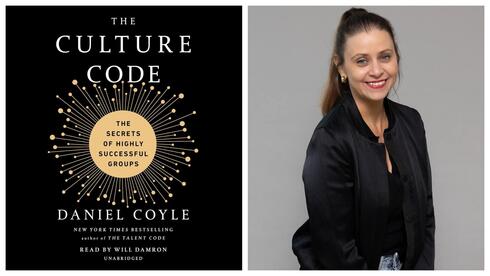
Lital Yaron, CEO at iLeadx, shares insights after reading “The Culture Code: The Secrets of Highly Successful Groups" by Daniel Coyle.
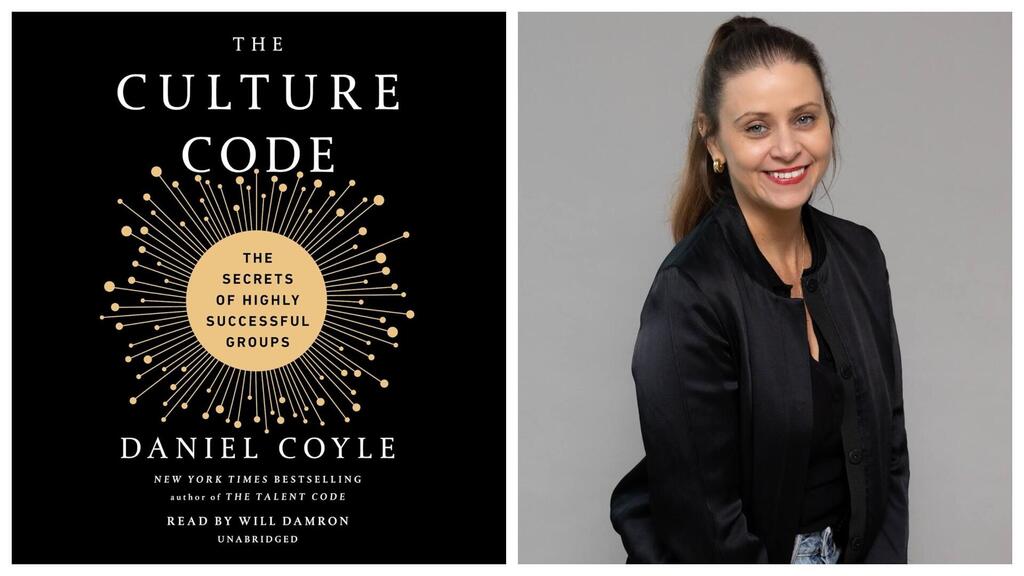
Lital Yaron is the CEO at iLeadx, a specialized executive search and recruitment firm. She has joined CTech to share a review of “The Culture Code: The Secrets of Highly Successful Groups" by Daniel Coyle.
Title: The Culture Code: The Secrets of Highly Successful Groups
Author: Daniel Coyle
Format: Book
Where: Home
Summary:
In my world, we spend every day trying to answer one of the most consequential questions in business: why does a leader thrive in one organization and fail in another? We analyze CVs, conduct deep-dive interviews, map career trajectories, and check references obsessively. But after over 15 years of placing senior executives in Israel's high-tech ecosystem, I've come to believe that the most important factor is one you can't measure on a spreadsheet. It's culture.
That belief is exactly what Daniel Coyle validates and elevates in "The Culture Code." Coyle, a bestselling author and advisor to professional sports teams, military organizations, and global businesses, spent four years studying the world's most successful groups: from the U.S. Navy SEALs to Pixar, from a San Antonio Spurs dynasty to a tech startup in Silicon Valley. His conclusion? Culture is not something that just happens. It is built, deliberately and skillfully, through specific behaviors.
The book is organized around three core skills that define high-performance group culture: building safety, sharing vulnerability, and establishing purpose. Each skill is explored through deeply researched case studies and counterintuitive findings that challenge everything most leaders believe about how great teams are built.
Important Themes:
1. Safety is the foundation, not a given
Coyle argues that the most successful groups make their members feel psychologically safe at a neurological level. This isn't about ping pong tables or wellness programs. It's about the thousands of small signals leaders send, through eye contact, body language, and the willingness to say "I don't know," that collectively tell people: you belong here, and it's safe to take risks. For anyone hiring or onboarding senior executives, this concept is critical. A brilliant leader placed in the wrong environment will not perform, not because of skills, but because of signal.
2. Vulnerability is a leadership strength, not a weakness
One of the book's most powerful and counterintuitive arguments is that high-performing cultures are built on leaders who openly acknowledge failure. Coyle shows, through examples like Pixar's internal "Braintrust" feedback sessions, that when senior leaders model vulnerability, they give permission to everyone around them to speak honestly. In the world of C-suite placements, this maps directly to a pattern I see repeatedly: organizations that celebrate only success end up hiring leaders who perform brilliantly in interviews but struggle under real pressure, because the culture never trained them to fail forward.
3. Purpose is what separates good from great
The third pillar Coyle examines is the clearest for leaders in the high-tech industry. The companies that attract and retain exceptional executives are the ones with a compelling "why," a north star so clear that it drives decision-making at every level of the organization. In my experience recruiting for Israel's high-tech companies, I find that the candidates who ask the most about purpose during the interview process are almost always the ones who become the best long-term leaders.
What I’ve Learned:
I read "The Culture Code" at a pivotal moment for iLeadX, when we were scaling rapidly and building our own internal team. I expected a well-researched management book. What I got was a manual that reframed my entire understanding of what we do.
Our work at iLeadX has always centered on fit, not just skills, not just experience, but the alignment between a leader and the organizational culture they're entering. Coyle gave me the language and the framework to articulate something I had been doing intuitively for years. After reading this book, we began integrating cultural diagnostics more explicitly into our search processes. We now ask clients not only "what skills does this executive need?" but "what cultural behaviors does your leadership team model?" The gap between those two answers is often where hiring mistakes live.
The book also shifted how I think about my own leadership. I started being more deliberate about the signals I send, in team meetings, in difficult conversations, and in the moments after something doesn't go as planned. Coyle's research showed me that culture doesn't come from memos or values posters. It comes from what leaders do when no one is watching, and from what they do when everyone is.
Related articles:
Critiques:
The book's greatest strength, its reliance on vivid storytelling and case studies, is also its occasional limitation. While the book is excellent, its examples can sometimes feel a bit too 'American' for our local landscape. In Israel’s 'be blunt and upfront' culture, where leaders are expected to project constant strength and control, showing vulnerability is a tough pill to swallow. For example, when a critical system failure occurs, the natural instinct for many Israeli managers is to project absolute authority and 'take charge.' However, Coyle shows that the leader who stands before their team and says, “I made a mistake in our risk assessment, and I need your help to fix this,” is the one who actually builds a more resilient and committed group in the long run.
Who Should Read This Book:
Every senior executive, HR leader, and board member who has ever been surprised by a leadership hire that looked perfect on paper and disappointed in practice, this book is for you. "The Culture Code" will not only help you understand why that happened, it will give you the tools to ensure it happens far less often. In an era where AI is reshaping how we source and screen talent, the human elements of leadership, belonging, trust, and shared purpose, have never mattered more.



