










HR The Next Leap
Aeronautics: “When there is a true sense of mission, even complex realities do not slow progress”
Ayelet Sapir, VP of Human Resources at Aeronautics, discusses how the defense sector defies broader labor market trends, and why purpose and connectivity sustain employee commitment despite external instability, as part of CTech’s HR: The Next Leap series.
“In the UAV and defense sector, employees are deeply aware that their work directly contributes to national security,” says Ayelet Sapir, VP of Human Resources at Aeronautics, an Israeli-founded world leader in designing, developing, and manufacturing Unmanned Aerial Systems (UAS) for the global defense and HLS markets. Throughout the trying and unprecedented times Startup Nation has experienced over the past few years, Sapir notes that this connection has created "a strong sense of purpose and at times even pride, which continues to be a central factor in their decision to stay and remain engaged.”
From active and looming war threats, to AI rapidly and constantly redefining what it means to be productive, running a company in Startup Nation brings with it its own category of challenges and rewards. HR: The Next Leap takes a glimpse into the heart of Startup Nation via the HR professionals shaping its culture. We survey the executives whose jobs are more demanding and more vital than ever, as they heed the future-proofing of their workforce, while simultaneously ensuring business continuity and employee wellbeing during relentlessly unprecedented times.
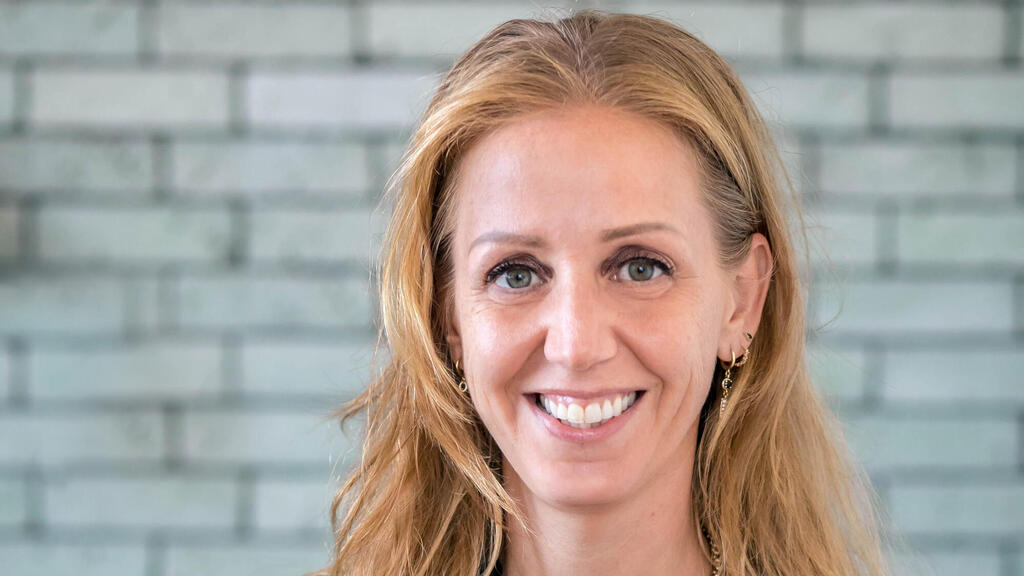
Sapir continues, acknowledging that while the company is seeing an increase in conversations around relocation, “we are also witnessing a parallel and equally significant trend: a strengthened sense of responsibility and commitment to national security.” Ultimately, she believes that “when there is a true sense of mission, even complex realities do not slow progress, they sharpen it.”
You can read the entire interview below.
Company Name: AERONAUTICS
Sector: Defense and Security
Founders: Avi Leumi, Moshe Caspi, and Zvika Nave
Year of Founding: 1997
Investment stage: Acquired
Total investment to date: $135M
Current number of employees: 540
Open positions: 20
Website: https://aeronautics-sys.com/
Social Media: LinkedIn
As of March 2026, the market officially shifted into an 'employer's market'. How have your screening criteria changed, and do candidates - including senior-level ones - still hold any leverage in negotiating salaries and terms?
As a defense company, the dynamics in our relevant market differ to some extent from broader labor market trends. Despite the general shift toward what is often described as an “employer’s market,” the defense sector continues to experience strong growth, and as a result, our employees remain highly sought after. At the same time, we are seeing increasing interest from high-quality candidates who are eager to join us – driven, among other things, by a connection to purpose, stability, and the broader impact of our work.
That said, even in a changing market, there are specific roles and domains where competition for top talent remains high and continues to challenge us, requiring focused and proactive recruitment efforts.
From our perspective, our core screening principles have not changed. We remain committed to identifying outstanding professionals, alongside a strong alignment with our dynamic organizational culture and core values. We look for individuals who demonstrate professionalism, commitment and the ability to operate in a complex and evolving environment, and in return, we offer them the opportunity to take on meaningful roles with real impact.
To support this, we rely heavily on flexible workflows, distributed decision-making, and cross-trained teams, enabling us to maintain continuity and advance critical projects even under complex conditions. Ultimately, our approach to hiring is not only about professional excellence, but also about cultural and human fit, recognizing that the right people are what enable long-term organizational success.
How have/are you managing operational continuity and recruitment while the economy navigates the emergency state triggered by the conflict with Iran? With the threat of escalation looming at any moment, how are you and have you been handling everything from interviews interrupted by sirens to managing teams thinned by massive, ongoing reserve duty?
Maintaining operational continuity is critical in our industry and it is directly tied to national and strategic priorities. Accordingly, we continue to operate, develop, and advance projects even during complex and sensitive times.
We place great importance on being attentive to the needs and constraints of our employees, managers and candidates. With this in mind, we have adapted our recruitment and operational processes to function effectively under ongoing disruption.
A significant portion of our workforce serves in reserve duty, and we are proud of their commitment and meaningful contribution. At the same time, it is important for us to support our employees and respond to their evolving needs. We proactively find solutions for teams operating with reduced capacity, relying on flexible workflows, distributed decision-making, and cross-trained teams that enable continuity even under complex conditions.
Beyond structures and processes, there is a strong sense of shared mission that helps sustain commitment and engagement even under pressure. Ultimately, continuity in this environment is not accidental, it is the result of intentionally building resilient systems and teams from the outset, alongside a deep connection to the people who lead them.
When there is a true sense of mission, even complex realities do not slow progress, they sharpen it.
Beyond the role of empowering employees, which roles has AI eliminated over the past year, what percentage of your workforce was reskilled to avoid being phased out, and how has this impacted entry-level hiring?
AI serves as a significant driver for professional growth and for enhancing the value our employees bring to the organization. It enables our people to focus more on strategic initiatives and advanced development, while leveraging tools that accelerate processes, improve technological capabilities and enable faster realization of new ideas.
At the same time, given that part of our work takes place in a classified environment, we are actually seeing an increase in internal collaboration and knowledge-sharing. This stems from the need to rely more on internal expertise and maximize the value of our organizational knowledge.
In this context, we have established a dedicated innovation function, where AI plays a central role. The combination of AI capabilities and our human capital allows us to drive innovation in a faster, more focused and more efficient way, while maintaining a sustained technological edge.
From a recruitment perspective, we are increasingly focused on identifying candidates with strong technological capabilities, alongside cognitive flexibility, a strong learning mindset and the ability to adapt to a rapidly evolving environment. We are looking for individuals who can effectively work alongside AI-driven tools, embrace change and continue to grow with the organization.
Against the backdrop of the unstable security and political climate, are you seeing an increase in relocation requests or 'quiet quitting' by top-tier talent moving abroad, and what is the most proactive step you are taking to retain them in Israel?
We are seeing an increase in conversations around relocation but at the same time, we are also witnessing a parallel and equally significant trend, a strengthened sense of responsibility and commitment to national security.
In the UAV and defense sector, employees are deeply aware that their work directly contributes to national security. This connection creates a strong sense of purpose and at times even pride, which continues to be a central factor in their decision to stay and remain engaged.
Our approach is to acknowledge both realities and manage them in an open and balanced way. We maintain transparent dialogue with our employees, provide as much flexibility as possible and ensure that each individual has a clear path for growth and impact within the organization.
Ultimately, the most effective driver of retention today is not based solely on benefits, but on reinforcing a sense of purpose, helping people connect their day-to-day work to something larger than themselves, while also giving them confidence that they can build a stable and meaningful professional future here, even in times of uncertainty.
In an era where stability has replaced flashy perks, how are you addressing the deep mental burnout of employees torn between the professional and security fronts, and what is the most critical benefit you offer today in place of the bonuses that have vanished?
There is no doubt that many employees today are coping with a complex reality that combines extended periods of reserve duty, intensive work in the defense industry, and personal and family needs.
With this in mind, we place strong emphasis on supporting balance wherever possible, through attentive listening, managerial flexibility and tailored solutions that address individual circumstances. Our focus is not only on performance, but also on people’s ability to sustain it over time.
At the same time, we see that a strong sense of purpose and connection to the work serves as a meaningful buffer against burnout. The opportunity to take part in impactful projects that contribute in a tangible way strengthens commitment and helps maintain engagement, even during challenging periods.
Eventually, addressing burnout is not about isolated solutions, but about combining genuine organizational support with a deep connection to the meaning behind the work.



