










Boarding Pass
Israeli startup MotionAnalytics looks to build a new category of identification using biometrics
Built on decades of university research, the pre-Seed startup identifies individuals not by their faces, clothing, or devices, but by the way they move.
“By introducing motion as a new biometric dimension, MotionAnalytics is defining a new category of identification, one that works where traditional systems fundamentally fail,” say MotionAnalytics co-founders Adi Nathan and Prof. Raziel Riemer.
The company was founded on the premise that human movement contains a unique, measurable biomechanical signature. As it gears up to launch its Seed Round, MotionAnalytics is currently engaged in two pilots with a major Israeli homeland security organization, demonstrating an over 90% identification accuracy on real operational video, according to the startup.
1 View gallery
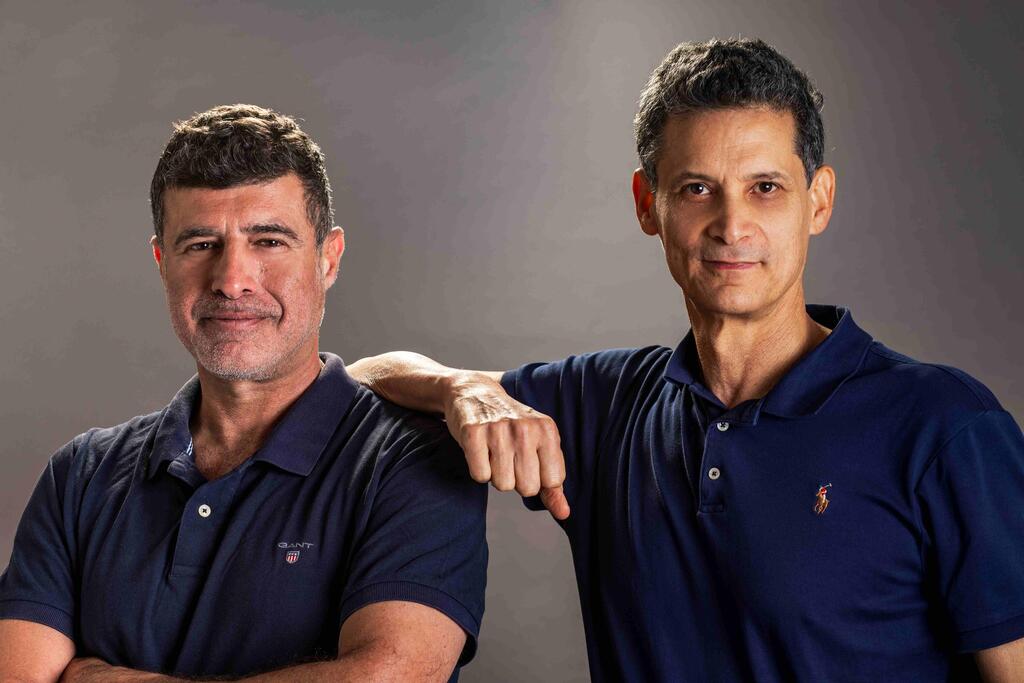
Adi Nathan and Prof. Raziel Riemer, co-founders, MotionAnalytics.
(Photo: Dan Miller)
According to the co-founders, the biomechanical technology, which stands to revolutionise the field by shifting reliance from appearance-based recognition to behavior-based identification, “is not just an improvement, it is a fundamental category shift, unlocking new capabilities across defense, homeland security, critical infrastructure, and broader dual-use environments.”
You can learn more about the company below.
Company Name: MotionAnalytics
Sector: Defense, HLS, and Smart-City
Product/Service description:
MotionAnalytics develops MotionID, a breakthrough biomechanical AI platform that identifies individuals by the way they move, not by their faces, clothing, or devices. Built on over 20 years of biomechanics research at Ben-Gurion University of the Negev, MotionID converts standard video into unique biomechanical signatures, enabling persistent, cross-camera identification across cameras and environments.
Unlike facial recognition and appearance-based systems, MotionID operates reliably in real-world conditions, including when faces are hidden, lighting is poor, or video is captured from distant, thermal, ground, and aerial sensors. The technology requires no dedicated hardware, using standard video feeds to deliver high-accuracy identification and re-identification in unconstrained environments.
Delivered as an SDK and API for on-prem or cloud deployment, MotionID integrates seamlessly into existing video analytics, surveillance, and command-and-control systems. Its primary applications focus on defense, homeland security, and critical infrastructure, where identification under challenging conditions is mission-critical.
By introducing motion as a new biometric dimension, MotionAnalytics is defining a new category of identification, one that works where traditional systems fundamentally fail.
Founder Bios:
Adi Nathan, Founder and CEO: Nathan is a seasoned entrepreneur with over 25 years in the high-tech industry and over 10 years of experience founding and leading startups. Prior to MotionAnalytics, he co-founded TeeVid, an enterprise virtual events platform acquired by Bizzabo in 2021.
His experience spans product strategy, R&D leadership, and go-to-market execution across startups and global enterprises. He brings a strong ability to translate deep-tech innovation into scalable products and commercial traction.
At MotionAnalytics, Adi leads the company’s vision to establish motion as a new layer of identity infrastructure, bridging advanced biomechanics research with real-world deployment in defense, homeland security, and critical infrastructure environments.
Prof. Raziel Riemer, Founder and CSO: Prof. Riemer is a Full Professor in the Department of Industrial Engineering and Management at Ben-Gurion University of the Negev. He holds a Ph.D. in Biomechanics from the University of Illinois at Urbana-Champaign, in Mechanical and Industrial Engineering.
His research focuses on human motion analysis, biomechanical modeling, and data-driven movement analysis, forming the scientific foundation of MotionID. Over more than two decades, he has led multidisciplinary research efforts and secured significant research funding, working at the intersection of biomechanics, engineering, and data science.
His expertise in biomechanics and motion modeling enabled the development of a fundamentally new approach to human identification, based on how people move rather than how they look, forming the core of MotionID.
Year of Founding: 2025
Last Investment Round: $400K
Last Investment Stage: Pre-Seed
Date of Last Investment: 16/03/2026
Total investment to date: $1.1M
Investors: InNegev & IIA, 1948 VC, JNF, Noam Bardin
Current number of employees: 7
Open positions: 1
Website: https://www.motionanalytics.io/
Social Media: LinkedIn
How was the idea born?
The idea behind MotionAnalytics emerged from a fundamental gap: existing identification systems break down precisely in real-world conditions.
Nathan met Prof. Riemer, a leading biomechanics researcher at Ben-Gurion University of the Negev, and together they recognized that human movement contains a unique, measurable biomechanical signature.
Instead of relying on appearance, they focused on physics-based identity, how people move over time.
This insight led to MotionID, a fundamentally new approach to identification built on biomechanics rather than visual cues, transforming over two decades of academic research into a deployable system, with early backing from InNegev.
What is the need for the product?
Today’s identification systems are heavily dependent on faces and appearance, which inherently fail in operational environments.
In defense, homeland security, and civilian applications, faces are often not visible, sensors are distant, and conditions are degraded.
MotionID addresses this by enabling identification based solely on motion, providing a reliable, hardware-free solution that works across cameras, environments, and sensor types.
The need is driven by a structural limitation in existing systems, not just an incremental improvement, and is increasingly relevant across both security and dual-use applications, where reliable identification is required under real-world conditions.
How is it changing the market?
MotionAnalytics is shifting identification from appearance-based recognition to behavior-based identification.
By introducing biomechanical AI, the company enables persistent identity across non-overlapping cameras and real-world conditions where traditional systems fail.
This is not just an improvement, it is a fundamental category shift, unlocking new capabilities across defense, homeland security, critical infrastructure, and broader dual-use environments.
How big is the market for the product and who are its main customers?
MotionAnalytics operates at the intersection of video analytics, biometrics, and person re-identification, a market expected to exceed $30B by 2030.
Primary customers include defense and homeland security agencies, intelligence organizations, and critical infrastructure operators, as well as select dual-use and enterprise security applications.
These organizations require reliable, persistent identification in environments where existing technologies are ineffective, making MotionID a critical enabling layer for next-generation security and situational awareness systems.
Does the product exist already?
MotionID is in advanced validation with real-world operational deployments, including paid pilots with major homeland security organizations.
The company is transitioning from R&D to a product-ready stage, focusing on a deployment-ready SDK/API for seamless integration into existing operational systems.
Initial commercial deployments are expected throughout 2026, as MotionAnalytics moves toward broader market adoption.
Who are the main competitors in this sector and how big are they?
Most existing systems fall into two categories: motion analysis systems that do not reliably identify individuals, and appearance-based systems that rely on visual cues such as clothing or facial features. Both approaches break down in real-world conditions, where visibility is limited, appearances change, or sensor quality is degraded.
MotionAnalytics is defining a new category: biomechanical identification, enabling reliable, persistent, cross-camera identification from standard video, including aerial, where traditional approaches fail.
What is the added value that the founders bring to the company and the product?
The company combines deep scientific expertise with proven entrepreneurial execution.
Prof. Riemer brings world-class biomechanics research and over two decades of experience in human motion analysis, while Nathan brings extensive experience in building and scaling technology startups, from product to commercialization.
Together, they bridge the gap between academic innovation and real-world deployment, addressing one of the core challenges in deep-tech: turning breakthrough research into operational, scalable products.
What will the money coming in from the round be used for?
Funds will be used to accelerate MotionID’s productization and go-to-market execution.
Key focus areas include:
- Advancing the MotionID SDK/API to a fully deployment-ready, production-grade level
- Expanding AI and engineering teams to support scale and performance optimization
- Building commercial capabilities, with a focus on the U.S. market
- Supporting pilots and early deployments with strategic partners and integrators
In the "Startup Boarding Pass" section, CTech will cover the (relatively) small investments made in companies during the early stages of their existence - and the entrepreneurs and startups who have not yet had the opportunity to reveal their stories to the world. Please use the linked form and fill it out according to the guidelines. This form is intended for startups raising between $500,000 and $3 million from venture capital funds, angels, or official grants from Israeli and foreign institutions. If relevant, someone at CTech will be in touch for follow-up questions.



