









“The next Palo Alto Networks has already been born, and it is probably in Tel Aviv”
New Era partner Ziv Conen believes Israel is on the verge of producing another global cybersecurity giant. He explains how AI is reshaping the industry, why military intelligence experience remains an advantage and why capital can matter as much as technology.
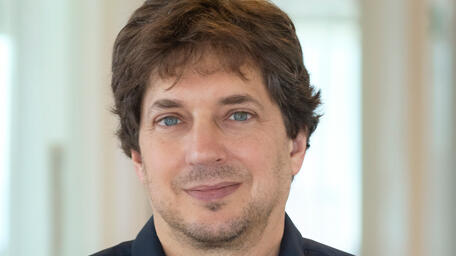
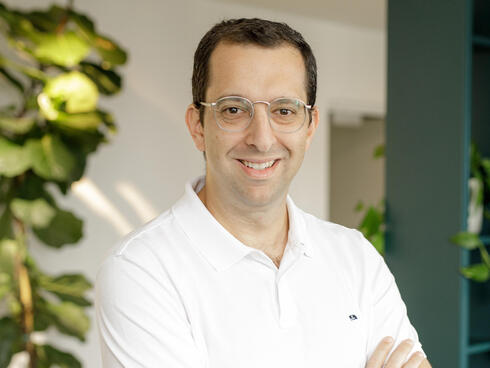
Ziv Conen, 41, a partner at venture capital firm New Era, has a broad view of the cybersecurity industry, both globally and in Israel. Although he has not lived in Israel for years, he remains closely connected to the local ecosystem. After serving as an officer in Unit 8200, earning a bachelor's degree in computer science and an MBA from MIT, and working at consulting firm McKinsey, he settled in Boston, where he is now based. Until now, Conen has largely kept a low profile as an investor. This is his first interview.
He joined New Era about six years ago and leads the firm alongside Gidi Argov, who is also based in Boston, and Ran Simha, who manages its operations in Israel. Since its establishment, the fund has invested in 40 companies, including two unicorns: payroll and payments software company Papaya Global, founded by Eynat Guez, and public transportation software company Optibus. A significant portion of the firm's portfolio, particularly the investments led by Conen, is concentrated in cybersecurity.
New Era is relatively small compared with some of the major international funds. Its first two funds totaled $200 million, while its third fund, which is currently in the process of closing, stands at $120 million. Nevertheless, it has already recorded several exits. The most notable was the sale of Apono about five months ago, in a deal estimated to have been worth $250 million to $300 million.
Since then, the cybersecurity sector has gained even more momentum. In early October, Palo Alto Networks became the first company in the history of the Israeli stock market to reach a valuation of more than NIS 1 trillion. Later that month, reports emerged that Israeli cybersecurity company Cyera was pursuing a funding round at a remarkable $20 billion valuation. Last week, employees at Wiz celebrated a successful year with a lavish party in Thailand featuring a performance by Katy Perry.
While global markets remain volatile and investors try to assess how the AI revolution will reshape different industries, cybersecurity appears largely undeterred. If anything, the sector is gathering momentum. Conen believes it is on the verge of another major transformation, one that could produce the next generation of global cybersecurity leaders in Israel.
"The next Palo Alto [Networks] has already been born, and in all likelihood, it happened in Tel Aviv," he told Calcalist. "I don't know yet which specific startup it will be. Perhaps Cyera. But I can see what's unfolding in the Israeli cyber market: the acquisitions, the attempts to bridge different security domains, and I understand where things are headed. The entire cyber sector is undergoing a transformation. AI is fundamentally reshaping it."
What, exactly, will artificial intelligence do to the industry?
"Three major shifts are currently underway. The first is the emergence of AI agents, which create a new category of identities and permissions that need to be secured. This essentially forces us to rethink how we approach information security.
"The second and third shifts relate to speed, which in turn affects scale. The time required to identify vulnerabilities has shrunk dramatically, for both attackers and defenders. For defenders, the time available to fix those vulnerabilities has also become much shorter. However, a gap remains between identifying a vulnerability and fixing it. CISOs tell us that their ability to neutralize threats is not keeping pace with the speed at which they can detect them."
Will all companies succeed in adapting to the new era?
"It is not easy for an established company. Building a genuinely new platform may require it to cannibalize its existing business. It needs to overhaul its architecture and integrate categories and products that were developed separately, such as endpoint protection and AI security. In some cases, it may even have to compete with products it is already selling. It will be easier for a new company to start with the right architecture."
Where, then, should new companies focus their efforts?
"There are several areas that require a fresh perspective. For example, how do you distinguish between actions taken by an AI agent and those taken by a human? How do you handle data leaks when it is difficult to determine whether an action was performed by an employee or an agent? And when, exactly, should penetration testing be conducted?
"In the past, many organizations, particularly financial institutions and healthcare companies subject to regulation, relied on periodic penetration testing. But attackers operate continuously, and an attack chain can now be assembled much faster than before. As a result, a one-off annual assessment is no longer sufficient. We are seeing a shift toward continuous penetration testing, and that creates an opportunity for new companies."
Could this also intensify competition, with more companies targeting the same niches and potentially hurting the industry as a whole?
"The market is evolving rapidly. Some categories will merge into others, while some will be reinvented. The key question is therefore not simply who is building a good product today, but who understands where the category is heading. Many companies are currently addressing similar problems, but not all of them realize that customer needs are about to change. Those that can bridge different domains and develop products that reflect how organizations actually use AI will have a significant advantage."
In such a rapidly changing market, what room is there for a relatively small Israeli venture capital fund like yours, particularly when the landscape is dominated by massive international investors such as Sequoia and funds that specialize exclusively in cybersecurity? How do you compete for access to the strongest entrepreneurs?
"Large funds tend to favor entrepreneurs who have already built companies, and they typically invest heavily in later, larger funding rounds. Our advantage is that we get to know these entrepreneurs long before other funds start competing for them, often before they become well-known names in the venture capital world.
"We can reach them through our personal networks, through people who commanded them in the military or served alongside them. People who were in my cohort in Unit 8200 now hold very senior positions within the unit. That is not to say it is easy to beat a major American fund, but it is possible.
"Recently, for example, we participated in a $25 million to $30 million Seed round for a company whose founders served with me. In another case, we were competing against a large American fund, and the entrepreneurs chose us, partly because someone they respect knew us and recommended us. When an entrepreneur is deciding who will stand by their side for years to come, they look at more than just the size of the check."
You also helped connect Nadir Izrael and Yevgeny Dibrov, the founders of Armis, which was sold to ServiceNow this year for $7.75 billion, drawing on your military connections. You also brought Izrael onto your fund's advisory committee to help identify young startups. Beyond these connections, what advantages do Israeli entrepreneurs with military technology backgrounds have over the Harvard and MIT graduates you meet in Boston?
"There are excellent cybersecurity academic programs in Boston, and we are in contact with various universities. There are brilliant people there, but most academic training in the field focuses on defense. Even when students experiment with offensive techniques, it is usually to better understand how to defend against them.
"In Unit 8200, by contrast, the offensive side is part of the daily work. The experience gained there is real and extensive. Someone who understands how an attacker thinks and operates brings a significant advantage, even when building a defensive product."
What about entrepreneurs who did not serve in Unit 8200 or another technological military unit? Do they have a chance of building a cybersecurity startup and raising capital?
"I don't believe you have to be a Unit 8200 alumnus to build a cybersecurity company. We even have a company in our portfolio whose founders did not come from those units. One of its founders was an ethical hacker who managed a private community of about 5,000 hackers on Telegram. He allowed them to use a tool he had developed, learned from their feedback and interactions with different systems, and realized he had access to a unique dataset. The company used that data to build penetration-testing capabilities.
"In short, it is possible to acquire the necessary knowledge and experience through other paths, although those paths are admittedly more difficult."
With the industry at such a high point, what ultimately determines a company's fate: the quality of its technology or its ability to raise capital?
"Capital carries enormous weight today, perhaps even more than we would like to admit. If you have good technology but two competitors have each raised $100 million, they can hire far more salespeople, reach more customers and grow faster. They could even be less efficient and still advance more quickly.
"That does not mean technology is unimportant. It has to be good. You cannot build a successful company on a poor product. But in a market flush with capital and strong demand for solutions, the ability to finance growth and reach customers quickly is critical."
How does that affect your work as an investor?
"As an early-stage investor, I have to think about how to help my portfolio companies raise the capital they need. That is also one of the reasons we cultivate relationships with large funds."
Does the greater availability of private capital also change the exit strategies of cybersecurity companies? Will fewer Israeli companies go public?
"Right now, it is much easier to remain a private company. There are funds willing to invest large sums over an extended period, and private companies do not have to contend with the quarterly expectations of analysts and public-market investors.
"On the other hand, if a company aspires to become a platform on the scale of Palo Alto Networks, it has to think in the very long term, including the possibility of becoming a large public company.
"In our investment model, when we evaluate a company, most of the scenarios we consider involve an exit worth hundreds of millions of dollars. That does not mean this is our policy or that we do not want to build massive companies. On the contrary, I always push entrepreneurs to think about how to build something bigger. But when a first-time entrepreneur receives an offer of $300 million to $500 million, it is very difficult to ask them to turn it down and bet on the possibility of building a company that, 15 years from now, could become the next Palo Alto."



