










Israel's most secretive state company wins battle to keep executive bonuses hidden
After a two-and-a-half-year legal fight, EAPC successfully blocked a Freedom of Information request seeking details of bonuses paid to senior executives, even as the government explores privatizing the company.
Even a legal battle that lasted nearly two and a half years failed to pierce the veil of secrecy surrounding the government-owned Europe Asia Pipeline Company (EAPC), which continues to refuse to disclose the bonuses and grants it has paid to senior executives, arguing that all of its operations are protected by strict confidentiality.
The saga began in March 2024, when Attorney Elad Man, representing the Hatzlacha Association, submitted Freedom of Information requests to several government companies and public bodies operating in the energy, infrastructure, and transportation sectors, seeking details of the bonuses and grants paid to senior managers in 2022 and 2023.
1 View gallery
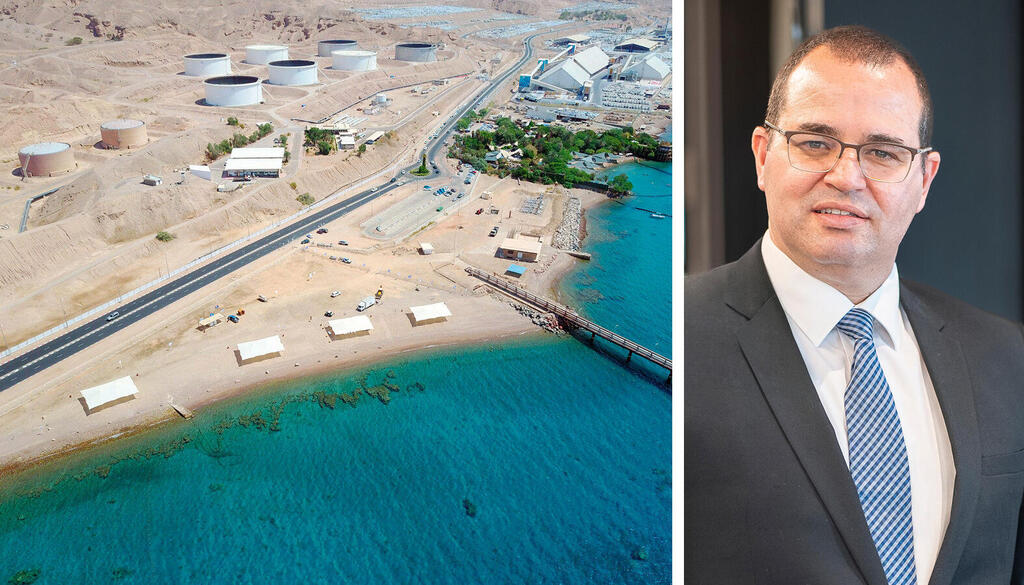
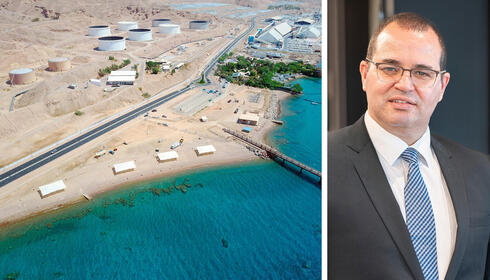
EAPC Director General Amit Shaked next to the EAPC facility in Eilat
(Raanan Cohen, Yair Sagi)
Responses soon began to arrive. The disclosures showed that four state-owned transportation companies paid a combined NIS 7 million in bonuses to senior executives in 2022. Israel Railways was the most generous, awarding NIS 3.65 million, followed by NTA with approximately NIS 1.4 million, Netivei Israel with NIS 1.25 million, and Netivei Ayalon with roughly NIS 700,000. The Israel Land Authority also disclosed that it had paid approximately NIS 1 million in bonuses and incentives to dozens of senior officials.
While most government entities complied, EAPC refused, relying on the secrecy order that makes it one of Israel's most opaque state-owned companies.
That secrecy dates back to the late 1960s, when the company was established as a joint venture between Israel and Iran under the Shah to transport oil from Eilat to Ashkelon. Although the company was renamed Europe Asia Pipeline Company in 2017, its operations and reporting remain subject to the same secrecy order.
After waiting nearly a year without receiving any information, Hatzlacha petitioned the Be'er Sheva District Court, asking it to compel EAPC to comply with the Freedom of Information Law. The association argued that there was no legitimate justification for withholding aggregate data on executive bonuses under the company's secrecy provisions.
EAPC's position was backed by the Ministry of Finance, the government body responsible for overseeing the company. The ministry argued that Hatzlacha's request concerned information covered by the company's secrecy and penal orders. The secrecy order was most recently extended in May 2025 and is currently set to remain in force through the end of 2026.
"The Treasury's arguments should not be accepted," Attorney Man told the court. "Their purpose is not to protect legitimate confidentiality, but to prevent the disclosure of information of clear public importance."
The State Attorney's Office, representing EAPC, argued that the petition effectively challenged decisions made by both the legislative and executive branches by attempting to circumvent the secrecy order approved by the Knesset's Foreign Affairs and Defense Committee. It further argued that the petition sought to overturn or amend a legislative act, a matter that falls outside the jurisdiction of the District Court sitting as an administrative court, which cannot review decisions made by the Minister of Finance or intervene in Knesset and government decisions.
The legal battle ended about three weeks ago when Hatzlacha asked the court to dismiss its own petition after concluding that it had exhausted all avenues for obtaining the information. During the proceedings, the state's explanations for maintaining the secrecy of the requested data were presented to the judge behind closed doors.
Attorney Man also failed to persuade Judge Yuval Livdaro to order the disclosure of only the aggregate amount of the bonuses or, alternatively, to identify recipients solely by rank without revealing information that could compromise state or company secrets.
"Even sensitive companies must be subject to proper administrative oversight," Man said. "Now that the Government Companies Authority is examining the privatization of EAPC, the absurdity becomes even greater. Transparency is a basic prerequisite for investors considering whether to invest in a company."
EAPC operates crude oil and refined products unloading, storage, transportation, and distribution facilities in Ashkelon and Eilat. The company imports roughly 40% of Israel's cooking gas, owns storage facilities with a capacity of 3.7 million cubic meters, and operates critical oil and fuel transportation infrastructure. Through its subsidiary Eilat Ashkelon Infrastructure Services (EAPC-AIS), it also holds a 37.5% stake in the Dorad power station in Ashkelon.
Three weeks ago, Calcalist revealed that the Government Companies Authority had begun examining the possibility of privatizing EAPC, despite the company's financial statements remaining classified under the secrecy order.



