










Palo Alto in talks to acquire Israeli AI cyber startup Terra in deal that could exceed $500 million
The cybersecurity giant is negotiating to acquire the startup, which uses AI agents to simulate cyberattacks and continuously test corporate defenses. The potential acquisition would add another Israeli company to Palo Alto's expanding AI security portfolio.
Cybersecurity giant Palo Alto Networks is in talks to acquire Israeli cybersecurity startup Terra Security in a deal valued at hundreds of millions of dollars that could potentially exceed $500 million, Calcalist has learned.
Founded in 2024, Terra develops technology that uses artificial intelligence agents to conduct automated penetration testing, continuously simulating the techniques used by real-world attackers to identify vulnerabilities in corporate systems and determine whether they can be exploited.
The potential acquisition would add another layer to Palo Alto's expanding AI security portfolio. The company has been moving aggressively to acquire technologies addressing the security challenges created by the growing use of autonomous AI agents, while also developing its own products in the field.

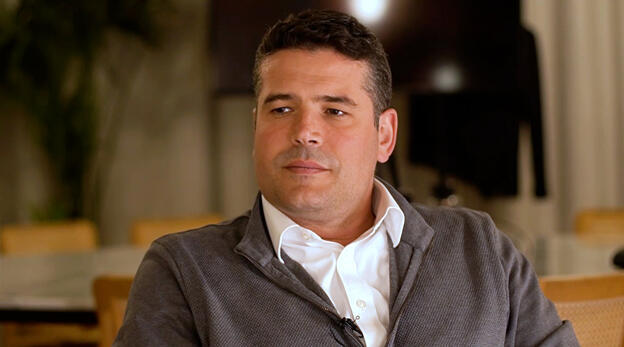
Terra was founded by CEO Shahar Peled and CTO Gal Malachi. Its platform deploys multiple AI agents, each specializing in a different stage of an attack, with human security experts overseeing the process. It can test web applications, internal systems, APIs, cloud infrastructure and corporate networks, as well as AI applications and autonomous agents.
Unlike conventional penetration tests, which are generally conducted manually at specific intervals, Terra's system is designed to assess an organization's defenses continuously. During 2026, the company expanded its capabilities to include internal network security and introduced features intended to turn vulnerability findings and remediation recommendations into measures that actively prevent exploitation attempts.
The technology operates in a market that Palo Alto is also targeting through its own development efforts. In September, the company introduced an AI-powered service designed to continuously test corporate systems for vulnerabilities, using models from Anthropic and OpenAI. An acquisition of Terra would therefore give Palo Alto access to an additional team and technology in an area it has already identified as strategically important.
Terra has raised $38 million to date. It secured an $8 million seed round in April 2025, followed by a $30 million Series A round in September of that year, led by Felicis. Other investors include Dell Technologies Capital, SYN Ventures, LAMA Partners and Underscore VC. The company operates in Israel and the United States.
The reported negotiations would come on top of Palo Alto's talks to acquire two other Israeli cybersecurity startups, Beacon Security and Clutch Security, which Calcalist reported earlier this month. Clutch develops technology to secure the credentials and access permissions used by AI agents, in a deal reportedly valued at around $500 million. Beacon provides AI agents with the data and context needed to detect, investigate and respond to cyber incidents.
The three potential acquisitions target different parts of the emerging AI security market. Clutch focuses on controlling the access of autonomous agents, Beacon on providing security teams with the information needed to investigate threats, and Terra on using AI agents to identify and test vulnerabilities by simulating attacks.
Palo Alto has already completed several major acquisitions this year, including Israeli cybersecurity companies CyberArk, in a transaction valued at approximately $25 billion, and Koi Security, in a deal estimated at around $400 million. Other acquisitions include Chronosphere, Portkey, Embrace and Console. Last week, the company also announced an agreement to acquire Applied Compute in an all-stock transaction valued at approximately $4.5 billion, subject to adjustments and regulatory approval.
CEO Nikesh Arora has described a strategy of acquiring companies that are leaders in their respective markets, even at prices significantly higher than they might have commanded a few years ago. He has said Palo Alto is looking for technologies and teams that could develop into assets worth $5 billion to $10 billion to the company over the next five to 10 years.