










VC Survey 2026
“Israel isn’t getting enough credit yet in AI infrastructure and models”
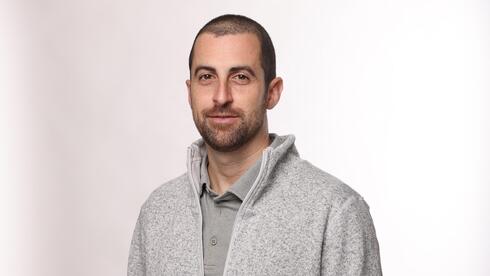
Greenfield Partners partner Raz Mangel joins CTech to discuss Israel’s next phase of tech growth, from operational resilience to scaling deep-tech businesses, as part of the VC Survey 2026: The Next Leap.
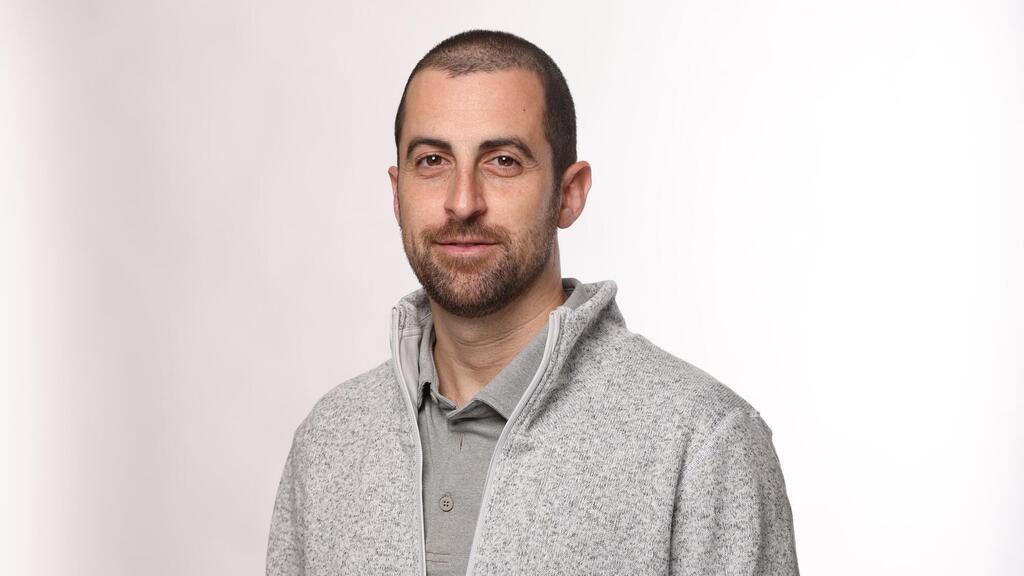
Raz Mangel
(Video: Orel Cohen)


“Israel isn’t getting enough credit yet in AI infrastructure and models,” says Raz Mangel, partner at Greenfield Partners. He believes that Israel’s technical depth in AI is already well established and, looking ahead to 2030, sees a bifurcated primary export engine for the country’s tech economy, with “cyber as the consistent export category, and deep tech plus AI infrastructure as the accelerating next engine of the AI era.”
Following the turbulence of recent years and the stabilization of 2025, the Israeli tech ecosystem is entering a new era: The Next Leap. Mangel joined CTech to share insights for its VC Survey 2026, which invites prominent investors to discuss the topics, trends, and “leaps” expected in the year ahead.
From defense-driven technologies influencing the construction industry, to what the past two years have reinforced around “global infrastructure and stronger resilience planning,” Mangel describes a number of key developments in Startup Nation that are shaping the leaps to come. Namely, he sees a shift “from innovation alone to scaling and business-building, with sharper emphasis on go-to-market excellence.”
You can read the entire interview below:
Fund ID
Name of Fund: Greenfield Partners
Total Assets Under Management (AUM): +$1B
Partners/Managers: Shay Grinfeld, Raz Mangel, Avery Schwartz, Yuda Doron, Nir Goldstein, Itay Inbar
Notable Portfolio Companies (Active): Vast Data, Coralogix, Silverfort, Torq, Exodigo, BigPanda, Capitolis, Eleos Health
Notable Exits: Guardicore to Akamai, Avanan to CheckPoint
The Global Leap: How is the “Israeli Tech” asset class being rebranded to global LPs in 2026? Are we shifting from “Innovation” to “Extreme Resilience”?
The most important shift, and the one LPs care about most, is the one we’re now seeing the fruits of: from innovation alone to scaling and business-building, with sharper emphasis on go-to-market excellence. We’ve seen that firsthand in our portfolio – multiple companies that were in single-digit ARR when we invested are now approaching or crossing $100M+ ARR with a line of sight to $1B in ARR – and this is exactly what our Greenfield Growth Momentum, or G2M, program is built to support.
We work with companies to implement the Seven Pillars of Efficient Growth – Strategy, Operational Framework, People, Pipeline, Sales Process, Partnerships, and Account Management – early on in their lives to avoid costly cycles and ensure the proper go-to-market infrastructure is in place to enable the rapid yet efficient growth that is necessary to achieve sustainable scale.
We believe this is increasingly what gets global LPs excited: Talent emanating from Israel isn’t only producing world-leading technology; it is coupled with GTM expertise that significantly increases the odds of becoming enduring global businesses.
The Deep Tech Leap: With the rising focus on hardware-heavy sectors (Defense, Climate, Quantum), is the Israeli VC model adapted to fund high-CAPEX ventures?
Israel is more prepared for deep tech than many people assume. The country has long built global leaders in capital-intensive industries, especially semiconductors and defense, with outcomes like Mobileye, Mellanox, and Habana proving that Israel can create world-class hardware-driven companies, not just software companies.
What’s changing today isn’t the talent base. Israel’s technical depth has been there for decades. The shift is in the ecosystem and funding model: larger rounds, more strategic partners, and a much more willing venture mindset to finance high-CAPEX, long-horizon bets, particularly when paired with strong software layers.
We also see this in our own deployment. At Greenfield, four out of the six deals we did in 2025 were deep tech, often HW-SW hybrids. That reflects both founder ambition and global pull – from defense innovation and AI infrastructure to next-generation compute and semis.
So, the answer is yes: Israel has always been a deep tech country. The difference now is that the venture ecosystem is increasingly built to support it at scale.
The Sovereign Leap: Have geopolitical lessons pushed Israeli startups to build independent “sovereign” tech stacks to reduce reliance on global platforms?
For most startups, but not in a dramatic way. In government and security procurement, geopolitics can influence vendor selection and requirements. But across the broader ecosystem, Israeli startups still build on U.S. cloud and global platforms, largely as they always have because they’re competing in global markets and selling to global customers.
The bigger shift isn’t “sovereign stacks,” it’s operational resilience: redundancy planning, security hardening, and business continuity as standard practice. Building through uncertainty forces discipline, and we’re seeing that in how companies architect infrastructure and run operations.
At a national level, I do think it’s important for Israel to strengthen independence in certain strategic resources and capabilities. But for venture-backed startups, speed, scale, and global competitiveness still come from leveraging the best global platforms and focusing on customer pull.
So sovereignty is a relevant theme in specific regulated sectors, but the dominant trend for Israeli startups remains global infrastructure and stronger resilience planning, which we have already seen and proved in the past two years.
The Dual-Use Leap: Which civilian industry will see the biggest disruption from adapting defense technologies?
The dual-use spillover is already underway, and the clearest leap is in Construction. The innovation forged since October 7th – from advances in autonomous systems to edge AI, sensing, and massive-scale compute – is now being repurposed for civilian markets at real speed.
Construction is an unusually strong landing zone for these capabilities. It’s one of the world’s largest industries, yet still among the most under-digitized and operationally inefficient. It’s also labor constrained, safety sensitive, and economically driven by ROI – meaning proven productivity technologies scale quickly.
We’re already seeing Israeli companies innovate both in the field, such as solutions like Exodigo (our portfolio company), and across the design and engineering pipeline, where AI can compress timelines, reduce rework, and improve predictability.
So while defense-derived technology will impact many sectors, construction is where we’re seeing a strong combination of immediate ROI, readiness to adopt, and meaningful disruption.
The Next Engine: Cybersecurity has been Israel’s primary export engine for a decade. What leads by 2030?
Cyber will remain a major Israeli export engine through 2030. The pipeline is exceptional, and many of the early cohorts formed in recent years will mature into global leaders over the next five years. Cyber also has structural tailwinds: AI expands the attack surface, and security becomes more central to every enterprise and every critical system.
But the strongest challenger – and likely the second growth engine alongside cyber – is deep tech, especially AI infrastructure (including models), defense, and semiconductors. These are longstanding pillars of Israeli innovation, and we’re now seeing more founders choose these domains, more strategic demand globally, and a venture ecosystem increasingly willing to fund ambitious, high-CAPEX bets.
I also believe Israel isn’t getting enough credit yet in AI infrastructure and models. The technical depth is real, and as these companies approach growth-stage, global awareness will increase quickly.
So the 2030 picture is likely dual-engine: cyber as the consistent export category, and deep tech plus AI infrastructure as the accelerating next engine of the AI era.
Finally, what are 2-3 startups that, in your opinion, are likely to make a leap forward in 2026?
From Greenfield’s portfolio:
- Exodigo - Exodigo applies advanced sensing and AI to construction, cutting delays and rework by reducing subsurface uncertainty. It’s growing rapidly in the U.S., already working on some of the world’s largest infrastructure projects – strong proof of ROI and a clear path to scaled adoption.
- AAI - AAI is building next-generation AI models focused on reasoning and discovery, not just incremental productivity. As the market shifts from “bigger models” to more reliable, controllable intelligence, teams advancing core model capabilities are positioned for outsized impact and rapid strategic momentum.
- Regulus - Regulus is a leader in counter-UAS, addressing one of the fastest-growing global security needs: drone detection and mitigation. As drone threats expand across defense and critical infrastructure, demand for battle-tested anti-drone solutions is accelerating, positioning Regulus for a major leap this year.



