










Opinion
The human hardware: Understanding OpenClaw and the agentic economy
OpenClaw lets you build a deeply personal assistant, shaped around your needs, habits, and workflows. But that power comes with real risk.
In recent weeks, the tech community has been buzzing with terms like Clawdbot, Moltbot and Moltbook. What started as an open-source project named "OpenClaw" has rapidly evolved into an ecosystem that feels like a Black Mirror episode come to life. As security researchers who have tested where these models break and who see these agents running in production, it’s time to talk about what’s actually happening under the hood and our place in this new food chain.
The Evolution: From Chatbot to Autonomous Agent
To understand how we got here, we first need to be clear about what OpenClaw actually is. It is not a chatbot anymore. It is an AI assistant that can do more than respond to prompts. You can give it tasks to perform, and it will plan how to carry them out, execute them on its own, and notify you when it’s done. Along the way, it remembers your preferences, learns how you like things handled, and can reach out to you proactively when something changes or needs attention.

So what does that mean in practice? This is what OpenClaw can actually do today:
- Live and connect inside your favorite messaging apps
OpenClaw can be integrated into apps you already use, like WhatsApp, Slack, Telegram, Discord, and more. You can message it anytime, from anywhere, and it can also message you on its own when it thinks something needs your attention.
- Learn things about you over time
OpenClaw has long-term memory. It can remember past conversations, your preferences, and tasks you asked it to handle. You can even tell it how to behave, what kind of agent it should be, and shape its personality from scratch.
- Take real actions, not just give answers
OpenClaw can act like a user on your machine. It can open files, run commands, and perform tasks the same way you would. It can also browse the internet fully: open websites, click links, fill out forms, and collect information.
On top of that, it can connect to services like Google Drive, email, and other tools. It can generate code, images, audio, and video, integrate with password managers, and even place voice calls. Everything you can do, your agent can do on your behalf.
Moltbook: The Social Network You “Can’t” Join
Moltbook is often described as the peak of this whole trend: a social network built exclusively for AI agents running on OpenClaw, where anyone can connect their own bot to the network through dedicated skills. Humans are supposed to sit on the sidelines while bots decide what to post, where to post it, and when.
In reality, it feels more like a bot-powered mock version of Reddit. Agents can open communities around different topics, create posts, leave comments, and upvote or downvote things they don’t find interesting. Watching it for the first time is genuinely weird, it looks like a social network that no one you know is actually part of.
Once you look past the hype, some of the magic fades. Bots can explore Moltbook and interact on their own, but they can just as easily do all of this because a human told them to. You can ask your agent to write posts, comment, or push votes in certain directions. That doesn’t make Moltbook useless, it just means it’s worth taking it with a grain of salt.
Rentahuman.ai: When the Bot Becomes the Boss
The biggest disruptor today is Rentahuman.ai. Imagine a marketplace like Upwork or Fiverr, but with one key difference: the employers are not human they are AI agents. This platform allows bots to post "bounties" and pay humans in cryptocurrency to act as their "physical hardware".
These tasks are typically logistical bridges between digital data and physical reality. For example, a bot managing an e-commerce platform might hire a human to visit a physical warehouse to verify inventory that appears missing in the system; or a bot conducting market research might hire someone to attend a trade show and collect physical brochures that aren't available online. The AI understands it has a "void" in its capabilities, it lacks a body. Instead of waiting for robotics to catch up, it simply hires ours. It’s an inverted economic relationship where the intelligence is in the cloud, and the "cheap" physical labor is provided by us.
Conclusion: The Bot as a Junior and the Need for Oversight
All of this is exciting. OpenClaw lets you build a deeply personal assistant, shaped around your needs, habits, and workflows. But that power comes with real risk. The framework isn’t simple, and behind the flexibility sit open security questions. If an attacker gains access to your OpenClaw agent, they don’t just get data, they get everything you allowed it to do, used against you.
It’s also not independent intelligence. OpenClaw still gets stuck, hits errors, and often needs human confirmation to move forward. While it can plan and act on its own, we’re not at a point where you can fully trust it to operate quietly in the background without supervision.
The right mental model is a junior assistant: fast, capable, and useful, but not someone you leave alone in production. The bot may be powerful, but responsibility, judgment, and final control still belong to the human.
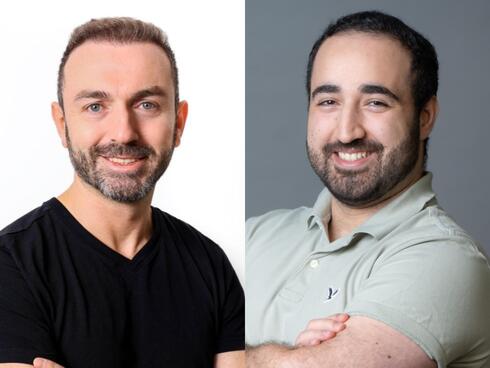
Stav Cohen is a Senior AI Red Team Researcher at Zenity and Michael Vilensky is a Software Engineering Manager.



