








Mind the Tech NY
"AI is reshaping the fundamental assumptions we have relied on in cyber"
"Israeli cybersecurity emanates innovation, talent, and impact on the world,” LeumiTech CEO Maya Eisen Zafrir said at a roundtable discussion at Calcalist and Bank Leumi's New York 2026 conference. BlueVoyant board member Ariel Litvin: "If hackers don't know exactly what they're doing, then they're mostly making noise"
"The conversation we are having today around artificial intelligence, cybersecurity, privacy and data is probably one of the most important happening in the world of technology right now. This is not only because AI is accelerating everything, but because it is starting to reshape some of the most fundamental assumptions we have relied on in cyber: what identity means, what trust means, and even where security itself actually resides," said Maya Eisen Zafrir, CEO of LeumiTech, at a roundtable hosted by LeumiTech on cyber and AI at the Mind The Tech New York conference of Calcalist and Bank Leumi.
1 View gallery
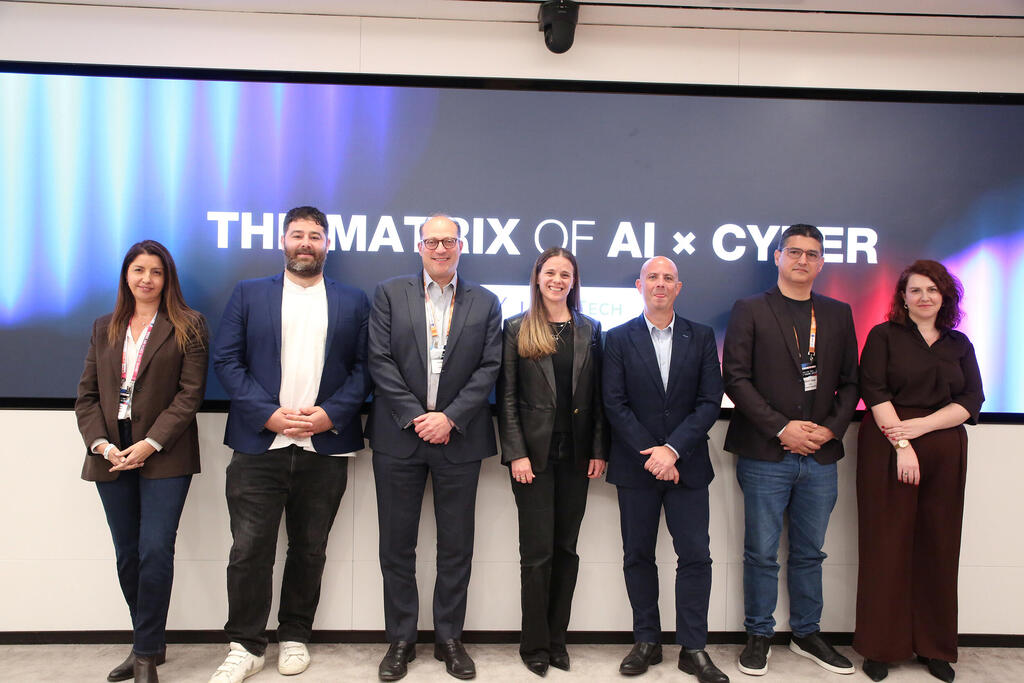
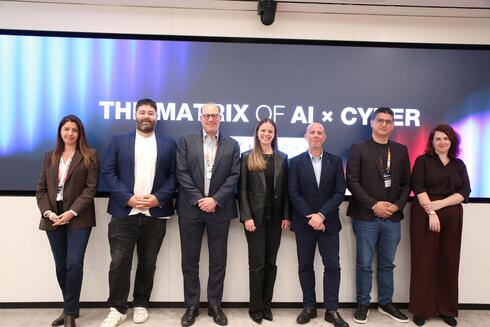
LeumiTech roundtable (from right) Iren Reznikov, Omri Iluz, Ariel Litvin, Maya Eisen Zafrir, Russell Barrett, Gal Tal-Hochberg, Hila Goldman-Aslan
(Reyan Preuss)
Eisen Zafrir added that “this discussion is happening everywhere, but it is no coincidence that we are having it here. This is because cybersecurity is one of the most obvious ways in which Israeli technology is being expressed on the global stage – a field from which innovation, talent and real impact on the world consistently emerge. Therefore, when AI begins to reshape the cyber world, this is not just another routine change. What makes this moment particularly interesting is that the change is not only technological, but also structural: the way startups are built, the way giant organizations are changing, and interestingly – the interaction between startups and large platforms: is the gap between them widening or narrowing? What roles do entrepreneurs play? And what is the role of traditional and established players in the market? This is exactly what we want to explore today. We have an excellent mix of participants around the table: founders, investors and senior executives in organizations. The combination of these perspectives is fascinating for the current conversation, but it also represents the important dialogue that must continue every day as we navigate this enormous change, for the future of our organizations and our economy."
Ariel Litvin, Board Member, BlueVoyant, said that "as a veteran VP of technology, I can say that artificial intelligence requires a reorganization of models, including corporate governance. Hackers and attackers always have successes. But if they don't know exactly what they're doing and how to use artificial intelligence, then they mostly make noise. But clearly there are successes. For those who want to protect the systems, artificial intelligence is an opportunity to start over. There is an opportunity to rebuild the strategy, in a different way. You need to build the organization so that it is more resilient. You need to think outside the box as someone who wants to protect the organization."
Iren Reznikov, a partner at the Vintage Fund, added that "Today we need to think about the software we buy as one that is pre-adapted to the current era of AI. Customers today need different things from suppliers. Consumers and clients today have a different perspective on things."
Gal Tal-Hochberg, co-founder and CEO of Beacon Security, added that "Security managers understand risk best, and therefore customers are also becoming much more sophisticated. This connects to what Iren said in this sense. Customers today know better what they want."
Russell Barrett, COO at Valley Bank, spoke about the interface between cyber and the banking system: "Today the level of vulnerability is much higher. Therefore, the use of identities and authentication becomes even more important. Today, everyone in the banking system is talking about the importance of protecting systems in the age of AI. And rightly so. And I think the entire organization is going to change in terms of protection. Today, security managers are thought of as part of the organization's resilience. The muscle of defense is not yet focused on cyber, but it is focused on infrastructure, and I believe that will change."
Omri Iluz, Co-Founder & CEO of Lumia Security, responded that "security managers cannot be expected to solve all problems and threats thanks to their technological skills. We need to reach a situation where the security manager is a kind of risk manager, or their role needs to be divided into several positions."
Eisen Zafrir asked whether new cyber categories would be created. To this, Hila Goldman-Aslan, managing partner at Runi Ventures, responded that "we see the product creation process becoming longer and more complex. It takes longer to turn design partners into customers. So if you think about it from the side of startups trying to enter this world using AI, then the ceiling becomes higher and higher."
Iluz emphasized that artificial intelligence still has limitations. "It does a better job than average workers, but it still has limitations."
Tal-Hochberg said that "the world is going through a crazy change, and it's very exciting. It allows security managers to become those who also generate revenue."
Barrett sought to highlight the differences between the American and Israeli markets. "There are things that are already embedded in the Israeli market more strongly than the American market. Security managers are taking more assertive positions. We are approaching the point where it will be necessary to rely more on a risk management process and less on regulation, especially in the US. The strategy of all sectors that depend on trust will have to be like this, not just banks."
Iluz added that "with artificial intelligence you have to be in a position where you are constantly reassessing the situation, also with regard to the cost of a mistake. Also with regard to working with AI agents."
Eisen Zafrir asked whether the use of AI agents increases the risk of damage caused by mistakes compared to damage caused by malicious attacks. Iluz said he believes that the weight of damage caused by mistakes will definitely increase. Litvin defined this risk as “friendly fire. The risk that someone will make a mistake on Thursday night, just before the weekend, definitely increases. AI agents can decide that they are rewriting code, and that will disrupt communication with Amazon or Microsoft cloud arrays. Even an update that disables 25% of the internal network at an inopportune moment can produce damage that is considered friendly fire.”
Barrett added that "the supply chain is actually becoming more complex. There is significant reliance on third parties, on suppliers, and that increases the level of vulnerability. That's another dimension that needs to be thought about."
Eisen Zafrir sought to focus the discussion on entrepreneurs and how they can not be left behind when the sequence of changes is so great.
Tal-Hochberg said that "startups have a high risk profile, but they also have the ability to adopt innovative solutions more quickly. The question is whether there is the ability to accelerate in accordance with reality. Entrepreneurs know that there is a race. There will be a new AI model every period, can you stay relevant and run at the same pace? Entrepreneurs need to know how to answer these questions."
Iluz said that "it's very easy to say that now as an entrepreneur you don't need engineers at all. But it's much more complex than that. You have to know how to balance. You can use AI and increase productivity. But you also have to know how to use it correctly. But you still need people who know how to design the system. QA is now becoming something much more important. What AI builds cannot be scalable without a human presence. I still expect my engineers to know the system and design it."
Reznikov spoke about investment strategy in the current era: "The right prism has always been to ask yourself if you believe in the team, especially at an early stage. I think today we need to focus on go-to-market. So the question is whether the team can build a great company with a good product, and quickly. And entrepreneurs need to ask themselves if they are growing fast enough and if what they are doing is sustainable over the years."
Goldman-Aslan said that in her opinion, "This is an amazing time to found startups. There are customers today that weren't there before. There's a lot of potential. We'll see more startups being born, including in cyber. But we'll also see a lot of layoffs because fewer people are needed. Not everyone will find jobs, but some will go and start companies. And then there will be a process of rebalancing."
The roundtable participants also addressed the implications for Israel as a country that stands out in the cyber field globally. Barrett said, "There are significant expectations for innovation in the cyber field in Israel. There is a difference between the ability of Israeli and American companies when it comes to building their narrative. And building a narrative today is very important. Americans are much more practical. Israelis know how to sell the vision. They know how to define the vision."
Eisen Zafrir concluded the discussion: “One key insight from this conversation is that artificial intelligence is not only changing cybersecurity, it is reshaping the foundations of trust, systems, and the way value is created. But the bigger story may not just be the technology – it is how ecosystems respond to such moments. Israeli founders have proven time and time again that they not only build great companies, but that they know how to operate under conditions of uncertainty. Whether it is geopolitical challenges or significant technological changes, this ecosystem has learned how to adapt, move fast, and build while changing. So, when a wave like AI arrives, it is not just a disruption – it is a moment of opportunity. Yes, there are real risks, but there is also tremendous growth potential. That future will be shaped by those who choose to harness technology and lead the change.”



