








Rylo partners with Nvidia to train AI for sign language translation
The Israeli startup will use Nvidia’s supercomputer to accelerate research into real-time sign language translation. It is also launching a free Mac application that captions workplace meetings, expanding its accessibility technology beyond telephone calls.
Rylo, the Israeli startup formerly known as Nagish, is expanding its AI-powered communication technology with a new collaboration with Nvidia and the launch of a desktop application designed to make workplace conversations more accessible to deaf and hard-of-hearing people.
The company will use Nvidia’s supercomputer to accelerate the training of AI models capable of interpreting sign language and translating it into text or speech in real time. At the same time, it is introducing Rylo Desktop, a free Mac application that generates live captions for meetings on platforms including Google Meet, Zoom and Microsoft Teams.
The two initiatives extend Rylo’s efforts to develop communication tools that work across telephone calls, in-person conversations and workplace meetings, while addressing the technical challenges of interpreting sign language without relying on human interpreters.
The sign language project builds on Rylo’s acquisition of sign.mt less than a year ago. Founded by Dr. Amit Moryossef, the company develops technology for AI-powered sign language translation. Moryossef joined Rylo following the acquisition and now leads its research efforts.
The team is developing technology to create an efficient, compact representation of sign language video, using Nvidia’s Cosmos Tokenizer models. The approach is designed to work with modern GPT-style language models and supports video reconstruction and generation, providing a foundation for research into sign language understanding and real-time translation.
Training also relies on Nvidia’s software and infrastructure, including NeMo Megatron Bridge, part of the company’s NeMo suite of AI development tools.
“Training models that can reliably interpret the nuances of sign language and translate them into text or speech in real time requires significant computing resources. Access to NVIDIA’s compute gives us the ability to train these models at greater scale and precision, and at a much faster pace than was previously possible,” Moryossef said.
Rylo Desktop runs alongside meeting software and displays captions without requiring a separate bot to join the call. Users can choose between a scrolling, chat-style transcript, a large subtitle line or a discreet overlay resembling the notch on a Mac computer. Captions use different colors to distinguish speakers, and keyboard shortcuts allow users to switch between display modes.
The application also includes a Type-to-Speak feature, allowing users to type during a meeting and have their words read aloud. Rylo Desktop is initially available in the United States as a private beta for Mac computers, free of charge.
The product expands on Rylo’s existing telephone service, which enables deaf and hard-of-hearing users to communicate by phone without relying on a human operator to relay the conversation. The app transcribes the other party’s speech and allows the user to respond by typing or speaking. When the user types, the text is converted into speech for the person on the other end.
Rylo says it is the only company among six providers licensed by the U.S. Federal Communications Commission (FCC) to offer the relevant telephone service without a human-operated call center. The company holds two FCC certifications, according to its latest announcement.
The regulatory approval is central to Rylo’s business model. Rather than charging users directly, the company receives payments from the FCC for eligible calls, at rates ranging from $1 to $8 per minute. The rate is set by the agency every three years.
The company says it has begun generating revenue since obtaining its license and is already profitable. It projects revenue of $100 million by the end of 2026 and is targeting an annual revenue run rate of $1 billion by 2028. It has also said it expects to reach unicorn status within approximately a year and a half.
Rylo estimates that governments and corporations spend around $4 billion annually on transcription services and sign language interpreters. It puts the cost of human interpreters at approximately $75 an hour, often with a two-hour minimum, and says existing tools serve only about 5% of the potential market, largely because of a shortage of interpreters.
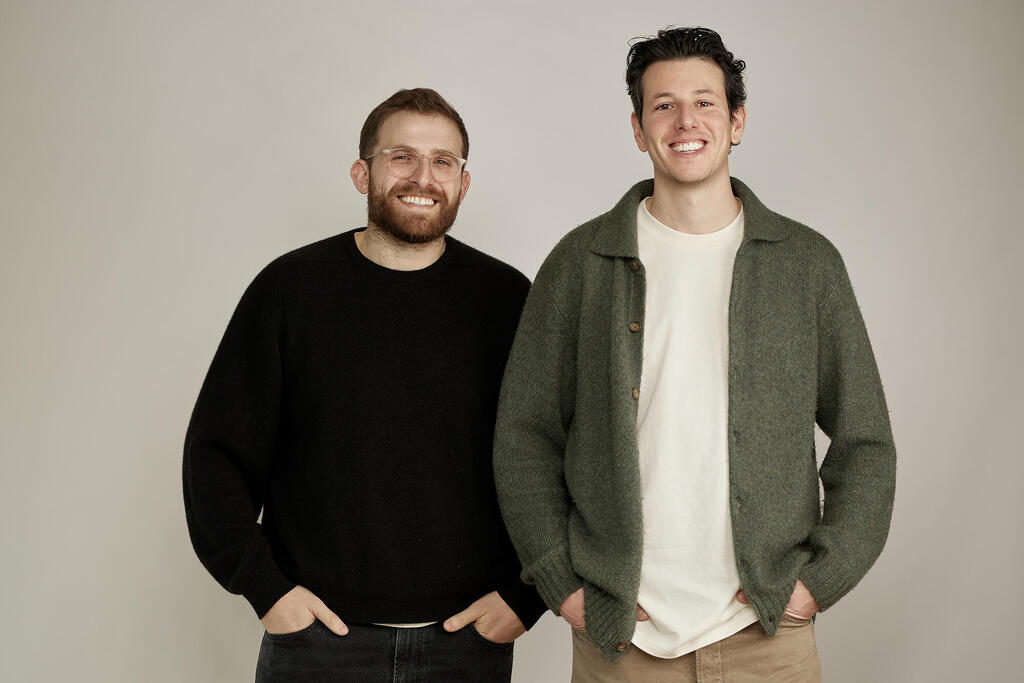
Founded in 2022 by CEO Tomer Aharoni and Alon Ezer, Rylo has raised $101 million from investors including General Catalyst, Canaan, Precursor and K5, as well as Israeli funds Vertex and Cardumen. The company has offices in New York and Tel Aviv.



