








“You see an object that needs to be brought down, I see lines of code flying through the sky”
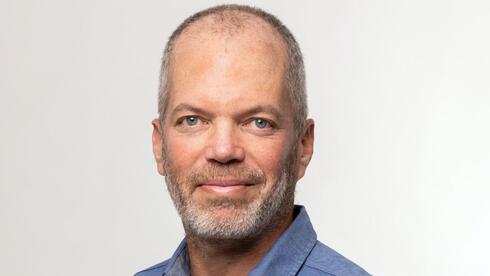
Zohar Halachmi, founder of Israeli counter-drone company D-Fend Solutions, built a system that can take control of unauthorized drones and land them safely. Motorola acquired the company for $1.5 billion, even as the rise of fiber-optic drones exposes new limits to the technology.
Anyone who did not examine the details of Motorola Solutions' $1.5 billion acquisition of Ra'anana-based D-Fend Solutions in August might have come away with the wrong impression. D-Fend has developed technology that can disable unauthorized drones entering restricted airspace, take control of them and land them safely without causing damage. A superficial reading might suggest that a solution has finally been found to one of the most widely discussed and lethal threats on the modern battlefield: drones operated through fiber-optic cables.
The operating principle behind these drones is simple, and therefore effective. The human operator holds a controller resembling a PlayStation joystick, and their movements are translated into commands that travel along a thin fiber-optic cable. The cable can extend for tens of kilometers between the drone and its operator. Because communication takes place through the fiber rather than radio waves, even sophisticated radio-frequency jamming systems are powerless against these drones.
Over the past two to three years, fiber-optic drones have become a game-changing weapon. They have wreaked havoc on Russian forces in Ukraine, reportedly accounting for approximately 80% of their casualties, and the IDF has also struggled to counter them in southern Lebanon. More recently, the Houthis have begun using them as well, sharing footage online showing the drones being used to attack Saudi Arabian troops and their allies.
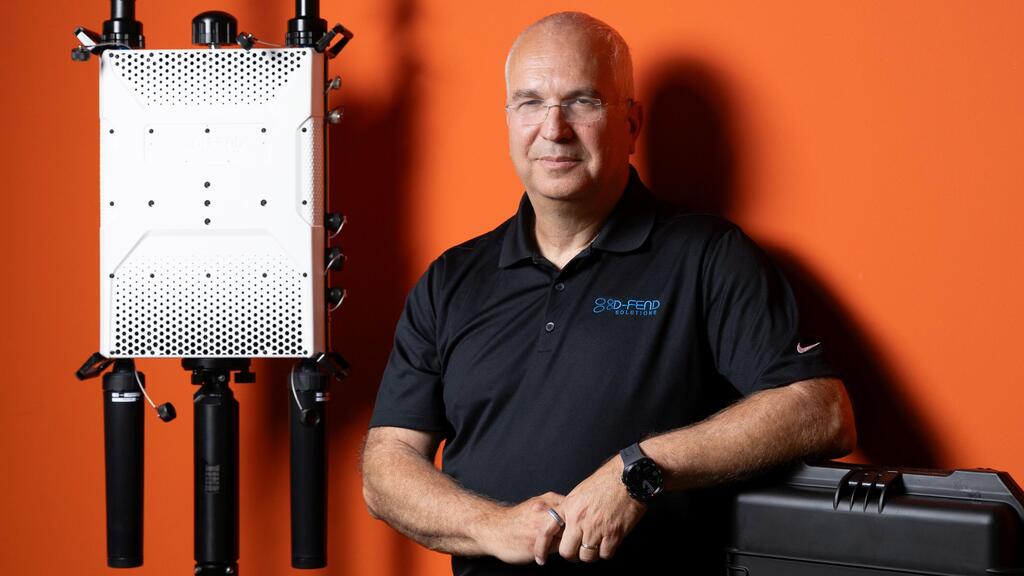
D-Fend's technology, at least for now, is not designed for the battlefield. The company operates in the fields of homeland security, border protection and the safeguarding of sensitive facilities and large public events. Those who examined the technology behind the acquisition, the largest exit to date for an Israeli defense-tech company, may therefore have been disappointed to discover that D-Fend's method of neutralizing drones does not work against those controlled through fiber-optic cables. If so, why did Motorola pay such a substantial sum for the company?
Greg Brown, chairman and CEO of Motorola Solutions, offered the following explanation in a press release announcing the deal: ""Safety on the ground demands security in the air," said Greg Brown, chairman and CEO, Motorola Solutions. "D-Fend's field-proven counter-drone technology is a powerful complement to our mission-critical ecosystem, providing differentiated airspace protection for our customers around the world."
The statement, however, offers little insight into the rationale behind the acquisition. Major General (Res.) Amiram Levin, a former head of the IDF Northern Command and deputy director of the Mossad, who is also the largest private shareholder in NextVision, emphasizes that he is not familiar with the specific deal. He notes, however, that there are several possible reasons why one company might acquire another.
"The rationale behind acquiring a company can vary widely. Sometimes, an acquiring firm might think, 'Something is developing here that could become a competitor in two years, or perhaps its valuation will grow to a point where we can no longer afford it', so they choose to acquire it now. In other cases, companies may simply want to prevent a competitor from gaining access to a particular firm's capabilities. It is also possible that investors are pushing for the deployment of available capital. Furthermore, since due diligence was conducted, it is quite likely that the acquirer met with D-Fend's technical teams and developed confidence in their ability to create additional long-term solutions. Another possibility is that, given Motorola's strong position in ground-based communication solutions, this acquisition represents their first step into the realm of air defense."
4 View gallery
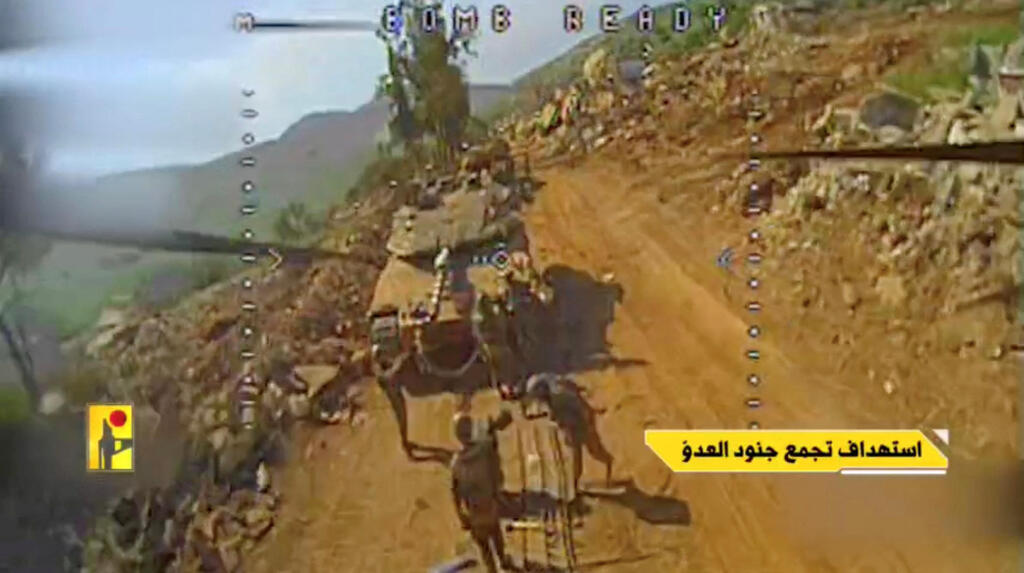
An IDF force, as seen through a Hezbollah fiber-optic drone camera in April.
(Hezbollah Military Media/Reuters)
The owner of a company operating in the drone sector, who requested anonymity, acknowledges that the high acquisition price may raise some eyebrows.
"Fiber-optic-controlled drones are currently the biggest headache in the defense world. The concern surrounding them isn't limited to Lebanon, or to the conflict between Russia and Ukraine; there is, for instance, a fear that such drones could be smuggled in to launch close-range attacks on energy infrastructure. That said, I am not familiar with D-Fend's revenue figures. If they have annual sales of $250 million, then a revenue multiple of 5x or higher would represent a level of profitability that justifies the price, making the amount paid a sound investment. Furthermore, in the civilian sector, the primary concern isn't fiber-optic drones, but rather standard commercial drones that could breach airports or critical infrastructure. In such scenarios, D-Fend's solution is an easy choice, as it enables both the detection and the 'interception' of these drones without causing collateral impact. It is also possible that the high deal value reflects additional technology held by D-Fend, an 'ace up their sleeve' that we aren't yet aware of. Moreover, the acquisition price could also be influenced by the company's leverage stemming from a potential path toward an IPO."
In contrast to Levin and the drone-industry executive, Major General (Res.) Giora Eiland takes a more positive view of the acquisition.
"Motorola's decision is a smart one, as D-Fend's technology is unique and groundbreaking. It allows for the takeover of a drone without requiring a line of sight, radar, or the use of kinetic weapons or lasers, and it enables the intercepted drone to be landed safely after the takeover," he says. "This technology is effective in environments with high levels of communication interference, such as airports, and it is constantly evolving. While Israel is deeply concerned about fiber-optic-guided drones, given the short distance from Lebanon, the rest of the world is more worried about aircraft capable of flying hundreds of kilometers. D-Fend's systems are highly effective at taking control of such craft. When a tech giant acquires you, it is a testament to both your global sales reach and the value they place on your capabilities."
A senior official at the Directorate of Defense Research and Development (DDR&D) reinforces this point.
"Thanks to the efforts of several companies, we have significantly improved our ability to detect and neutralize drones that rely on electronic communications, a capability that fully matured by February 2026. Once Hezbollah realized that these types of launches were no longer effective, they shifted to using fiber-optic-guided drones. However, looking at the global challenge, the vast majority of drones are radio-controlled rather than fiber-optic-guided; therefore, Motorola is making the right move. This is the primary challenge at the moment."
And what about dealing with tethered drones?
"I don't think we'll arrive at a single, airtight solution; rather, we'll see a mix of solutions, with each company contributing its part. Some of these are already operational, while others will mature in the coming months."
"As far as we're concerned, a drone is a virus."
Zohar Halachmi, 56, founded D-Fend about a decade ago after recognizing that the ease of operating drones, their low cost and their widespread availability posed a growing threat to a range of clients. These included airports, which cannot tolerate unauthorized aircraft near their planes, and organizations such as FIFA, which seek to prevent drone operators from infringing on broadcasting rights or disrupting events.
"I spoke with potential clients who understood the threat posed by these drones, and I decided to enter the field to provide a solution," he says.
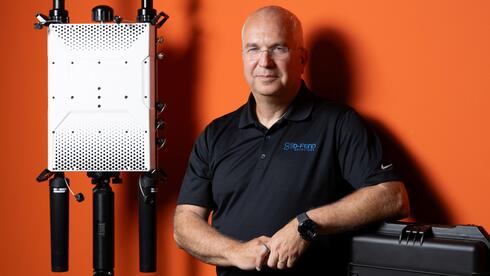
D-Fend's technology identifies the communication protocol used by an unauthorized drone, severs its original radio link, takes control of the device and lands it safely, without endangering people or property. To build the company, Halachmi recruited Assaf Monsa, who had held management and development roles at several technology companies, and Yaniv Benbenisti, who left Verint to join the new venture. He had met both through his daughter's kindergarten and school.
To date, D-Fend has raised approximately $67 million, and had used only about half of that capital by the time of its sale. The company employs approximately 250 people in Israel, with nearly 50 more based elsewhere.
According to Halachmi, the challenge for clients is that they cannot know what an unidentified drone is carrying or why it is there.
"When a drone is detected, it is impossible to know whether it is an explosive-laden drone or one operated by someone simply looking to capture footage. However, ignoring it can be dangerous, as the crowd itself could be the target at a public event. Our solution involves taking control of the drone discreetly and steering it to a safe location, all without disrupting the event. This is the unique advantage we offer clients who purchase our technology: they define for the system who is permitted to be in the event area and who is not, and the entire process is executed through purely cyber-based means."
Could you explain how it works?
"When you see an object that needs to be brought down from the air, I see lines of code flying through the sky. Just as you use antivirus software to protect your computer, for us, a 'virus' is a drone. Our system utilizes antennas deployed on-site and is controlled via a tablet. The client marks authorized drones on the tablet; for unauthorized ones, the system takes control, silently, using radio-frequency communication rather than an explosion. This method also avoids unwanted environmental side effects, like those we witnessed during the war in the north, where there was widespread disruption to GPS-based software."
Do you have a solution for dealing with fiber-optic-controlled drones?
"I can't go into too much detail, but we are in the business of defending against anything that poses a threat. We are the world's leading player in counter-drone defense systems, and regarding fiber-optic-controlled drones, we are doing whatever is necessary to maintain that position."
How is it that this threat wasn't anticipated sooner?
"In this field, there is a constant game of cat and mouse. When a new 'mouse' appears, we develop a new 'cat.' Even after we address the issue of fiber-optic-controlled drones, a new vulnerability will inevitably emerge, that's just the nature of our world. In any case, Israel represents a very small portion of our total sales compared to NATO countries, where budgets are significantly larger. We are capturing an ever-growing share of this market, with sales already reaching hundreds of millions of dollars, and our systems are currently in operation in more than 30 countries."
Does the sale to Motorola mark the end of Israeli involvement in this field?
"It's not the end, but rather just one stage in the process. We've received a boost from a massive organization, enabling us to enter a market where it previously had no presence. I've joined Motorola's leadership team to oversee this operation, which is intended to serve as a key growth engine for the company. My goal here is to build a major enterprise that will provide a livelihood for hundreds of families, both directly and indirectly."
"An entrepreneur needs to know how to take a few slaps in the face."
Halachmi says that raising the capital needed to turn his vision into reality meant facing numerous rejections from investors. In 2017, he raised $2 million from several angel investors. A year later, he secured another $6 million, in a round led by Vertex Ventures, which went on to participate in all subsequent funding rounds. It was not until 2019 that the company raised a significantly larger sum: $28 million in a round led by Claridge. The most recent funding round took place in late 2024, when IPG invested an additional $31 million.
Why was the fundraising process a struggle?
"Because, through an 'Israeli lens,' our field is perceived as military. However, the right way to view us is through a 'civilian lens,' as that is the core of what we do. It was difficult for us to explain that our focus isn't military; rather, our solution is designed to protect sensitive areas, for instance, a stadium hosting a World Cup soccer match, or a mass religious service, such as the one where our system protected the previous Pope. I've since joked that we are the company that protected Christianity."
Did investors slam doors in your face?
"For every investor who said 'yes,' dozens said 'no', in total, we received over a hundred rejections. While things improved as we grew, hearing 'no' is always a painful experience. It's something you have to learn to accept. An entrepreneur must be able to handle it, to take a 'no' and keep going as if nothing happened. You have to believe in your path and not let it sway you."
Halachmi recounts that, following a Series B funding round in late 2019, D-Fend succeeded in selling its system to government agencies in the United States and subsequently to a major country in Asia. Just as the venture appeared to be gaining momentum, the COVID-19 pandemic struck.
"I was stuck in Israel for nearly a year, and the real challenge began: managing everything remotely. Airport operations, gone; mass events, gone."
Were you at risk of shutting down?
"We couldn't grow. Even a year or two after the pandemic began, airports were still licking their wounds, having lost millions of dollars, which meant they had less money to invest in a service like ours. By then, we were already a large company with over a hundred employees, yet by the summer of 2023, we were forced to make cuts. We reduced our workforce by nearly 20% and cut salaries. If there's one experience that took a real toll on my health, it was sitting down one-on-one with people I had personally hired, only to have to fire them or cut their pay. The turnaround process was highly successful, and now the mission is to sell."
"We were not bought to be swallowed up."
Halachmi was born in Petah Tikva and served in the IDF as a section head in a technological field on which he declines to elaborate. He earned a bachelor's degree in industrial engineering and management from the Technion, graduating with honors, and later completed a master's degree in information systems engineering at Tel Aviv University.
He began his career in the 1990s as an engineer at Tower Jazz and Lucent Technologies, before moving into senior management roles. He served as information systems manager at Orckit, vice president at Amdocs and VP of global sales at ECI Telecom. Over the years, he also founded two startups: Thetis Technologies, which was sold, and sellAring, which failed. He says his experience managing Amdocs' sales operations in Asia ultimately convinced him that entrepreneurship was where he belonged.
"I was at Orckit during its early days, and in 2000 I founded Thetis; that's where I learned how to build a startup and caught the 'entrepreneurial bug,'" he says. "During that period, we lived in Boston for four or five years. Afterward, I took on a role managing the Asia region for Amdocs, which meant moving to Hong Kong for two years, where my family actually lived, while I was constantly traveling. I didn't particularly enjoy my time at Amdocs; it felt very corporate and heavy, and there were ways of doing things that just didn't suit me. The experience served as a good training ground for managing a large corporation, and it helped me get to know the region, but ultimately, I realized I wanted to return to the world of entrepreneurship."
4 View gallery
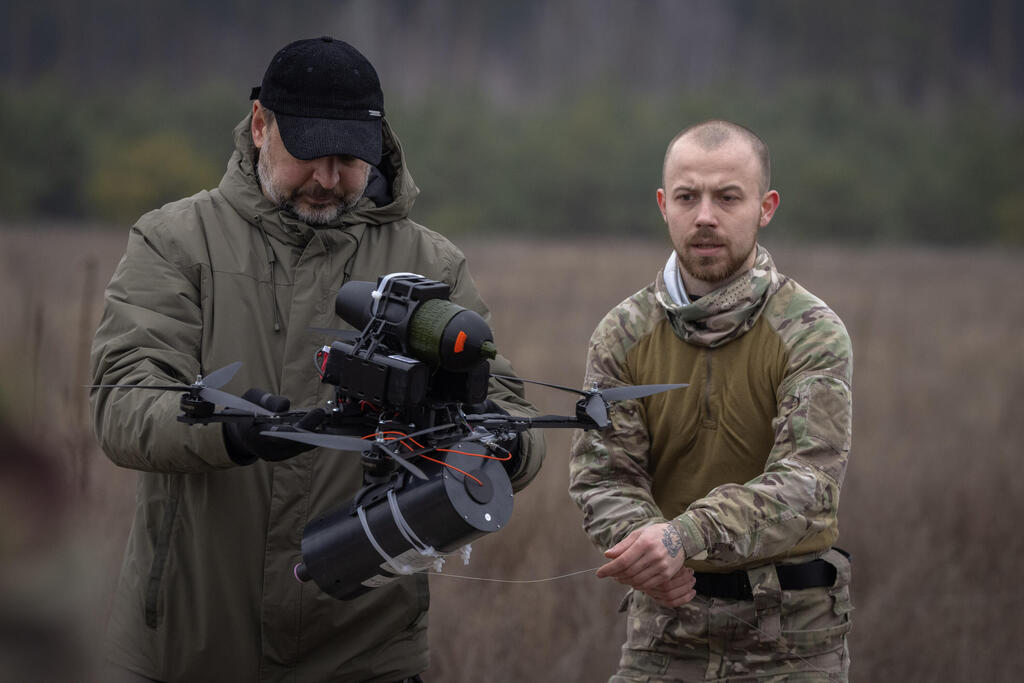
Ukrainian soldiers prepare to launch a fiber-optic drone, January 2025.
(Efrem Lukatsky/AP)
The D-Fend acquisition follows three other significant deals involving Israeli companies in the counter-drone sector. Dedrone was acquired by U.S. public-safety company Axon in October 2024 at a reported valuation of approximately $503.3 million. In November 2025, U.S. company Ondas acquired Sentrycs for $225 million. Sentrycs also specializes in the cyber takeover of drones. Another company in the sector, XTEND, which develops control systems for drone swarms used in warfare, went public through a reverse merger. It initially traded at a valuation of approximately $1.5 billion, although that figure has since fallen by 75%.
D-Fend, however, is the only one of these companies to have been acquired for a sum of this magnitude: $1.5 billion in cash. According to reports published last summer, the three founders collectively held 25% of the company's shares at the time of the sale, meaning each received approximately $125 million from the transaction.
How did you end up with Motorola?
"They reached out to us. I had an extensive network of connections at Motorola, so the first call came to me. In the early months, the dialogue was kept under the radar, just me, without even the bank involved. It was a long process of mutual discovery that lasted nine months, from November 2025 until the closing at the end of August 2026. Throughout the discussions with Motorola, we were simultaneously moving forward with the company's IPO process, until we reached a point where a choice had to be made. We had to determine what was best for the company, the employees, and the investors, since they are also part of the equation."
What did you personally prefer?
"Whatever was best for the company. My goal is to build a large-scale enterprise, to establish an industry, not just to pull off a quick 'exit' and be done with it. Motorola provides a home that allows us to grow. If you want to become part of the broader American ecosystem, aligning with an entity like Motorola is a huge asset. If there's potential to build a massive company, it's with them. So, for me, an 'exit' is just one step along the way."
But the reins are no longer in your hands.
"We weren't acquired to be swallowed up by Motorola, but rather to grow. I am now also a Senior Vice President for the counter-drone sector at Motorola Solutions, which makes me the most senior Israeli in the global defense-tech industry. The acquisition will allow us to invest resources in R&D and human capital, an effort that will enable the industry to take its next major step forward."
Are you already cooking up your next entrepreneurial venture?
"No. I am fully committed to this endeavor, and this alone. I'm at Motorola Global to take D-Fend to the highest possible level. I want us to become the dominant player, the go-to, generic name for drone-defense solutions. That is my goal."
You raised $67 million and sold for $1.5 billion. That's a multiple that makes investors very happy.
"Indeed. Our funds didn't just turn a profit; we delivered their highest-ever return on investment. This was the biggest 'home run' they've ever had in any of their funds. Furthermore, the company's last funding round took place in 2024. I executed it to ensure we had a sufficient cash cushion in case of a catastrophe, like the COVID-19 pandemic, but I haven't touched a single shekel of that capital; it's all still in the bank."
Let's get back to the topic of fiber-optic-guided drones. Until a few years ago, it was believed that your system would provide a complete solution to this aerial threat, but it now turns out that is not the case.
"We know how to detect them; the challenge now lies in how to deal with them following detection. We also possess technology that can have an impact on the surrounding environment, but it is not a suitable solution for tethered drones. The solution will involve a combination of detection layers, such as radar and optics. Ultimately, this threat will be neutralized, though I cannot say when."
Is your technology equipped to handle an attack by swarms of drones?
"Yes. Our systems are deployed in the most challenging environments and serve the most demanding clients, precisely because of our ability to address these specific needs."



