










Can MDMA help heal the wounds of war? Inside an Israeli PTSD trial
At a treatment center in Israel, therapists are testing whether the drug once associated with the party scene can help people confront severe trauma
For the past four decades, MDMA, the active ingredient in Ecstasy, has suffered from a poor reputation. It is associated with the party scene and irresponsible drug use, and in 1985 it was classified as a Schedule I controlled substance in the United States. The substance, formally known as methylenedioxymethamphetamine, is not new. Although it was first synthesized in 1912, it attracted little interest for decades. It was only in the decade after the psychedelic wave of the 1960s that researchers began investigating its therapeutic potential.
Unlike classic psychedelics such as LSD or psilocybin, the active compound in hallucinogenic mushrooms, MDMA does not typically produce intense visual hallucinations. Instead, it primarily heightens feelings of empathy, openness, closeness and security. Some researchers believed that, with the guidance of skilled therapists, these effects could help people suffering from post-traumatic stress disorder (PTSD), and the associated anxiety, depression and profound guilt, cope with memories of traumatic events.
The classification of MDMA as a Schedule I drug, the most restrictive category under U.S. federal law, halted or severely constrained research into the substance. However, since the "psychedelic renaissance" began around the turn of the millennium and gained momentum over the past decade, attitudes toward MDMA and other consciousness-altering substances have begun to shift. Scientists at leading Western universities have received authorization to conduct controlled studies into the potential therapeutic benefits of these substances, and the results from a number of trials have generated significant interest.
In Israel, a country where, according to conservative estimates, 625,000 people suffer from PTSD and 80,000 are at high risk of losing their jobs, there is particular interest in this research. The interest stems not only from the distress experienced by PTSD sufferers and their loved ones, but also from the immense economic toll the condition exacts. According to a report by NATAL, an organization dedicated to trauma resulting from national conflict, the direct and indirect costs of PTSD to the Israeli economy are projected to reach NIS 100 billion annually in the coming years. The ongoing war that erupted following the October 7 massacre has only exacerbated the situation.
At least 10 different studies involving MDMA are currently underway in Israel, targeting various groups, including survivors of the October 7 massacre, ZAKA personnel and members of the security establishment. Since 2024, the Metiv Center, the Israel Center for the Treatment of Psychotrauma at Herzog Medical Center, has been conducting a study involving former security personnel with PTSD. The goal is to demonstrate the safety and efficacy of MDMA-assisted psychotherapy for PTSD and contribute to the body of research needed for regulatory approval beyond clinical trials.
To date, public attention has focused primarily on the researchers driving the field forward. They have explained how psychedelics affect the brain, identified the substances released and the pathways involved, and described how these processes may help people suffering from a range of mental health conditions.
Yet the personal experiences of the patients and therapists themselves have remained largely in the background.
For this article, Calcalist Magazine spoke with the therapists leading the Metiv study and three of its participants. All described their experiences and breakthroughs with remarkable openness. These are their stories.
The intelligence officer: "Since the treatment, whenever I experience a distressing memory or anxiety, I say to the sensation, 'Come.'"
M., a 54-year-old former police officer and intelligence operative, had long attributed his PTSD to events he experienced in Lebanon. A bomb-disposal expert beside him stepped on an explosive device, while a suicide bomber who detonated nearby was splattered against the tank M. was in.
He says, "During the MDMA treatment, other events surfaced that I hadn't remembered, for instance, when two people tried to assassinate me in Jerusalem's Old City."
How did the session unfold?
"They set up a cozy, cabin-like space for us, and I sat there with two therapists who restored my faith in the profession. They checked my blood pressure; we lit candles and stated our intentions, affirming that we weren't afraid of the 'demons' that might emerge, even though they aren't really demons. In reality, you are encountering yourself. I remember finding it very hard to let go of control; at first, I told the therapists I thought they’d given me a bad batch of the drug because it wasn't working. But after two or three hours, the substance took hold, and something incredible happened. I’m not someone who freely talks about what I’ve been through, but as the painful events surfaced, I started speaking and couldn't stop. I ended the day with a sore jaw from all the talking. Throughout the process, even though asking for help was very difficult for me, the therapists guided me, offering a hand or a hug. They told me to sit with the fear and observe its effect on me. Now, whenever a painful memory surfaces or I experience anxiety, I simply say to that feeling: 'Come on in.'"
M. recounts that, under the influence of MDMA, he relived the arrival of the helicopter that evacuated the wounded bomb-disposal expert.
"I experienced the event as if watching a replay on VOD. I climbed into the helicopter, and the paramedic told me, 'Get out. You’ll just get in the way.' So I stepped down and was left alone. Until then, I hadn't remembered him making me get off; I only remembered calling the hospital and begging them to tell me what had happened to him. The person who answered initially said she couldn't say, and then, 'I’m sorry. He passed away.' I remembered that he was buried on the day his son’s Bar Mitzvah was supposed to take place."
One of the PTSD symptoms experienced by M., who had been unable to work for the past three years, was severe, unexplained pain in his hands. During his second MDMA treatment session, everything fell into place: he recalled squeezing the IV bags attached to a wounded combat engineer with all his might. By the end of the session, the mysterious pain had vanished.
"For years, I felt terrible guilt over his death, but while the intensity of that guilt used to be a million, now it’s ten, and I can live with that. It prompted me to visit his grave for the first time in my life. The events no longer haunt me in nightmares or flashbacks; another change is that, since the MDMA treatment, I’ve lost ten of the forty kilograms I had gained due to the medication I was taking. I don’t understand why MDMA treatment isn’t offered to every suffering combat soldier."
The Special Forces officer: "The substance held my hand while I experienced the events that terrified me most."
Dudi Greenbaum, 53, an Israel Nature and Parks Authority employee and former Special Forces officer, suffers from what he describes as dual-layered PTSD, a condition that contributed to the breakdown of his first marriage.
The initial trauma stemmed from a fierce combat encounter in southern Lebanon in the early 1990s; the second resulted from an incident that remains classified to this day.
"Before the treatment, I was afraid they would try to force me into places I feared and didn't want to visit," he recounts. Yet that proved unnecessary.
"The substance was like a good friend by my side, holding my hand as I relived the events calmly and safely, reaching places I hadn't dared even think about for twenty years due to fear. During the treatment, not only did I feel capable of facing these memories, but I actually wanted to revisit them again and again, to look at the scenes that had once terrified me more than anything else. It allowed me to be far more forgiving of myself, to the point where the therapists suggested I take a break, while I just wanted to keep going."
According to Greenbaum, "Before I underwent MDMA therapy, I used to beat myself up; I saw only the negative aspects whenever I thought about the events that caused my trauma. The therapy allowed me to see the mitigating circumstances as well: the bullets whistling over my head, the explosive charges detonating around us, and the long, sleepless days leading up to that engagement. I realized that even if I made mistakes during the battle, I had done my absolute best, the best I possibly could."
These insights, Greenbaum says, "cause my feelings of guilt to dissipate. I was in the room with two therapists, good people who encouraged me to view every aspect of my experience, but beyond them, I felt the presence of the men who had been killed. They spoke to me and stood by my side as character witnesses, and that was empowering. In the faces of the fallen, I saw no blame or anger, only understanding and acceptance, as they recounted what I had done right during that engagement."
"For me, MDMA therapy was magic," Greenbaum continues. "It allowed me to stop taking the medication I had been on for a very long time. I was afraid the effect would wear off afterward, but so far, that hasn't happened. When I’m struggling, images from the therapy sessions come to mind; everything feels calmer, and I’m more forgiving of myself. PTSD no longer runs my life, and I hardly ever have panic attacks. Before the therapy, whenever I suffered from PTSD-induced attacks, I used to flee to the desert to be alone."
Greenbaum’s current state has led him to help others. He and his wife established a center in Bulgaria for processing combat experiences and treating people suffering from PTSD. In June, survivors from the Be'eri rapid-response team who were active on October 7 visited the site.
"It brought things full circle, and helping others is part of my own healing process," he says.
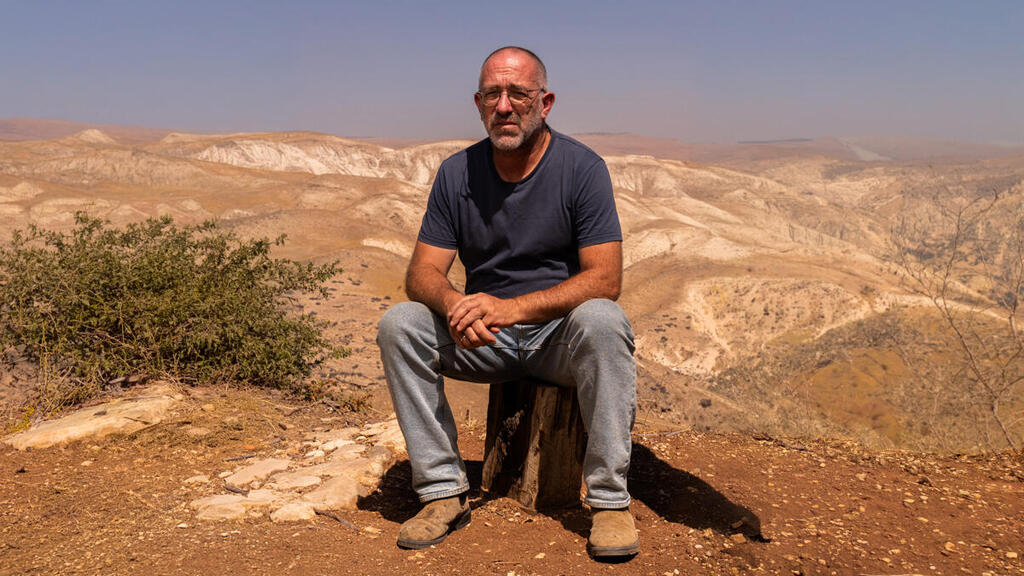
The medic: "Previously there were no brakes for trauma. Now I can stop and process events."
C., 42, is a high-tech professional who suffers from PTSD stemming from his service as a paratrooper medic during the second intifada. Most of the difficult events he experienced, he lists 15 of them, involved a risk to his own life. But an event in which he himself was not in danger had an extraordinary effect on him.
"We received wrong intelligence from the Shin Bet and we went to arrest someone who turned out to be a three-month-old baby," he says. "At the entrance to the house, the baby's father grabbed my rifle and I hit him with the weapon even though the orders required me to shoot him. I opened his chin and he lost consciousness and started foaming at the mouth."
How did it make you feel?
"For many years I could not live with the fact that I sent an innocent father to the hospital and may have broken his jaw. Blame for what happened was very dominant in my post-trauma and only after treatment did I accept the fact that I was a pawn in the game and that the mistake was not mine. I will never feel complete with what happened, but I have reached a situation where I live in peace with what I did."
What was your experience during the treatment?
"Once the substance kicked in, I saw sounds manifesting as shapes moving in and out of the frame, like an animation. I also saw events playing out in a split-screen view: on one side, military scenes and images of the dead; on the other, fun days spent with my children at the park. Amidst this, I discovered I could seamlessly shift from being in the Balata refugee camp, where people were trying to kidnap and lynch me, to an outing with my kids. All the while, I felt in control of the situation, able to choose to focus on the positive things I was seeing and feeling.
"Before that, whenever I spoke to a psychologist about these events, I felt like I was in a car with no brakes speeding down a bumpy road, eventually crashing into a wall, a panic attack. Afterward, I’d lose weeks to the aftermath. Using MDMA made me feel as though that car had reached an intersection where I could stop, take a break, and then return to the memory. It gave me immense confidence that I could process these events without being helplessly sucked back into them. The dark abyss no longer pulls me in; I can work through a memory and then let it go.
"I can divide my life into 'before' and 'after' the study I participated in. I used to think that PTSD was a death sentence, and I never imagined I would manage to feel the way I do today, like a person who isn't controlled by those events or sucked back into them. I remember that after one session, the psychologist told me I was the most moral man she had ever met; that remark profoundly softened the way I viewed myself. Today, I feel like a better father and partner, and although I still have PTSD and use medical cannabis, the amounts I consume are significantly lower than they used to be."
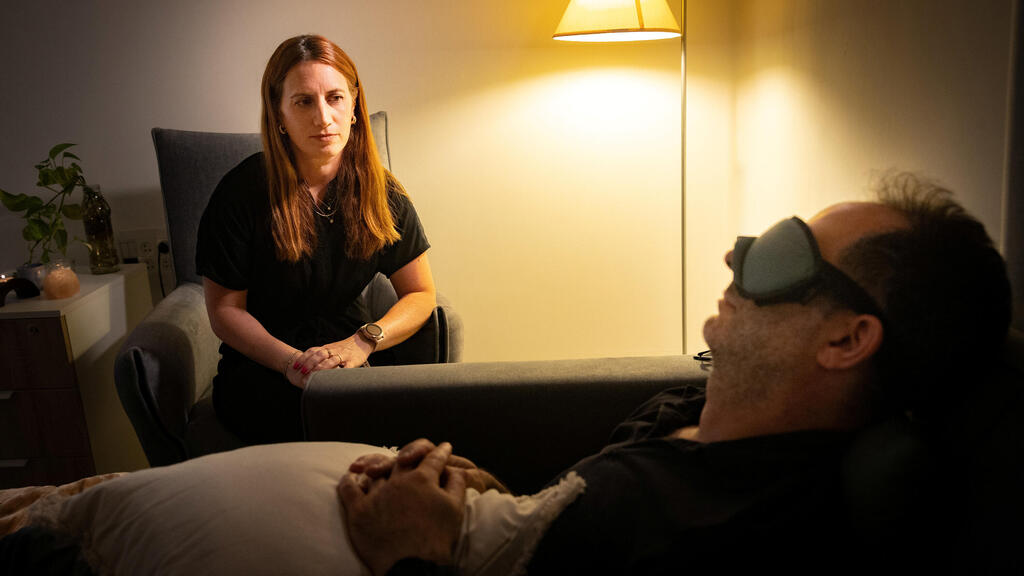
The therapists: "A patient said he felt as though he were facing the Red Sea, and that he needed to believe the sea would part."
Clinical social worker Dalia Zivan and psychologist Dr. Anna Harwood-Gross, who are conducting the trial at Metiv, explain that PTSD disrupts the ability to distinguish between what occurred during a traumatic event and what is happening in the present. As a result, patients may feel they are still in danger and experience symptoms such as rage, anxiety, fear of leaving the house, nightmares and flashbacks.
Until now, the primary treatment methods have involved talk therapy and antidepressants. The efficacy of these treatments is limited: fewer than a third of people suffering from PTSD report a complete disappearance of their symptoms.
The trial conducted by the two professionals spans three to four months and comprises a total of 15 sessions. It begins with three talk-therapy sessions, each lasting an hour and a half, followed by a single session in which the patient receives MDMA. This session lasts eight hours, after which the patient stays overnight at the facility under supervision.
Following the drug-assisted session, three additional talk-therapy sessions are held to process the experience. This cycle repeats until the full course of treatment is completed. Both types of treatment always involve two therapists, a man and a woman.
The trial involves only people suffering from PTSD who have previously undergone other treatments that failed to resolve their symptoms, and the results obtained so far are described by the researchers as highly encouraging.
"To date, we have completed treatment with 17 out of 60 patients, and almost all of them no longer experience PTSD symptoms," says Harwood-Gross. "For us, success is defined as a reduction in symptoms sufficient to no longer meet the criteria for a PTSD diagnosis, or a more moderate reduction in symptoms. Success can also mean an improved ability to maintain relationships or return to work."
How does MDMA differ from other psychedelic substances, and why do you believe it is effective for treating PTSD?
"Classic psychedelics such as psilocybin, ayahuasca, and others induce a sense of ego dissolution and detachment. With MDMA, however, we see connection, to reality, to the therapists, and to the present moment, accompanied by a lowering of defenses and increased openness. When treating trauma, we do not seek detachment; the challenge is to keep the patient in contact with the memory rather than avoiding or distancing themselves from the pain. MDMA allows us to engage with the trauma gradually while remaining constantly connected to reality."
Do the data accumulated so far allow therapists to know in advance whether it is better to treat a specific patient with MDMA rather than another substance?
"No. That is a very important question that, for the moment, cannot yet be answered."
An MDMA therapy session, Zivan says, always begins with a statement of intentions.
"The patient states where they want to get to and what they want us to do for them, and the therapists also tell them where they aim to guide them. We invite them to lie down, and once the substance takes effect, a journey of several hours begins, one that bears no resemblance to the experience of taking MDMA at parties. Often, their initial experience is one of anxiety about losing control and a desire to avoid the process; we give that feeling space and room. At the start of therapy, we don't try to overcome avoidance behaviors; instead, we respect and take an interest in them, we approach them with curiosity. Our experience shows that when such feelings are given space rather than fought against, patients soften."
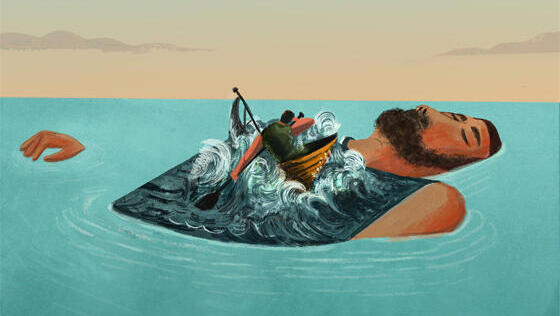
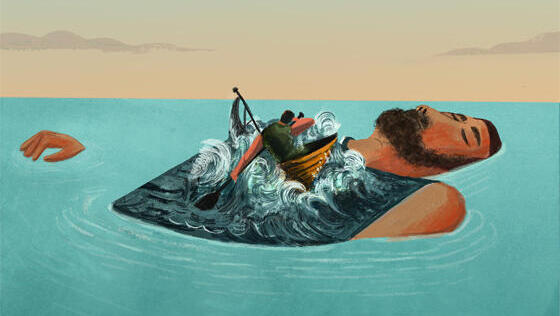
"We often see patients experiencing recurring imagery of entering a dark cave; we even had a patient who experienced an image of the parting of the Red Sea. He told us he felt he had to step into the sea and believe it would split in two. After overcoming that hurdle, he experienced a sense of serenity, saying it was worth the risk of drowning just to emerge floating again, feeling secure. It is deeply moving to be with someone during those moments."
Zivan describes patients shifting between emotional extremes within a single session.
"We witness experiences of intense pain and profound, long-repressed grief, moments where patients realize they never truly mourned the people they lost, as well as feelings of guilt. We hear accounts of harrowing scenes and dangerous environments, yet we also see positive emotions surfacing in people accustomed to feeling only negativity; during therapy, they begin to feel compassion for themselves and others. Sometimes, after addressing military-related trauma, childhood or sexual traumas also surface, and the treatment then addresses the feelings of loneliness, mistrust, and abandonment common to both types of experiences."
Isn't it difficult for the therapists themselves to cope with this emotional burden?
"Senior therapists are lining up to join this trial because it is intriguing, novel, and compelling. It is highly rewarding work because we see something very significant taking place, but our team of therapists also needs support and a safety net, and we provide that for them."



