










After PTSD and years of insomnia, Israeli founder raises $6.5 million to improve sleep through scent
Founded by a former Oketz soldier, Israeli startup Kimba uses AI and personalized scent therapy to actively improve sleep quality and recovery.
The startup company Kimba has raised $6.5 million in a Seed round. The round was led by Selva Ventures and included Resolute Ventures, Able Partners, Barrel Ventures, Palette Ventures, Supermoon Capital, Air Ventures, Beyond 22, and Fresh Fund, which was the first investor in the company. The funding was raised in two stages: $1.1 million in a pre-Seed round, followed by an additional $5.4 million in the Seed round.
The company has developed an AI-based device designed to improve sleep quality through scent therapy. It was developed in collaboration with sleep and neuroscience researchers and is intended to actively enhance sleep quality and recovery.
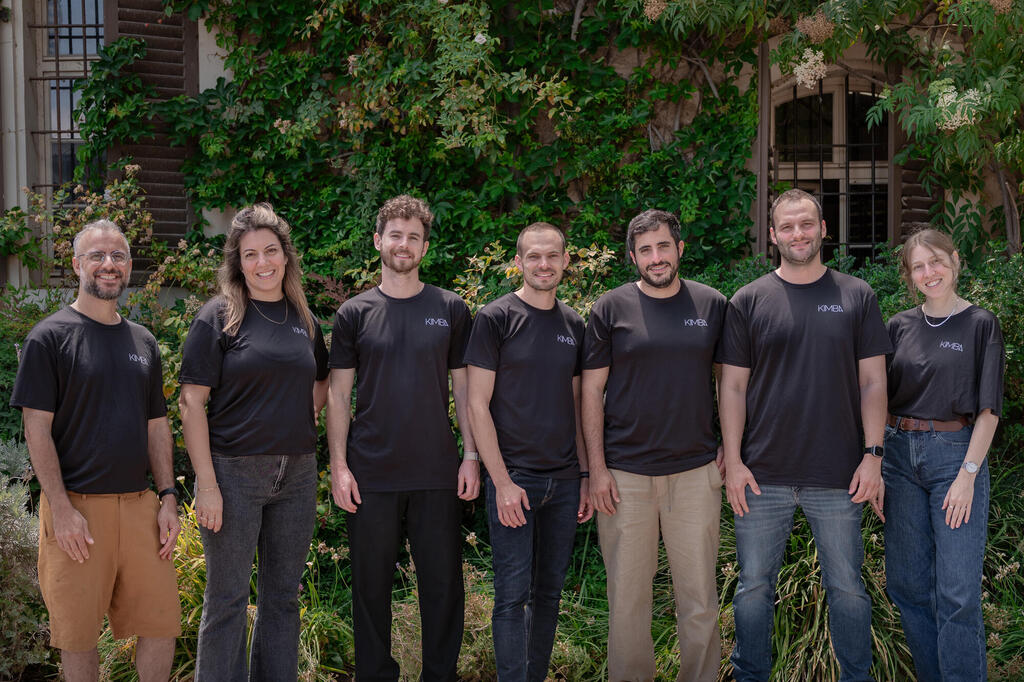
The story behind the startup is distinctly Israeli and is connected to post-traumatic stress disorder following military service. Kimba’s founders are Ben Fuxbruner (CEO) and Gabi Beck (CTO). Fuxbruner, a former soldier in the Oketz unit, was seriously injured during Operation Protective Edge. Following the injury, he suffered from post-traumatic stress disorder and chronic insomnia. After years of searching for solutions, and while studying together for a degree in mechanical engineering at Tel Aviv University, Fuxbruner and Beck turned to research in the fields of sleep and olfaction and developed the system that Fuxbruner himself needed.
The system is called Kimba, named after Fuxbruner’s dog, who was injured alongside him, saved his life, and did not survive. “We live in an era of a global epidemic of stress and sleep disorders,” says Fuxbruner. “We use the sense of smell to help the body and mind reach a more relaxed and balanced state, and to improve sleep quality through scents that are personalized to each user’s patterns.”
The company was officially founded in 2024 and currently employs 10 people, most of them in Israel. Its product is already available for order in the U.S. and will soon be launched in Israel. The kit, which includes the device, software, and a six-month personalized scent package, will cost $299.

According to studies, between 30% and 50% of the adult population in the U.S. suffers from symptoms of sleep disorders to varying degrees, affecting stress levels, cognitive function, mood, concentration, memory, and overall quality of life. In Israel, where large segments of the population live under prolonged emergency conditions, the scale of the problem is even more severe.
Despite the dramatic increase in the use of wearable devices for sleep monitoring, most existing technologies still focus on measurement and tracking rather than intervention and active improvement of sleep quality.
The olfactory pathway in the brain is directly linked to the limbic system, which is responsible, among other things, for processing emotions and memory. Kimba uses this pathway to influence brain activity during sleep in a non-invasive way that does not cause awakening.
Kimba monitors various physiological signals by connecting to a range of smartwatches and sensors built into the device. These analyze the sleep environment and identify in real time signals that require intervention. Upon detection, the bedside scent diffusion system creates a tailored scent mix, adjusting its composition, intensity, and timing to produce a precise olfactory stimulus designed to promote deeper and more effective sleep, without drugs, masks, or uncomfortable devices that disrupt rest.
The company is creating a new category in sleep technology: actively influencing sleep, rather than only measuring and monitoring it.
Kimba’s system has been tested in clinical studies and has demonstrated a significant improvement in sleep quality and cognitive performance through scent stimulation compared to a placebo. In a study conducted in collaboration with the University of Haifa, led by Prof. Peretz Lavie, former president of the Technion and a pioneer of sleep medicine in Israel, and Dr. Anat Arzi, a leading researcher in neuroscience and olfaction, 50 participants were monitored over 48 nights. Various cognitive parameters were measured, including memory, motor function, and attention. On nights with olfactory stimulation, a 21% improvement in cognitive performance was recorded, and 86% of participants reported improved sleep.
The company is currently conducting two additional clinical studies in Israel. One uses EEG brainwave measurements to directly assess Kimba’s effect on brain activity. The second examines the impact of the technology on sleep, recovery, and mental health among veterans suffering from post-traumatic stress disorder.



