










“We have opened the door to a new world of computing”: Israeli startup Qedma claims quantum breakthrough with IBM
Israeli quantum software company says its error-reduction technology helped IBM’s computers achieve a result beyond the reach of leading classical simulations for the first time.
Is the quantum market approaching its moment of upheaval? Israeli quantum software company Qedma, together with computing giant IBM, has demonstrated for the first time what researchers describe as quantum advantage using commercially available hardware and software, showing that a quantum computer, combined with advanced error-mitigation technology, can solve a scientific problem beyond the consistent capabilities of leading classical simulation methods.
The experiment, conducted using IBM’s Quantum Heron processor together with Qedma’s QESEM software, examined a complex physics problem involving the behavior of magnetic materials. The system reached up to 74 qubits, a scale at which leading classical simulation methods, including those running on Fugaku, one of the world’s most powerful supercomputers, could no longer consistently provide reliable answers.

“It’s like the launch of the first spacecraft. There are no humans inside yet, but we have opened the door to a new world and a new type of computing. What happened in AI a few years ago, when scientific breakthroughs began but many people only recognized their significance after ChatGPT was launched, is happening now in quantum computing,” says Dr. Asif Sinay, co-founder and CEO of Qedma, in an interview with Calcalist.
Sinay emphasizes that the company did not rely only on IBM’s quantum system. Qedma performed the same calculation on a quantum computer developed by Quantinuum, which uses a different architecture based on trapped ions, and achieved consistent results.
“This significantly strengthens our confidence that what we are seeing reflects the actual physics of the system being studied, and not an artifact of a specific machine,” he explains. “Our system knows how to predict the correct result mathematically. But beyond that, we took a different type of quantum computer and received the same result. It is like reaching the same destination by car and by ship while also confirming that the journey itself makes sense.”
The achievement is significant because it demonstrates that quantum computers, when combined with error-mitigation software, can begin addressing scientific problems that have moved beyond the practical limits of classical simulation.
The research, conducted by Qedma, IBM and Japan’s RIKEN Institute, examined the dynamics of a two-dimensional Floquet Ising model, a system used by physicists to study how the magnetic properties of materials evolve when repeatedly exposed to external pulses.
Understanding how these oscillations behave in larger systems has remained a major challenge because the computational complexity grows rapidly as the size of the system and the duration of the simulation increase.
To evaluate the results, the researchers compared the quantum calculations against several state-of-the-art classical simulation approaches, including simulations conducted with the help of BlueQubit’s technology and RIKEN’s expertise in high-performance computing. As the complexity increased, the classical approaches stopped producing consistent results, while the error-mitigated quantum calculations continued to show stable, long-term oscillatory behavior.
In recent years, tens of billions of dollars have been invested in quantum computing based on the promise that these machines will eventually solve problems beyond the reach of conventional computers. However, for years that promise remained largely theoretical, mainly because quantum systems are extremely sensitive to noise and errors.
Qedma’s software, called QESEM, is designed to address this challenge. The platform uses quantum error suppression and error-mitigation techniques to improve the reliability of calculations performed on today’s noisy quantum computers, without waiting for the arrival of large-scale fault-tolerant machines.
The significance of the current announcement is that it moves quantum computing closer to becoming a practical tool for scientific research. Rather than replacing classical computers, quantum machines could eventually complement them by tackling specific problems where traditional simulation methods reach their limits, including areas such as advanced materials, optoelectronics and potentially new forms of superconductivity.
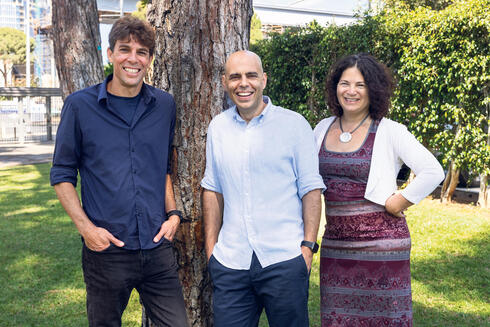
Qedma, which employs only about 40 people, was founded in 2020 by Dr. Asif Sinay, Prof. Dorit Aharonov of the Hebrew University and Prof. Netanel Lindner of the Technion.
Aharonov demonstrated about three decades ago that quantum computation could theoretically be performed even in the presence of errors, laying foundational work for the field of quantum error correction and fault tolerance. Lindner is a world-renowned theoretical physicist specializing in complex quantum systems.
Qedma has raised $30 million to date across two funding rounds. Its investors include Glilot, TPY, Q FUND and IBM.



