










“People are getting spooked”: Tower CEO says AI demand remains intact
Despite a sharp correction in its share price, the Israeli chipmaker expects record annual revenue of $2 billion, with silicon photonics emerging as its largest growth engine.
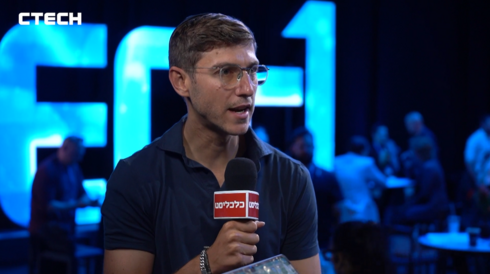
“The drop in Tower’s stock has nothing to do with the company’s performance. People are getting spooked, but I see no reason for the decline. We stand by all our forecasts, both short-term and long-term, and based on what we are seeing within our segment of the AI revolution, there has been no change in demand, nor are there any headwinds,” said Russell Ellwanger, CEO of chipmaker Tower Semiconductor, following the release of the company’s third-quarter results.
The results were strong once again, offering little apparent explanation for the nearly 50% decline in Tower’s share price from the peak it reached in the summer. Despite the selloff, driven largely by the volatility that has swept through chip stocks and AI infrastructure companies over the past month, the stock remains up 34% since the beginning of the year. Following the earnings announcement, Tower shares edged lower, bringing the company’s market capitalization to approximately $18.3 billion and leaving it among Israel’s five largest publicly traded technology companies.

The Migdal HaEmek-based chipmaker, which came close to being acquired by Intel for $5.5 billion in 2023 before the deal was called off, has benefited over the past year from growing demand for silicon photonics, a technology that uses light rather than electrical signals to transmit data. Tower manufactures chips for these systems, which are increasingly important for connecting servers and processors inside AI data centers.
The importance of optical connectivity to the AI infrastructure market was underscored just before Tower released its results, when Marvell announced an agreement to acquire Lumentum in a transaction valued at approximately $115 billion, including debt. Lumentum makes optical components used in data centers and communications networks. As AI systems require ever-faster data transfers between increasingly powerful processors, optical connections are gaining ground over traditional copper-based infrastructure, which faces limitations in bandwidth, speed and energy efficiency.
“What we are seeing on the ground is the opposite of what is being reflected in the stock market. There is no slowdown, only an increase in demand. Our customers continue to commit to ever-larger orders. For the first time in the company's history, we are entering 2027 without anticipating the seasonal weakness typically seen in the first quarter. High demand is offsetting the impact of seasonality,” Ellwanger added.
“Based on our fourth-quarter forecast, we are entering the strongest growth phase in the company's history. We will close the year with $2 billion in annual revenue and an annualized revenue run rate of $2.4 billion,” he said.
“Our investments in expanding production capacity, including the previously announced project to establish a 300mm-technology fab in Japan, known as Track-1, are progressing ahead of schedule. This, combined with customer contracts extended through 2029, provides significant confidence in our ability to meet our 2028 revenue and profitability targets, while also offering a clear path toward further margin improvement thereafter.”
Earlier this year, Tower announced a major project involving a planned $4 billion investment in new production capacity for photonics chips in Japan, with the participation of the Japanese government. According to Ellwanger, the first new fab is scheduled to begin operations in the third quarter of 2027. By then, quarterly revenue from photonics chips is expected to reach $700 million, compared with approximately $240 million in the most recent quarter.
Tower reported third-quarter revenue of $526 million, an increase of 33% year over year. It expects revenue to climb to $600 million in the fourth quarter, putting it on track to generate approximately $2 billion for the full year. Silicon photonics is expected to account for slightly more than half of that total, contributing approximately $1.1 billion in annual revenue.
Profitability also improved. Gross profit nearly doubled to $179 million, while operating profit reached $127 million, 2.5 times the level recorded in the corresponding quarter of 2025. Net profit hit a record $120 million, or $1.06 per share, representing a net margin of 23%. Cash flow from operations totaled $185 million.
Ellwanger said the company expects its growth to remain profitable, supported by two main factors: price increases of up to 20% across certain product lines and a relatively lean cost structure. Under Tower’s updated model, the company expects to achieve a gross margin of 45% and an operating margin of 38%. The relatively small gap between the two reflects its efforts to keep operating expenses under control as production expands.
“We are highly efficient, with minimal middle management, and we invest primarily in production capabilities and development, while the finance, sales and administrative functions remain largely unchanged,” Ellwanger said.
Despite its focus on maintaining a lean organization, Tower has continued to recruit in Israel. Ellwanger said the company has hired more than 100 employees in the country since the beginning of the year and is currently seeking to recruit another 150 people for technical and operational roles at its Israeli facilities. Tower employs approximately 1,500 people at its Migdal HaEmek plant, which has also undergone expansion and conversion work in recent months to support the production of photonics chips.



