










VC Survey 2027
"For us, AI is not an investment thesis in itself"
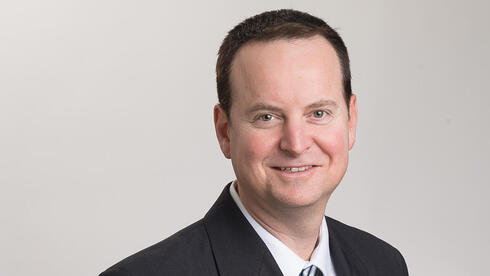
Boaz Lifschitz, Co-founder & Managing General Partner at Peregrine Ventures, joined CTech for its 2027 VC Survey.
"We believe the VC industry will become more disciplined in how capital is raised, allocated and returned to investors over the next three to five years. Following years in which fund performance was often measured primarily through valuations and unrealized gains, LPs are placing greater emphasis on actual distributions," said Boaz Lifschitz, Co-founder & Managing General Partner at Peregrine Ventures, when asked about the future of VC.
"This shift will increasingly influence fundraising decisions and how funds construct their portfolios."
1 View gallery

Boaz Lifschitz, Cofounder & Managing General Partner at Peregrine Ventures.
(Photo: Yossi Zwecker)
With AI reshaping how startups are built and funded, and Israel's tech ecosystem adjusting to a new economic and geopolitical reality, investors are rethinking their playbooks. Lifschitz joined CTech to share insights for its VC Survey 2027, which invites prominent investors to discuss the trends, challenges and opportunities expected in the year ahead.
You can read the entire interview below.
ID CARD
Fund Name: Peregrine Ventures
Total Assets Under Management: $600M
Partners/Managers: Boaz Lifschitz, Eyal Lifschitz, Lior Shahory
Notable Portfolio Companies: Insightech, BrainQ, Momentis Surgical, Magnisity, KAHR, Cordio Medical, Restore Medical
Notable Exits: BioProtect, CartiHeal, EndoStream Medical, Cardiovalve, Valtech, Eximo
How is AI changing the way you evaluate companies, from business models and capital needs to valuations and competitive advantage? Is this a fundamental shift in how companies are built and scaled, and are parts of the market overheating?
AI is accelerating how companies develop technologies, operate and scale, but its impact varies significantly across industries. From our perspective as healthcare investors, AI is not an entirely new phenomenon. Advanced algorithms, machine learning and intelligent software have been part of medical technologies for decades, particularly in imaging, diagnostics and robotic systems. What has changed is their sophistication, accessibility and pace of adoption.
In MedTech, the integration of software and AI into medical devices and robotic systems can create significant value, but technology alone is not enough. AI can accelerate development, improve efficiency and solve complex algorithmic problems. However, new, creative, out-of-the-box technological breakthroughs, clinical validation and regulatory requirements will remain important factors in bringing medical technologies forward, requiring significant human resources and substantial capital.
For us, AI is not an investment thesis in itself. We focus on companies developing first-in-class or best-in-class technologies that address significant unmet medical needs and demonstrate clear clinical and commercial potential.
The growing enthusiasm around AI is certainly influencing investor attention and how companies position themselves, with many choosing to place greater emphasis on AI capabilities that have long been embedded in their technologies. Whether this signals overheating in parts of the market remains difficult to determine, but the shift in market perception is undeniable.
Related articles:
- "Israel has always won on deep technical moats, but in enterprise AI, vertical AI, and fintech, the real moat is now distribution."
- "Being an Israeli company in the current atmosphere is not helping and in many cases decreases the valuation."
- Beyond the AI hype: what investors are looking for in startups today
Does Israel's mix of AI, cybersecurity, defense tech and deep tech give it a new competitive edge, or is its traditional advantage eroding? How will foreign investors' appetite, early-stage fundraising and the election results affect its ability to build global companies?
Israel's technological capabilities remain strong, and we believe its competitive advantage continues to grow and evolve. Israel's strength lies not only in its technological expertise, but also in its ability to combine knowledge across disciplines with agility, resourcefulness and a highly pragmatic approach to innovation. One of the greatest strengths we have witnessed over the years, particularly during periods of global uncertainty, is the exceptional potential of Israeli entrepreneurs. In that respect, we believe the future of Israel's tech ecosystem holds tremendous promise.
Despite geopolitical challenges, we continue to see strong interest from leading global medical technology companies in Israeli medical technologies through acquisitions, investments and collaborations. Israel remains an important source of healthcare innovation for these companies, whose long-term technology needs extend beyond short-term market and geopolitical conditions.
We believe Israel's technological strengths will continue to attract global attention, a trend we are already seeing. Greater stability and better international relations will give investors more confidence and help translate that interest into sustained investment activity.
How will the VC industry in Israel and globally evolve over the next three to five years? How will changes in fundraising, fund structures, secondary transactions and exits reshape it, and what will funds need to do to stay competitive?
We believe the VC industry will become more disciplined in how capital is raised, allocated and returned to investors over the next three to five years. Following years in which fund performance was often measured primarily through valuations and unrealized gains, LPs are placing greater emphasis on actual distributions. This shift will increasingly influence fundraising decisions and how funds construct their portfolios.
We expect greater attention to the balance between investment stages, capital requirements and potential exit timelines. Investing in more mature companies during the early years of a fund, alongside earlier-stage opportunities, can help create a more balanced path to potential distributions without fundamentally changing the fund's investment strategy.
At the same time, secondary transactions, continuation vehicles and more flexible fund structures are likely to play a greater role in providing liquidity. While these mechanisms can offer valuable alternatives, they will complement rather than replace traditional exits through acquisitions and IPOs.
Taken together, these developments will require fund managers to plan more carefully for the timing and realization of returns.
VCs with deep sector expertise and strong industry relationships will be better positioned to create opportunities for strategic acquisitions and earlier liquidity events.
As a Healthcare VC, we have seen this trend develop over the past few years, working together with leading global medical technology companies to create "build-to-buy" ventures.
Finally, name 2-3 startups that, in your opinion, are worth watching this year.
Biobeat – Following its $50 million funding round and the strengthening of its leadership team, Biobeat is advancing the U.S. commercialization of its FDA-cleared, cuffless blood pressure monitoring technology. We believe 2027 could be an important year for Biobeat as it works to translate its technological and clinical capabilities into broader commercial adoption.
BrainQ – In 2026, BrainQ launched its non-invasive, AI-powered system which uses targeted electromagnetic stimulation to help the brain relearn functions lost after a stroke, with the aim of reducing disability and restoring independence. With CE Mark certification in Europe and commercial activity underway in Israel and Chile, we believe BrainQ could attract growing attention in 2027 as it works to expand access to its technology.
Cordio Medical - Cordio's technology uses AI-powered voice analysis to detect early signs of heart failure deterioration through short daily recordings on a standard smartphone, without requiring additional medical devices. With CE Mark certification in Europe and FDA Breakthrough Device Designation, Cordio is now pursuing U.S. regulatory authorization, with a planned market launch in 2027. We believe this could be a significant milestone for the company, with the potential to enable earlier medical intervention, prevent serious deterioration and reduce hospitalizations among heart failure patients.



