









Why prediction markets want LeBron James and other sports superstars
Athlete partnerships are giving a controversial new financial product mainstream visibility just as companies face growing scrutiny from regulators.
In a brief, 14-second video posted to his X account, LeBron James is seen stepping out of an elevator after pressing a button labeled “Sports.” Other options on the control panel included politics, crypto, economics, climate, gaming and technology. The accompanying caption was concise: “Step inside Polymarket HQ.”
James’s decision to film himself in an elevator connecting crypto, politics and sports was no coincidence. It reflected a broader shift in the fintech sector, where sports is increasingly being treated not simply as a category of entertainment and leisure, but as another source of tradable outcomes in a global market.
For the NBA superstar, the move is more than a conventional commercial endorsement. It is another sign that prediction markets are pushing deeper into the sports business, seeking to turn games, players and sporting events into financial products that can be traded in real time.
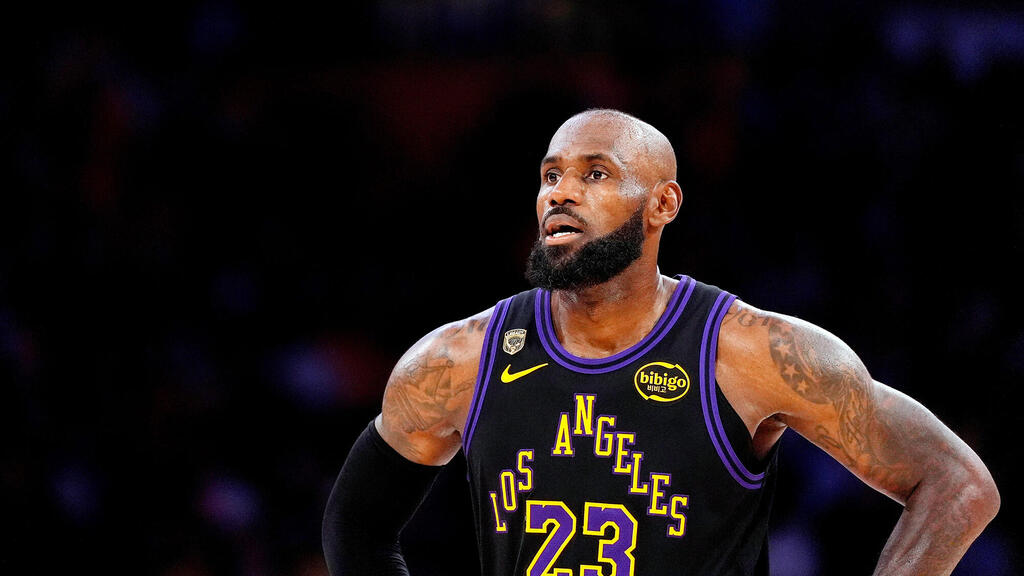
The precise financial terms of James’s deal were not initially disclosed, although reports have put its value in the tens of millions of dollars. The size of such agreements illustrates how aggressively prediction market operators are seeking high-profile athletes as they try to move from the margins of online wagering and into mainstream finance and entertainment.
As we analyzed here last April, the first phase of the prediction-market expansion was largely legal and regulatory. In April 2026, a federal appeals court in New Jersey affirmed a preliminary injunction protecting Kalshi from state enforcement while its legal challenge continued, finding that the company had a reasonable chance of establishing that federal commodities law preempted New Jersey’s restrictions on its sports-related event contracts.
The legal battle, however, is far from settled. In March, Arizona’s attorney general filed 20 criminal counts against Kalshi, accusing it of operating an unlicensed gambling business and unlawfully offering election wagering. Kalshi maintains that its contracts are financial products subject to federal oversight rather than gambling products governed by state law.
The second phase is playing out in the marketplace. Prediction exchanges are enlisting some of the world’s most recognizable athletes to promote the industry and help make its products familiar to a much broader audience.
LeBron is not the first athlete to enter the prediction-market world. He follows a growing list that includes Lionel Messi, Giannis Antetokounmpo, golf star Bryson DeChambeau and former tennis player Maria Sharapova. Antetokounmpo became a shareholder in Kalshi, while DeChambeau became the company's first individual athlete partner. Kalshi has also partnered with the Argentine Football Association, with Messi featuring in related promotional activity.
The strategy cuts across sports, from soccer and golf to tennis and basketball. The platforms are not simply looking for familiar faces. They are attaching themselves to athletes who can help present prediction markets as part of the broader financial and digital economy.
When one of the most influential athletes of his generation lends his name to such a platform, it helps normalize the idea that sporting outcomes can be treated as tradable assets.
A stock exchange, not a casino
To understand the appeal, it is important to look at how the industry presents itself.
In the past, athletes endorsing betting companies such as DraftKings or FanDuel were promoting products that were explicitly associated with gambling. In traditional sports betting, the customer bets against a bookmaker, which builds a margin into the odds and takes the other side of the transaction.
Prediction markets present a different model. Platforms such as Polymarket and Kalshi provide peer-to-peer trading infrastructure in which users buy and sell binary contracts tied to future events. Prices move as traders respond to new information, from a player’s injury to changing weather conditions.
The fan is no longer presented simply as a bettor. The industry’s preferred framing is closer to that of a trader, using information to assess probabilities and potentially buying or selling a position as the market changes.
The language has changed as well. Athletes are not necessarily telling fans to “bet.” Instead, the platforms emphasize trading, information and the so-called wisdom of the crowd. Sharapova, for example, has promoted live trading on tennis matches, while DeChambeau became Kalshi’s first individual athlete ambassador. Antetokounmpo went a step further by taking an equity stake in the company.
That framework is particularly suited to a generation that grew up with trading apps and cryptocurrencies. To younger consumers accustomed to buying and selling digital assets or stocks from their phones, prediction contracts can appear less like a casino product and more like another form of market speculation.
The sponsorship model is evolving, too. Prediction-market companies are not necessarily limiting their relationships with athletes to a payment for a social-media post or television advertisement. Some deals involve longer-term partnerships, equity stakes or participation in marketing campaigns.
The exchange model also changes how the product can be used. With a traditional betting slip, money generally remains committed until the outcome is determined. A prediction-market contract, by contrast, can be bought and sold before the underlying event is over. If a trader buys a contract predicting a team will win and that team takes the lead, the contract may become more valuable and can potentially be sold before the final whistle.
That ability to trade in and out of positions is central to the financial-market analogy.
But the arrival of active athletes as ambassadors creates a more complicated question: What happens when a player promotes a platform where users can trade contracts based on events involving that same player?
The potential value of information becomes particularly sensitive in sports. Advance knowledge that a star will be rested, limited or unavailable can affect the prices of contracts tied to a game. In financial markets, insider trading is governed by a well-developed body of law. In sports prediction markets, the boundaries are newer and more complicated.
What happens if a player’s relative, trainer, physiotherapist or another person with access to non-public information trades before that information becomes public?
The issue becomes even more sensitive when the athlete himself is serving as a commercial ambassador for the platform.

Where will the elevator go?
Despite some important legal victories, the regulatory dispute surrounding prediction markets is far from over. Arizona’s criminal case against Kalshi is one example of the continuing conflict between states seeking to enforce gambling laws and prediction-market companies arguing that their contracts fall under federal commodities regulation.
Professional sports leagues face a related dilemma. Prediction markets can add another layer of real-time engagement to games, giving fans a financial stake in events unfolding on the field or court. But the ability to trade contracts on specific in-game events also raises questions about integrity, conflicts of interest and access to non-public information.
At the same time, the business strategy is becoming increasingly clear. A sports sponsorship market long dominated by apparel companies, airlines, banks and consumer brands is now attracting companies built around data, probability and financial speculation.
The most valuable athletes are no longer simply posing with a product. In some cases, they are becoming investors, ambassadors or long-term partners in the platforms themselves.
LeBron James’s Polymarket partnership is another step in that evolution. It places one of the most recognizable figures in global sports inside an industry that is still fighting over whether it should be understood primarily as gambling, finance or something in between.
The elevator in James’s video has already chosen its floor. The larger question is how far the sports industry is prepared to travel with it.



