











Tnuva Chairman: "We have no choice but to excel in Israel. It is existential"
According to Haim Gavrieli at Calcalist's 2026 Forecasts Conference: "Within hours of Israel's attack on Iran in mid-June, there was a 300% increase in the number of shoppers in the shopping chains, extraordinary demand on a scale we had never seen before. And we responded. During those twelve days of fighting, we provided a continuous supply of all products to all points of sale in the country."
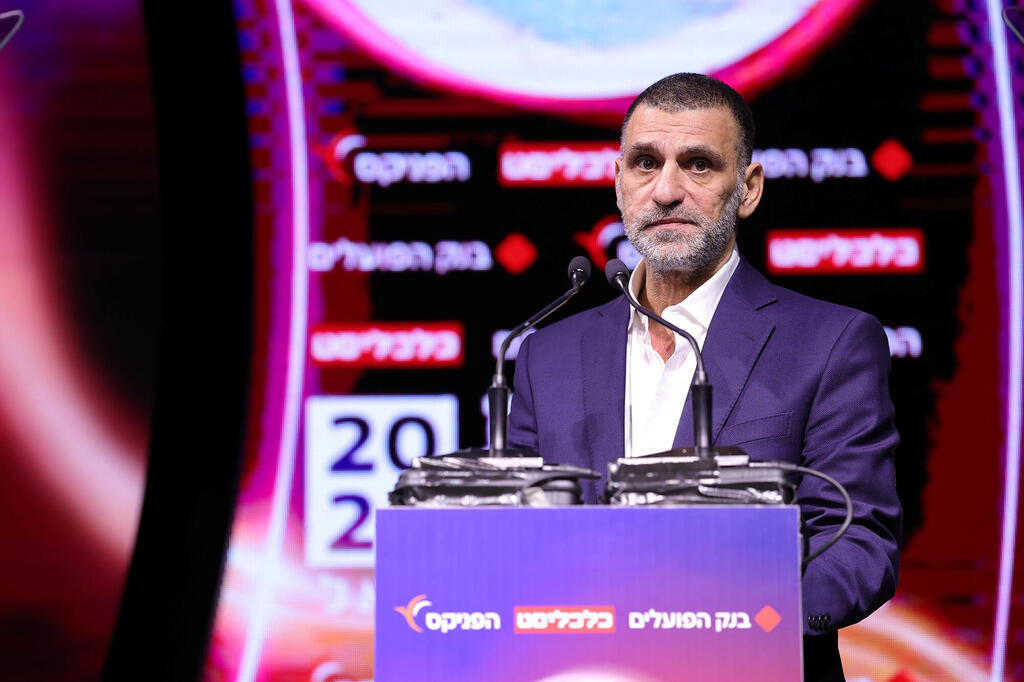
"Excellence, in my opinion, is the ability to be prepared even for what cannot be predicted, because in a world where reality changes faster than anything imaginable, excellence is the only tool that allows us to deal with uncertainty," said Tnuva Chairman Haim Gavrieli at Calcalist's Forecasts Conference, held in collaboration with Bank Hapoalim and Phoenix.
"Excellence begins with leadership, responsibility, and personal example. In those days, when the war with Iran broke out, our managers at Tnuva did not stay behind desks. They went out into the field, to the dairies, to the logistics centers, to the production lines. The second principle of excellence is high standards and discipline. Excellence does not exist without precision. Without order and strict adherence to procedures, the basis for repeated success, especially in moments of emergency when the pressure is high and reality is shifting, high and uncompromising standards enable continuous and efficient work.
"The third principle of excellence is constant learning, practice, and thorough investigation in order to maintain true excellence. You have to learn constantly, investigate, find the gaps, and practice again and again. You have to stop, look inward, and improve. Check what works and what doesn’t. When an organization truly knows how to learn, it emerges stronger and sharper. Then all of this, learning, investigation, practice, will benefit the organization not only in normal times but certainly in times of crisis.
"Within hours of Israel's attack on Iran in mid-June, there was a 300% increase in the number of shoppers in the shopping chains, extraordinary demand on a scale we had never seen before. And we responded. During those twelve days of fighting, we provided a continuous supply of all products to all points of sale in the country, with an emphasis on price-controlled products. We provided stability for ten million citizens in Israel. Full shelves under this kind of threat are, in my opinion, a clear expression of excellence.
"This example of Tnuva is not unique to one company. It illustrates how principles of excellence, when deeply embedded, enable organizations and countries to deal with even the unpredictable. When I talk about excellence, I do not mean the ability of the country to be the best on a given day. I mean the ability of an entire system to continue functioning, make the right decisions, and act according to a set of clear and sharp principles.
"When I talk about the country, I want to add two additional principles of excellence and one condition. The first is the principle of education, education that sets a high standard, cultivates curiosity, critical thinking, and creativity. Education that respects teachers, invests in them, and does not give up on any child, in the periphery or the center, in every sector and in every community.
"The second is economy and innovation. Investment in research and development, entrepreneurship, small businesses, and advanced industry. Reducing bureaucracy, creating regulatory certainty, and fostering a deep connection between academia, high-tech, and traditional industry. An excellent economy produces growth while maintaining social responsibility.
"And all five of these principles cannot exist without one condition, there is no excellence in a divided society. I repeat: there is no excellence in a divided society. An excellent country integrates all its parts, Jews and Arabs, women and men, religious and secular, center and periphery, understanding that diversity is a source of strength, not weakness.
"But beyond all of these, excellence is a culture, a culture that is not satisfied with 'good enough,' that is not afraid of criticism, that is willing to learn from failure, and that demands more, from itself first and foremost.
Related articles:
- Tnuva Chairman: "The business sector has significant potential to bolster national strength"
- Tnuva Chairman: "The war highlighted Israel's national security Achilles heel, but it has also underscored the critical importance of food security"
- The national food security plan must be included in Israel’s 2025 budget
"The business world in Israel has already proven that it is possible. Israeli entrepreneurship, innovation, and the ability to turn a small idea into a global impact are proof of what happens when excellence meets vision. And here it is important to ask the opposite question: what happens when there is no excellence?
"What would have happened if we had not had the military and intelligence infrastructure during the war with Iran? Israel is a small country, almost an isolated island, surrounded by a complex geopolitical environment, far from global production centers, dependent on external supply chains, and living in a reality of constant uncertainty. We have no geographical depth, no advantage of scale, no significant natural resources, and no margin for error.
"A mistake here is not absorbed; it is felt immediately. A small disruption quickly turns into a major crisis. In Israel, we do not have the luxury of being mediocre.
"The events of October 7 took a heavy toll on all of us, but they were also a great lesson in humility and understanding that we, as a country and an economy, must be far better planned and prepared. Every day we must pursue excellence, excellence based on thousands of quiet decisions made beforehand, on planning, on investment, on a refusal to compromise. This excellence is not measured in moments of brilliance but in the simple routines we maintain even when the world around us changes.
"If, as a country, we embrace all these elements of excellence, the State of Israel will not only meet the challenges of the future but will represent the standard that others will aspire to."



